What is International Literacy Day?

International Literacy Day takes place on 8 September every year.
It is a day that highlights how important literacy is for people and communities around the world.
It was celebrated for the first time in 1967.
To mark the day, here are some fun and useful activities to help encourage a love of reading and develop writing skills.
Watch – Read a book!
Reading a book can open a whole new world of adventure and excitement.
Watch this video to learn more about why books are so amazing!
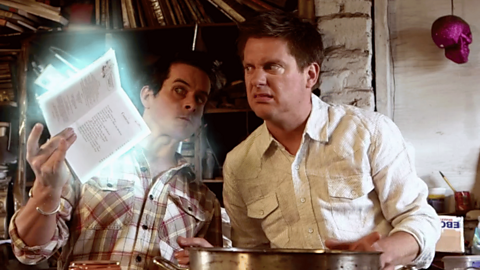
Join Lucy and Kevin as they open their books and journey in search of Treasure Island.
LUCY: My friend Kevin loves reading.
Kevin!
KEVIN: Just a second.
LUCY: See what I mean? And one day he showed me why.
I just asked him – what are you reading?
KEVIN: Treasure Island. It's brilliant!
It's all about a boy called Jim Hawkins who finds a treasure map, a proper one with an X and everything.
He shows it to some grown-ups, and they go off on a big adventure to find gold and jewels.
But guess what?
LUCY: What?
KEVIN: It turns out that the sailors on the ship are all pirates. And the ship's cook is the sneakiest pirate of all. Long John Silver!
LUCY: What happens next?
KEVIN: I don't know. That's as far as I've got.
LUCY: It was too much. I had to know.
I went to the library and got my own copy.
TOGETHER: We couldn’t put it down!
LUCY: On Saturday, Kevin came round to my house and we dressed up as Treasure Island characters.
We made hats from cardboard and a treasure chest from a box, and used old clothes as the pirate costumes.
When we got to the playground, I was Jim Hawkins and Kevin was Long John Silver.
We made whole new stories.
KEVIN: Jim Hawkins, look here. I can see some treasure off the starboard bow.
LUCY: Looks like it's time for a whole new adventure.
TOGETHER: What are you reading?
Reading
Being able to read and write helps us every day.
It lets you understand labels, signs and messages from other people.
Reading is not only practical, it can also take you into exciting, imaginary worlds through stories.
Have a look at the information and activities below to learn more.
What are facts and opinions?

When you read information, it is important to understand the difference between a fact and an opinion.
Facts are statements that are true and can be checked or proved with evidence. For example:
"The Prime Minister is giving a speech."
Opinions are what someone thinks or feels. They can be based on personal beliefs, likes or dislikes. For example:
I think having a teenager as Prime Minister would be a terrible idea.
Activity - Fact or opinion?
See if you tell the difference between facts and opinions with this activity.
Reading for pleasure
The ability to read helps you to learn about the world around you.
You can discover real‑life facts through non‑fiction books, dictionaries and information leaflets, or explore imaginary worlds through fictional stories. Reading is a hugely important skill because it opens the door to both knowledge and adventure.
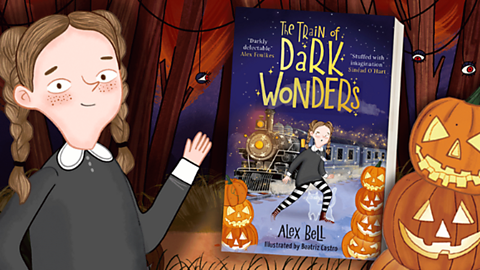
The Blue Peter Book Club has many books to explore, including The Train of Dark Wonders, written by Alex Bell and illustrated by Beatriz Castro.
It takes you to worlds full of mystery, magic, sweets and adventure!
Discover more on KS2 reading
Have a look at these articles to learn more and improve your reading skills.
Retrieving and summarising information
KS2 English
What is inference?
KS2 English
Reading out loud
KS2 English
Writing
From jotting down a shopping list, or a quick text to a friend, to writing a long email or even a story - writing is everywhere!
Creative writing can be a fun way to express your thoughts, feelings and imagination.
Take a look at the information, videos and activities below to learn more and practise your creative writing skills.
500 Words competition
500 Words is a competition to encourage children to write a story they would love to read themselves.
It just needs to be 500 words or under and can be about any topic - the more imaginative, the better!
How do you write a story?
When writing a story, it's important to think about what happens in it. This is called the plot.
What will happen in the beginning, middle and end of your story?
Planning your story before you write it can help structure your story and make sure you get all the important parts in, so the plot makes sense.
Watch - How to plan a story
Watch this video to learn more about planning your story.
Narrator: Stories can be complex.
But can also be very simple.
Most stories follow a simple structure of beginning, middle and end.
Don't you just love the funfair, the games, the flashing lights, fantastic!
It's the perfect location for the beginning of our story.
Local Man: Don't ya just love it when the funfair is in town?
Local Woman: Oh yes darling, it's a perfect night, in our perfect little town.
Local Man: What could possibly go wrong?!
Narrator: Now that we've established the location and the characters, we move on to the middle of our story.
Uh oh! Looks like these people aren't the only ones who, like the funfair. Things could get messy!
Local Man: Wait my darling I will protect you!
Narrator: Oh no, the monsters have scared everyone out of the funfair!
The once beautiful place of fun is now, a place of crazy monster madness!
This story is pretty dramatic so far!
But every story needs a good ending.
What's that? Sounds like the cavalry is here!
Local Man: Time to reclaim our funfair darling!
Narrator: Aww a happy ending after all!
Characters
You also need to think about the characters - the people in the story.
What do they look like and what are their personalities like?
What are their relationships with each other like?
Activity - Write a story for 500 Words
Now that you have thought about your story, plot and characters - why not have a go at writing a story for the BBC 500 Words competition?
You could write about an exciting adventure, a magical fairy tale or thrilling mystery!
500 Words story challenge
500 Words Live Lesson
Discover more on KS2 writing
Take a look at these articles to learn more and make your creative writing even better!
How to use inverted commas
KS2 English
What are paragraphs?
KS2 English
What are narrative poems?
KS2 English

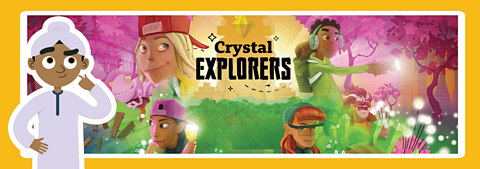
Play - Crystal Explorers
Join the Crystal Explorers and use your knowledge of grammar, punctuation and spelling to solve the fiendish puzzles, in this fun KS2 English game!
Crystal Explorers. game
KS2 English
More resources from the BBC
You can find many more amazing resources from around the BBC.
Follow the links below for more ideas on International Literacy Day.
Bringing books to life 1
Bitesize for Teachers
Bringing books to life 2
Bitesize for Teachers
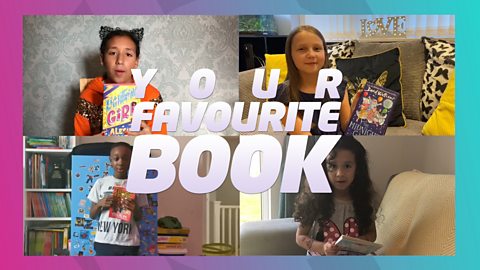
What is your favourite book?
Newsround
Where next?
Play Bitesize Primary games. game
Fun and educational primary games in science, maths, English, history, geography, art and design, computing and modern languages.