A trip back in (dinner) time
From their inception at the start of the 20th century, school dinners have provided pupils with a hot meal in between a packed timetable of lessons. They’ve spawned some iconic dishes - as well as plenty we’d rather forget.
But how have school dinners changed over time? And which meals and snacks were loved and loathed by generations?
Here, BBC Bitesize takes a look back over the past century of school dinners, from simple breakfasts and hearty meals, to the Turkey Twizzler and beyond.
Early 1900s
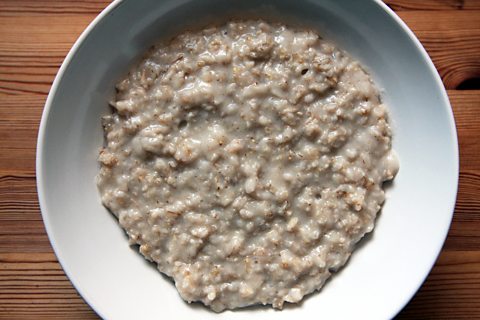
School dinners first became a topic for the national agenda in 1906. The Provision of Meals Act in that year gave local authorities the power to provide free or subsidised meals to children who needed them. Nursery school pioneer Margaret McMillan, who lobbied for the bill, argued that if education was compulsory then it was only right for the state to provide a hot meal too.
This free hot meal tended to be breakfast and the offerings were limited to say the least. If you were lucky enough to go to school in the early 20th century then you could expect porridge, bread with dripping and a nice glass of milk to wash it all down with.
Things did get better during the twenties and thirties as British classics began to be introduced (mutton stew, anyone?) and desserts like treacle pudding found their way onto the menu.
Post-WWII
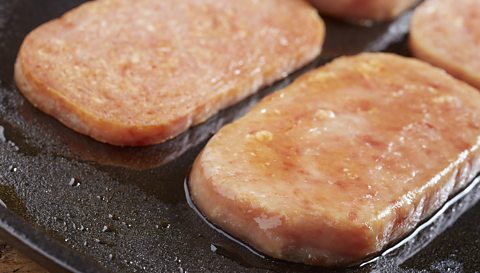
Just before the end of the Second World War in 1944, it was made compulsory for local authorities to provide school dinners. Part of the war effort on the home front was to maintain morale, and that couldn’t be achieved on an empty stomach.
However, food rationing continued for several years after the war ended, and this was certainly reflected in school dinners. Tinned meats were popular because of their longevity, and there was plenty of mash to go with it. The simple jam roly-poly also made its debut on school menus.
The cost of providing free school meals soon became apparent though, and parents began to shoulder much of the burden, with some reprieve for those families on lower incomes. As rationing came to an end and the economy began to recover, baby boomers were treated to the luxuries of corned beef, and fish and chips would become a Friday staple across canteens nationwide. Iconic school desserts like spotted dick and rice pudding (with a dollop of jam of course) became the norm.
1968: The best school dinner
Originally broadcast on 9 January 1968, this BBC Archive video was filmed in Scotland for BBC's Scottish news magazine programme called A Quick Look Round.
In the video, Evelyn Elliot quizzes Scottish schoolchildren about their favourite and least favourite school dinners. There was clearly one winner!
BBC Archive offers a unique collection of thousands of archive films, capturing life and events across the UK since the 1940s.
Scottish school children stand in the dinner hall and sing a prayer before eating their lunches
Lyrics:
"Thank you for the world so sweet, thank you for the food we eat, thank you for the birds that sing, thank you, God, for everything. Amen."
School meals are placed on tables and passed to pupils - chats can be heard by pupils throughout the hall
Camera cuts to Evelyn Elliot, interviewing pupils
Evelyn said: "What do you like to eat at lunchtime?"
Pupil one replies: "Mince and potatoes and jelly and ice cream."
Evelyn continues: "Do you ever get anything you don't like?
Pupil one replies: "Err…not really."
Camera cuts to more pupils eating their lunch
Evelyn asks: "What do you like to eat for lunch?"
Pupil two replies: "Mince and potatoes."
Pupil three: "Beetroot and potatoes and peas."
Pupil four: "I like roast potatoes and beans and spaghetti."
Pupil five: "Mince and potatoes."
Evelyn replies: "Is there anything that you don't like having?"
Pupil five said: "Yes, turnip."
Pupil six said: "I like having meat and potato."
Pupil seven said: "Boiled egg with bread and butter with it."
Pupil eight said: "Beans. Soup sometimes. For dessert I'll have to have - I like ice cream or cake, sweet cake. I like meat. Every kind of meat I like. That's all."
Camera cuts back to pupil seven
He said: "I don't like some of the soup, but I do like other soup."
Evelyn returns to interview older school pupils
Pupil nine said: "I like mince and potatoes."
Pupil 10 said: "Mince and potatoes."
Pupil 11 said: "I like mince and potatoes and carrots as well."
Pupil 12 said: "Mince and potatoes and the soup. I don't like the cold meat."
Pupil 13 said: " I like mince and potatoes and cabbage and steak pie and mince pie and this roast pork."
Evelyn asks: 'Anything you particularly don't like?"
Pupil 13 replies: "I don't like semolina and prunes."
Evelyn continues: "What do you think of school lunches?"
Pupil 13 replies: "I like them."
Evelyn continues to interview another pupil at the table
Evelyn asks: "What do you like to have for lunch?"
Pupils 14 answers: "I like their mince and potato and I like their cold meat, and I like nearly all them."
Camera cuts to another group of pupils
Pupil 15 said: "It doesn't matter much."
Evelyn asks: "What do you like having for lunch?"
Pupil 16 said: "I'm quite content with the dinners the way they are."
Evelyn continues: "Anything you particularly like?"
Pupil 16 replies: "The meat pie especially."
Evelyn asks: "No dislikes at all?"
Shaking their head, pupil 16 replies: "No, I'm quite happy."
Camera cuts to another group
Pupil 17 said: "I like steak pie and the cabbage and the potatoes. Custard and caramel cake that's special here."
Pupil 18 said: "I don't like turnips and carrots."
Camera cuts to dinner plates being piled up on a tray and taken away - end of news segment
1980s/90s
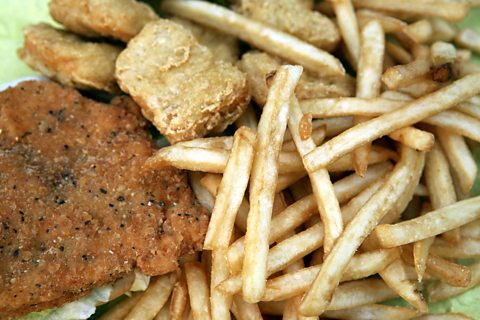
Margaret Thatcher’s Conservative government of the eighties was widely criticised for ‘milk snatching’, but its impact on school meals was wider than just that. Provisions of school meals were opened to competitive tender as private contractors battled it out to put food on the school dinner table at lower costs.
Nutritional standards were also affected in a further bid to keep spending down. Schools saved money and pupils got to feast on a new variety of sugary and salty treats.
The eighties saw an increase in ‘fast foods’ like pizza, fries and chicken nuggets being served from the school canteen, along with more fizzy drinks with high sugar content. This trend continued into the nineties and went largely unchecked. A 1999 medical survey suggested children in the 1950s had healthier diets with a higher nutritional value than children in the 1990s – and that was during rationing!
The 2000s
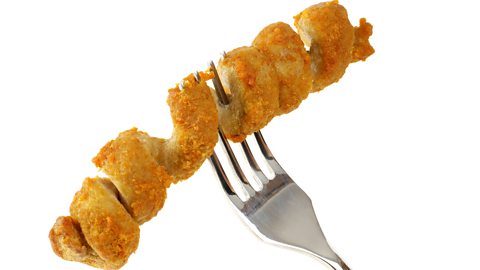
In 2005, Channel 4 aired Jamie’s School Dinners, a four-part series examining the state of Britain’s school dinners. The programme brought to light the poor nutritional value of food served out of the school canteen, and how this was contributing to an increase in child obesity rates as well as negatively affecting educational attainment.
The show made a villain of Turkey Twizzlers and other junk foods that were now staples of the school dinner. The TV chef called for the government to act and the public quickly got behind the cause. Over 270,000 signed a petition calling for better nutritional meals. Soon, many schools banned Turkey Twizzlers, fizzy drinks and sweets and added healthier options to their menus.
The 2010s/20s
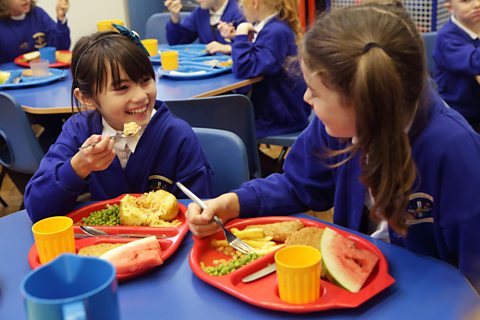
The shockwave caused by Jamie’s School Dinners was still being felt in the decade after it originally aired. Although many junk and processed foods had been banned and tighter nutritional guidelines brought in, not all schools were on board.
This changed again in 2015, when a new regulation came into effect. From this point, every meal would have to include at least one portion of vegetables or salad and there’d have to be a wide variety of fruit and vegetables available. The changes also included a limit on the amount of deep-fried food cooked every week and restrictions on fruit juice portions for pupils.
Today’s school dinners look a lot more colourful than they did thirty years ago and they’re much more nutritious as well. Still, there are plenty who mourn the loss of the Turkey Twizzler. In 2018 a petition was set up to bring the controversial meat spirals back to a supermarket near you.
But more recently, it was announced that fish and chips and other deep-fried food may soon be banned in schools in England. The Department for Education (DfE) said the changes will apply to primary and secondary schools in England - and it's so far had a mixed reaction from parents and pupils. Some schools may make changes straight away, but a full enforcement system is expected to be in place from September 2027.
This article was published in August 2019 and updated in August 2026
