
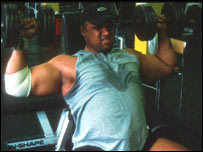
 I can't understand the phrasal verb work out. For me it is used when people go to a gym. But in Flatmates episode 131 a person says: I'm sure you'll work out fine. What does it means?
 Hi Fabio and thanks for your question! Now, one of the reasons learners of English say that they find phrasal verbs difficult is that one phrasal verb can have several meanings. And work out is a very good example of this. Here are some of the many meanings of work out:
 Well, those are the two meanings that you were talking about, but work out has yet more meanings:
We’ve only been sharing the flat for a few days. We haven't worked out who’s going to do which bits of housework yet.
I've added up all the household expenses and divided them between the three of us and it works out at £63 a month each.
And this last meaning of work out provides some really good advice on how to cope with these phrasal verbs which have lots of different meanings. What you have to do is look at the context surrounding the phrasal verb and try to work out what it means from the situation and the words that it appears with. For example, most people know that the phrasal verb get up means to leave your bed in the morning because you’ve woken up - I get up every day at about seven o’clock. But if you see a sentence like this,
The children were playing in the garden. I knew they were getting up to no good when I saw one of them covered in mud. Their parents were furious!
-it’s quite obvious from this situation that get up doesn’t mean ‘get out of bed’. But you can work out from this situation – they were playing in the garden, they were covered in mud, their parents were furious – you can work out that get up to means ‘do something that you’re not supposed to do’.
Now, let’s have a little bit of practice. You’re going to hear two sentences, both of them using the phrasal verb get off. But in which sentence does get off mean ‘avoid punishment’ and in which sentence does it mean ‘stop touching something’? Listen to the first one:
Will you get your feet off the table, please!
And here’s the second one:
He was very lucky. Even though he’d stolen a lot of money, he got off with a fine. He should really have been sent to prison!
So, in the first sentence, get off means ‘stop touching something’ and in the second one it means ‘avoid punishment’.
OK, let’s have another go. You’re going to hear two more sentences, this time using the verb put down. But in which sentence does put down mean ‘publicly criticise’ and in which sentence does put down mean ‘humanely kill an animal to end its suffering’?
I don't know why she stays with him. He hardly ever takes her out and he's always putting her down in front of other people.
And the second one:
We had to get our pet dog put down last week. It had stomach cancer.
So in the first one, put down means ‘publicly criticise’ and [in] the second one, put down means ‘humanely kill an animal to end its suffering’.
OK then Fabio, I hope that you’ve learned today that phrasal verbs can have lots of different meanings and that context is absolutely vital for working out what the different meanings are. You can also help yourself to understand phrasal verbs by buying a really good English-English learner dictionary, which have lots of definitions and example sentences too. So, good luck Fabio with phrasal verbs.


