Football is full of highs and lows, whether playing the game or watching it.
The football pitch can be a great place for children to develop valuable life skills, including empathy, teamwork and learning how to support others in winning – or losing - moments.
Real life and on-screen football coach Charlotte Lynch, AKA Coach Georgie in Football Fantastics, shares some tips on how football can help your child to build empathy, both on and off the pitch:
Hi, I'm footballer, presenter and actress Charlotte Lynch. You might know me as Coach Georgie from CBeebies Football Fantastics.
Whether we're playing it or just watching it, football can be an emotional game.
And the football pitch might end up being one of the first places we start to develop early emotional skills. In particular, learning empathy and how to be supportive.
Things don't always go to plan in a football match: a teammate might miss an open goal or the goalkeeper might let the ball slip straight through their fingers - but it's moments like this which help us learn the importance of compassion. Frustration and anger might be our natural reactions, but we understand very quickly that that won't help us recover and win the match. No one is perfect, and we all miss an opportunity at some point. By experiencing this, we learn to step outside of our own feelings and understand someone else's. This is empathy - identifying with one another. It's recognizing when a teammate is hurt or upset.
Child speaking: "You ok?"
It's understanding that the other team want to win, just as much as we do and that they will feel sad if they lose too.
And it's learning to be genuinely happy for a teammate who scores their first goal, even if we wanted to score too.
When we learn to understand and respect our teammates' feelings, we become more compassionate, showing support for other players who might be struggling after not quite getting the result they wanted.
Football is a game that's played with a heart as much as the head, and the competitive nature of it can create big feelings.
But by thinking about how the game makes us feel, children can learn a lot about their emotions and what it means to be compassionate, empathetic, and above all, kind - in a safe and controlled environment.
Children speaking: "Was I mean to Theo, Sophie? I wasn't trying to upset him. It's okay. I think he's fine."
Four ways football can help your child to develop empathy
1. Understanding things won't always go to plan
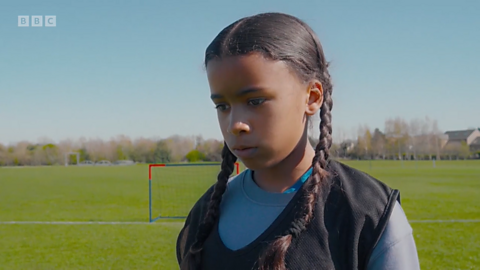
For example, a teammate might miss a goal, or a goalkeeper might let the ball slip through their fingers.
While these moments can be disappointing, they also provide valuable opportunities to learn about empathy.
Empathy is the ability to recognise and understand how someone else is feeling. It means stepping outside of our own emotions and seeing things from another person's perspective (as if standing in their football boots!)
It's noticing when a teammate is feeling upset and offering support if they need it. It also means understanding that the other team wants to win just as much as we do, and that they’ll also feel disappointed if they lose.
Supporting your child's emotional development can help them build empathy, resilience and positive relationships, both on and off the pitch.
2. Children can be kind to themselves
It can be easy to feel frustrated or angry at ourselves when things don't go our way on the football pitch.
But harsh thoughts won't always help us.
Instead, we can encourage children to focus on using their little voice inside them to build confidence, determination, and help them to bounce back.
A simple reminder to themselves such as, "I'm doing my best and getting better at passing" can help them stay positive and keep going despite any setbacks.
Take a look at our article on resilience and why it's helpful to focus on ‘progress’ rather than 'perfection.'
3. Help your child to understand their feelings
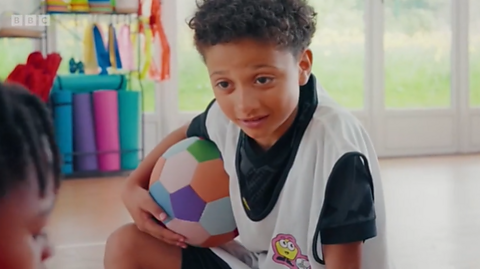
Football can be a great opportunity for children to explore and understand their emotions.
By talking about how the game makes them feel, they can begin to recognise their feelings and what it means to be kind, compassionate and empathetic, all in a safe and supportive environment.
They can also recognise the value of team-work and working with others.
Want to help your child understand their emotions? Take a look at our advice on supporting children's emotional development.
4. Know you can be happy for someone else’s success
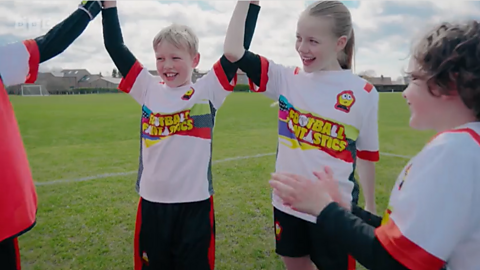
Your child can learn to be genuinely happy for a teammate who scores their first goal, even when they were hoping to score it themselves.
When children cheer on a teammate or show kindness to someone who is feeling disappointed, they begin to understand and respect other people's feelings.
Encouraging children to "play nicely" helps them develop empathy, learn to support others and build positive relationships, both on and off the pitch.
Football can be full of big feelings, from the thrill of scoring a goal to the disappointment of missing one. These moments give children opportunities to learn about empathy, including how to celebrate and feel joy for others when they succeed too.
Football can be full of big feelings, from the thrill of scoring a goal to the disappointment of missing one.
These moments give children opportunities to learn about empathy, including how to celebrate and feel joy for others when they succeed too.