If you think your child is having problems hearing you, they may have glue ear.
Specialist speech and language therapist Alys Mathers gives us the lowdown on the common condition.
What is glue ear?
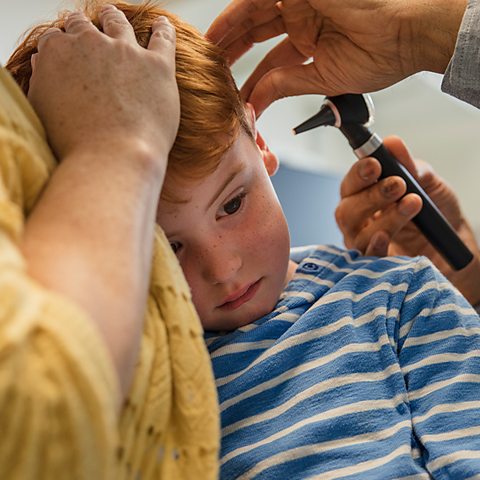
Glue ear is a build-up of sticky fluid in the middle part of the ear which can make it hard for your child to hear. It’s really common in toddlers and preschoolers: according to the National Deaf Children’s Society it affects eight out of 10 children.
It usually clears up on its own, but for some children, glue ear comes back again and again. “Because it causes mild hearing loss each time, this can cause problems with speech and language development”, explains Alys. “If they’re not hearing certain sounds this might make it hard for them to learn new words and sounds.”
The symptoms of glue ear in children
There are a few different signs your child may have glue ear, says Alys. These include:
Temporary hearing problems
“This is a really obvious sign”, says Alys. “If you’re talking to your child and they are facing the other way, they might not hear you at all.
"Babies normally turn their heads when they hear a sound or voice. If they’re not doing this, it might be because of glue ear.”
They seem more tired or frustrated than usual
“It’s tiring not being able to hear”, says Alys.
Your child might be frustrated or not be able to concentrate on chatting or stories.
“They might choose activities where they don’t have to talk or listen too much. Or they might not want to join in with an activity and choose to play on their own instead.”
Earache or pain in their ears
Not all children with glue ear will have pain, but some will. They may also have a ringing or buzzing sound in their ears. Glue ear can be in one ear or both.
How is glue ear diagnosed?
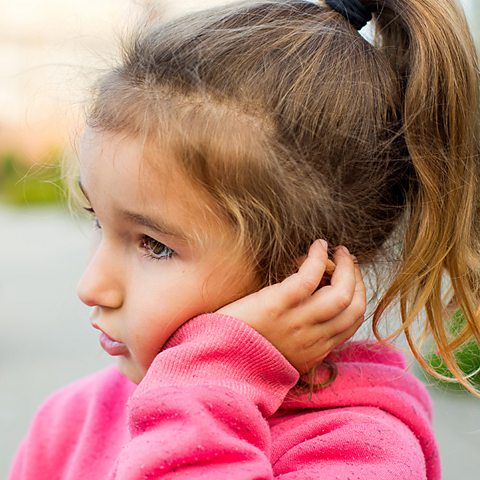
If you’re worried your little one may have glue ear, the first step is to see your GP. They will look in your child’s ears to see if there are any blockages and may also do some hearing tests.
Treatment for glue ear
There’s no medication for glue ear, and it often clears up by itself.
But if it hasn’t gone away after three months, or if it keeps coming back, your GP may send you to a specialist doctor. That’s because your child’s hearing issues could start affecting their learning and speech development.
“When you see a specialist, they could suggest putting grommets in your child’s ear”, says Alys. “These are little plastic tubes that drain the sticky fluid and help stop glue ear coming back.” Your child will need an operation to have the grommets put in. They will fall out on their own within 6-12 months.
How to help your child if they have glue ear
There are lots of things you can do to make it easier for your child if they’re struggling to hear.
1. Reduce background noise
“Glue ear muffles everything and makes it hard to hear quieter sounds”, says Alys. “That’s why it’s important to give your child the best chance of hearing the sounds you’re making.”
One simple way to do this is turning off the TV while you’re talking to your little one. “This is helpful for all children’s listening and language learning, but for a child with glue ear, it’s especially important as spotting the words among background noise is even harder.”
2. Talk face to face
Make sure your child can see your mouth when you are talking.
“They will get lots of clues about what you’re saying by watching your face and how your lips move”, says Alys. “That’s why being face to face and getting down to your child’s level is really useful.”

3. Don’t shout
Even though talking louder or shouting might seem like a good idea, this doesn’t actually help, says Alys.
“Shouting changes the way your lips move and the sound of your voice. This then makes it harder for your child to work out what you’re saying.
"Instead, talk clearly and at an average to slow speed. You want to keep the normal ups and downs in your voice because your child will pick up on those clues from a young age. They’ll use them to work out if it’s a question or statement.”
4. Let your child lead
Not being able to hear properly might mean your child gets tired and irritated.
“Let your child decide how you play together”, says Alys. “For example, instead of a story at bedtime they might just want a cuddle while listening is hard work.”
5. Keep it simple
Help your child understand what you’re saying by keeping things short and to the point.
Alys says, “If you don’t think they’re hearing all the words, stick to the key messages."
Instead of saying, ‘Look over there, it’s a big plane flying in the sky,' you could say, ‘the plane’s flying.' It doesn’t change the meaning of what you’re saying and will help your child pick out the keywords.
6. Use your hands
Another simple way to communicate with your child is through using hand gestures or drawing pictures. It could be as simple as pointing at a toy before asking if they want to play with it or gently touching their shoulder before you start talking so they can focus on who’s talking.
Find out more about how to use pictures to help with children's communication.
More information
For more information or advice about glue ear, visit The National Deaf Children’s Society.