| 13 November 2014 |

| |
| BBC Homepage | | |
| |||
| Contact Us | | |
Made In EnglandYou are in: Beds Herts and Bucks > Made In England > Made in England: What is The Full English? 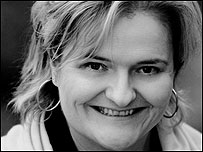 Janet Robertson Made in England: What is The Full English?Katy Lewis Artistic Director of The Full English, Janet Robertson, explains what it's all about and what will happen on the day! On the 23rd April 2009, local people are helping to celebrate St George’s Day with a unique on the move production! Arts Council England and BBC English Regions are joining forces to put St George’s Day back on the calendar with celebrations up and down the country, but commuters in Bedfordshire and Hertfordshire will be amongst the first to experience the festivities as a unique production wends its way through the two counties. 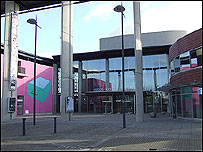 Milton Keynes Theatre The Full English will start at Milton Keynes Theatre and end at St Pancras International Station, were the performers and train passengers will be greeted by a 100 strong choir on the concourse singing a new anthem for England, composed and conducted by young English composer Sam Dunkley. The Artistic Director, Janet Robertson, told us more about the project, what will happen on the day and how you can become part of the art! The Full English is a major project for Made in England. Can you explain what the actual project is about and how it fits into the Made in England venture?Janet: The project has taken the idea of how people in England interact with their environment, the kinds of experiences that create them culturally, and how that resonates with them and then try to celebrate it. We’ve worked with lots of young people, lots of older people, a professional theatre company, and even under fives, and found different ways which, by using visual and performance arts, they can identify and articulate what being Made in England means to them. The Full English is an “on the move” performance happening on one day, starting in Milton Keynes and ending up at St Pancras station. There are a lot of parts to this so can you run through what’s actually going to happen on the day?Janet: The Hoipolloi Theatre Company will emerge from Milton Keynes Theatre and create the starting point for the day. Surrounding them will be a lot of people from Stantonbury Campus in Milton Keynes, a soul band, lots of young singers and hopefully lots of the community as well. The theatre company will then travel by double decker bus to Luton station where their main performance will begin. They will be on a train delivering little snippets of performance that they are creating that are attached to extended versions of identifiable English characters. For example, there might be an eccentric English woman in a traditional sense, very countrified, very tweedy and very much involved in country pursuits. She will be extended and developed into really quite a colourful and exaggerated character to bring attention to all the little bits of idiosyncratic personality that we can identify as Englishness. There are about five or six characters and performances of them will be delivered on the train as it travels between Luton and St Pancras. Commuters on that train will not have any idea that this is going to happen, suddenly characters will arrive beside them and just deliver a performance. It maybe that the commuters themselves will choose a piece from a tray which has lots of items that are Made in England on it, and that will signal the start of that specific performance, so the public themselves will be interacting with the art. Once we get to St Pancras there will be a celebration on the platform where the Roundhouse Jazz Orchestra, which are a bunch of young and brilliant musicians, will be performing as Hoipolloi arrive. There will also be London fashion students who will have designed fashion of all kinds, which again will be picking up on English characters and caricatures of Englishness that maybe identifiable very strongly in a fashion sense. Hoipolloi will then join the Roundhouse Jazz Orchestra and at that point we will be joined by about 120 children from Morden Primary School and all sing the celebratory anthem – the new anthem for England. Wow – there’s a lot happening on this day! Going back firstly to the performances on the train by Hoipolloi, these characters that they have come up with, have they just come from talking to people to get ideas?Janet: Yes, by talking to people and from ideas that have been thrown up and fed back through the groups that we’ve been working with, what they have commented on and how they have seen themselves. There were a lot of different conversations and consultations but consultation is such a dull word – it’s a lot more vibrant than that! It’s come out of the community, this is society’s reflections on their own experience of the every day – what makes England, England, what’s Made in England for you or have you been Made in England? Who and what is Made in England? It’s interesting just to get their take on that – it’s so varied, it’s amazing! The people on the train are going to get quite a shock, and I was thinking that from my days of commuting, it’s likely that people will probably just pretend it’s not happening - but in a way that’s kind of summing up Englishness isn’t it?Janet: Well, that’s the interesting part of this entire project. There has already been interest from the media, people are saying this and that and the reactions that have been given are actually part of the whole thing!  This Made in England project is not just about this one day event, it’s about the process, and not just what we are going to explore on that day but the reactions of everyone around to what we deliver. That is part of the project. Every comment that’s made about the anthem, every piece of media that picks up on the story, and every other person who is sitting over their cup of coffee saying “oh have you seen about that Made in England project?” are to an extent extending and participating in the whole concept of Made in England. Because that’s what the English do, it’s part of our freedom, to comment about things. As you say, there has been a lot of publicity about this anthem with some saying that it’s being put forward as a new national anthem but that’s not the case is it?Janet: Yes, I think that’s possibly barking up the wrong tree a little bit! The idea is that it IS a new anthem for England in that it’s NEW, and it’s an anthem – a piece of celebratory music – and definitely very English, but I don’t think at any point anyone is attempting to offer it as THE anthem for England. Certainly not anything that’s a national anthem – that’s quite beside the point – it’s not anything that has even been discussed or considered as part of this project. But the people’s reaction to what you’re doing, as you say, is part of being English isn’t it? It’s how we react to things?Janet: It’s part of that process and it is definitely making them part of the Made in England project because their reactions are what the project is about to an extent. And it’s so interesting to just look at the way we see ourselves and the way we react to other’s declarations of self – it’s amazing. You are actually Scottish?! How has that affected your input into this project?Janet: I think it’s why I was very excited about the Made in England project. Being Scottish, our cultural identity as a nation is very strong. I grew up in Scotland where the pride in our achievements, and our ability to define what cultural identity was and the celebration of it, was almost part of the every day. It was part of school, part of community work and part of family life. And that was for everybody. I have lived in England for the past 20-odd years and it’s been very obvious to me all that time, that this cultural identity that I grew up with, just doesn’t happen here. An awful lot of English people seem to almost apologise for their Englishness. That might be contentious but there’s an awful lot of “sorry, I didn’t mean to offend you” rather than a real cultural strength of self-proclamation that I was used to experiencing as a Scottish person. When the Made in England project arrived and I was invited to participate, I was really quite inspired to drive that a little bit because I think it’s important. Taking time to celebrate and taking time to acknowledge and take pride in your culture and share that with your community, that’s a vital thing in growing a strong society. So you’re going to teach us how to do it in a way?!Janet: I think that’s a bit bold! I think it’s just the idea that a lot of Welsh people would probably identify with me as well, as would a lot of Irish people. We all have cultural identities that are very strong. I don’t know any Scottish person today who couldn’t recite me a Scottish traditional poem or a Scottish song. They know them, they’re taught them, it’s part of them and they are used to churning them out at any opportunity and it just doesn’t happen in the same way with the English. This is possibly because England has such a brilliant and vibrant cultural melting pot bubbling away, that people are very aware of that and don’t always want to try and over-emphasise their own experience. But I think those experiences are the same experiences that everyone around them has, so why not sing about it, dance about it and develop it – let’s find ways to celebrate it. You do have strong links with this area as well though, weren’t you one of the people who is responsible for the Milton Keynes Theatre actually being there?Janet: Again that’s a bit bold but yes, I was part of the original team at Milton Keynes Theatre. I was the first Education and Community Director there, and I helped to develop and produce the whole community launch of that building with the team that were in place then. We’re coming up to the ten year anniversary and it’s hard to believe that! It was so exciting to be involved in that because it was so new and it was just a big ambition. It was the most driven project I think I’ve been involved in for a long time. So it must be nice for you that this whole thing is starting at the Milton Keynes Theatre?Janet: It is, because Milton Keynes represented and still represents for me this terrible newness in England and Britain because it’s a new city, a new town, and it’s full of new ideas. For me, Milton Keynes was and is always, a place that’s full of people who are entrepreneurial. Everyone there is a bit of a maverick because it is so very different from a traditional English city or town, it has a real flavour of difference, in its architecture, in its spirit and in its socialising – in almost anything you can think of, it has a different take on it. The theatre seemed to galvanise all these different areas and bring them together. I believe that Milton Keynes Theatre today is still the most popular regional theatre in Britain. It maintains that great record because people really do go and get involved and Milton Keynes always embodies that fabulous spirit of adventure for me. People can come and watch The Full English can’t they?Janet: Yes please! We will be starting off in the morning and emerging with Hoipolloi from the theatre. There will be events happening in the Square outside the theatre and we will be inviting everybody to come along and be part of that and enjoy the event and maybe even have a bit of a sing which would be lovely! And that will make them part of the project too won’t it? It will be like ‘arts by stealth’ – you don’t realise that you are part of it - but you are?Janet: Yes, by being there and offering your reaction [you are part of it]. You may not agree with some of the things offered up, you may see things that you don’t think are English at all and it doesn’t resonate for you, but that’s great because that’s your experience and that’s very valuable. We do desperately want to make sure that people feel involved and become involved as much as possible through being there on the day, through the Website, or anywhere that they can. We want their experiences of being Made in England, what it means and what it says to you. Tell us what you think?Find out more!Artistic Director Janet Robertson keeps us updated with all the latest events from the project! Find out more:Check out the route for The Full Englishlast updated: 24/04/2009 at 10:08 Have Your SaySEE ALSO
You are in: Beds Herts and Bucks > Made In England > Made in England: What is The Full English? |
| | About the BBC | Help | Terms of Use | Privacy & Cookies Policy |