| 24 September 2014 |

| |
| BBC Homepage | | |
| |||
| Contact Us | | |
Theatre and Dance PreviewsYou are in: Beds Herts and Bucks > Entertainment > Theatre and Art > Theatre and Dance Previews > Interview: Michael Garner 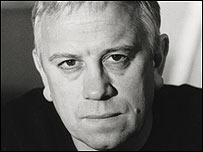 Michael Garner Interview: Michael GarnerKaty Lewis You may recognise Michael Garner from London's Burning, but since hanging up his helmet, he has taken on a range of stage and TV roles, and this month can be see at the Watford Palace! A Small Family BusinessWatford Palace Theatre 21 Sept - 13 Oct 2007 For ten years Michael Garner played the firefighter everybody loved to hate in the role of Geoff "Poison" Pearce in London's Burning. Since hanging up his helmet and hose, he has taken on a range of stage and TV roles and this month can be see at the Watford Palace in Alan Ayckbourn's 'A Small Family Business'. He told us more about the play and also a bit more about his time in the top TV show. What's the basic premise of this play?Michael: My character Jack [McCracken] takes over the family business when his father-in-law retires. Jack is a very upright honest man and a likeable man of high principle, but the family business does not turn out to be what it appears on the surface. And that's the initial thrust of the play as Jack unearths all these skeletons in lots of different cupboards. It's also very ingenious and Alan Ayckbourn is quite famous for his ingenuity. The set is a house on two storeys with stairs and all the rest but it is simultaneously the houses of all the different family members at the same time. That might sound confusing but it isn't when you see it. It's very pleasing - you can have a scene in the kitchen and a scene in the bedroom but they are actually two different houses although physically before you they are the same one on the stage. It's a big set and a big play with about a dozen in the cast. Ayckbourn often writes chamber pieces for four or five characters in a sitting room so the scale of this is much bigger. I think that one of the reasons for that is unusually, this play was commissioned by the National Theatre and he wrote it for the Olivier at the National which is a very large space. It's sort of Ayckbourn's state-of-the-nation play but it's primarily a comedy with dark undertones. What's your character like?Michael: I am the central good man who takes over the tiller of this company and it all starts to unravel in front of him. I don't want to say too much but, as they say, "much hilarity ensues". As you say, it's kind of a state-of-the-nation play which balances family values against materialism. How does that come out in the play?Michael: Without making it sound too heavy and worthy, it's about small moral compromises. Is taking pens and paper from the office home stealing? And if it's not, what do you have to bring home from the office for it to be stealing? And how little compromises on your principles can lead to, in this play particularly, in a sort of domino effect, quite catastrophic and serious conclusions. This was last seen in the south east in 1987 when it premiered at the National. That was 20 years ago and at the height of Thatcherism. It was relevant then and I'm assuming, if it's about consumer greed, it's still relevant today, if not more so?Michael: Yes - I don't think we'd be doing it if we didn't feel it was relevant. In fact, although it was written in 1987, this production is set in 2007 in Watford. The play is not specific but it's clearly somewhere very like Watford. I think when you see it, it comes up fresh and shiny and very contemporary. It's not a Thatcherist play, it's more about family. How much do you protect your family and at what point do you go to the police about your own family? And highly relevant to today. But it's not a lecture, because it's Ayckbourn he lets you know things but without shoving them down your throat?Michael: Yes - I mean it's almost a farce and certainly in places it IS a farce. We have Italians hiding in wardrobes, and so on and so forth, and it's done in a very accessible manner. But it's not a bit of fluff, it's funnier for that. Because there's some ballast in it, because it's actually talking about things that you can actually recognise, it makes it funnier. If it's just silly comedy, you've forgotten it by the time you get home. So people will leave the theatre thinking?Michael: Yes - I think so! But hopefully entertained! So who will enjoy this?Michael: There's nothing too shocking in it for anyone. Ayckbourn is quite wholesome. There is a leather clad thigh-booted woman at one point with a whip but it's quite accessible for anybody really! Anyone who fancies a good night out. Anyone who's in a family which is just about anybody - would enjoy it I think! Can I ask you about London's Burning? You have done so much on stage and TV but this did make you recognisable didn't it?Michael: Yes - it was a big show, I did it for ten series over ten years and it was the big Sunday night ITV show. We used to get 16-17 million viewers and those sort of viewing figures don't exist anymore. It was big and I enjoyed it very much. It was a good show for an actor because one day you'd be filming domestic scenes with your wife - or your dog - and the next day you'd be kicking doors down and rescuing a baby out of the smoke. And I got on very well with the other blokes in it, it was sort of like being in a football team on tour all the time, it was great! It was physically quite hard but I enjoyed it. Presumably you had to do all the training?Michael: Yes - I wouldn't claim we were firemen but, partly for insurance, we had to know how to use all the equipment properly. We used to get a couple of weeks every year before the series started at the fire school down in Southwark being trained up and ridiculed by real firemen. But the health and safety business got tighter and tighter and made us make compromises towards the end, but for the first half a dozen years we did some very exhilarating things! And your character was wonderful, wasn't he?Michael: Yes - he was sort of the fly in the ointment. I think most people have at least one person in the office who they wouldn't really want to go for a curry with after work even though they are quite good at their job and that was where he was I think. He was slightly dysfunctional and dramatically it's useful to have a character who is not one of the lads and will say the procedurally correct thing and so on. That [character] was fun to play and grew quite a lot. He wasn't really like that when I started but you mutually grow characters with the writers and producers when you do them for so long, so that was an interesting process to go through. You've done a lot of theatre, but was it quite a shock coming back and doing stage work from that?Michael: It was very nice to be playing a role without wearing a yellow helmet! The first theatre I did afterwards was a big national tour of Art and it was quite a shock when they put the tannoy on in the dressing room on the first night and you heard the audience. My insides hit the floor but it's like riding a bike - touch wood! And there is actually no substitute for hearing 600 people laugh. I enjoy television very much but the immediacy of theatre is very thrilling for an actor. And there was a lot of words to learn in something like Art?Michael: yes. In TV you film all day and learn [words for] the next day that evening so you develop a facility for learning stuff very quickly, but you learn it so you've forgotten it 24 hours later. Whereas in the theatre, ideally you know it for more than 24 hours! They [TV and theatre] are very, very different creatures really, but both have their own pleasures. So, there isn't any chance of a London's Burning comeback is there?Michael: It had done 16 years and most things in TV don't make a second series. So, it was very successful and very long running but in TV nothing lasts forever, but I think probably more than anything it was expensive and in my opinion, television's sort of recessional at the moment. Viewing figures have been distributed through loads and loads of different channels and that reflects on the advertising income and so on and also health and safety got tighter and the preparation to do relatively straightforward fires would be immense. But that's what people wanted from the show, the fires were like the guest stars each week, people wanted some sort of spectacle, but I guess it just sort of grew old and died and I don't think you'll ever see it again! last updated: 12/09/07 Have Your SayYou are in: Beds Herts and Bucks > Entertainment > Theatre and Art > Theatre and Dance Previews > Interview: Michael Garner  Rhythms of the World! |
| | About the BBC | Help | Terms of Use | Privacy & Cookies Policy |