 | 29 October 2014 |

| |
| BBC Homepage | | |
| |||
| Contact Us | | |
Local HistoryYou are in: Stoke & Staffordshire > History > Local History > Boats, trains and automobiles 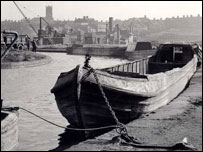 Boats, trains and automobilesBefore the development of the A500, the Potteries relied on the canal network to transport its wares, but could Stoke have become a major railway city? The opening of the A500 in 1977 wasn't the first time the Etruria Valley had been used as a vital transport link for getting goods off the back roads and out of the Potteries. In the late 1700s this area had become one of the great industrial centres of the UK, if not the world, but there was a huge problem for the pottery owners: how to get huge numbers of highly breakable pots out of the area in one piece. Local historian, Fred Hughes, explains the importance of Wedgwood's canal and why the Potteries botched the coming of the railways... Help playing audio/video The importance of Wedgwood's canalThis was in a time before paved roads and before railways had been invented, and the only way to transport pottery was on the back of pack horses, along rutted tracks. 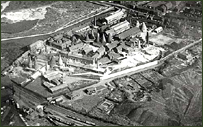 Wedgwood at Etruria (C) Stoke Museums Josiah Wedgwood wanted to protect his profits - so he employed engineer James Brindley to come up with a solution - and they built the Trent Mersey Canal, which was an overnight success - saving tens of thousands of pounds in breakages. The Trent Mersey Canal was built along the course of the Etruria Valley, and 200 years later, the A500 - or D-Road, was proposed - with a route following Wedgwood's canal. The original plans that were drawn up for the A500 had a similar vision to Wedgwood - they wanted to bypass the congested town centres of the Potteries and allow free movement of goods in and out of the area. They hoped that the new road would stimulate trade and help the fortunes of the city, but the road didn't work out as they intended. Why the Potteries botched the coming of the railways...Following the success of the canal - the first major trunk route connecting the Midlands and the North West - Stoke-on-Trent could have become a major rail centre, but the pottery owners didn't want to risk losing their workers to a new industry. So they made sure that the main line from the North West to London avoided Stoke-on-Trent and it took a route through Crewe and Stafford. 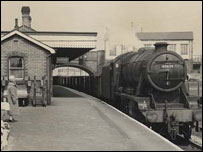 Etruria Station (C) Stoke Museums This led to Stoke relying on one industry and losing investment that the railway might have brought. Crewe became a major railway centre and it took 40 years for Stoke to catch up with the railways. The main line railway that was eventually built also followed the route of the canal through the Etruria Valley, and today the railway, the A500, and the canal all share a similar route along this valley - which is where the old pack horse routes took goods out of Burslem, and there was even an Iron Age cartway. But while the canal had been a success, the railway didn't bring the same good fortune to the area, and a hundred years later - the lessons of the botched railway building hadn't been learned when it came to building the A500. last updated: 11/03/2008 at 15:29 SEE ALSOYou are in: Stoke & Staffordshire > History > Local History > Boats, trains and automobiles
|
| | About the BBC | Help | Terms of Use | Privacy & Cookies Policy |



 Listen to the
  Watch the