World Cup hydration breaks - who are the winners and losers?
'It's changing the game' - pundits debate impact of hydration breaks
- Published
It has become a familiar scene at World Cup games.
The referee blows his whistle to stop the game 22 minutes into each half to allow players to rehydrate.
The mandatory three-minute drinks break at all 104 games has been introduced to help players tackle stifling heat and humidity levels in Mexico, Canada and the United States.
But not everyone is impressed.
Some have described the breaks as commercial interruptions to appease US broadcasters.
Hydration breaks even take place at grounds with retractable roofs with interior climate control.
Asked about the stop in play in each half of every match, Mauricio Pochettino, the head coach of co-hosts USA, said: "I don't like it. I only like it when the conditions are extreme.
"But when the conditions are good, it is unnecessary."
So, who are the winners and the losers of the World Cup hydration breaks? And how have they affected the opening games?

Many matches at the 2026 World Cup are taking place in extreme heat
'Hydration breaks? I call them momentum breaks'

Carlo Ancelotti delivers instructions to his Brazil players during a hydration break against Morocco
When Brazil's players took on water midway through the first half at the New Jersey New York Stadium on Saturday, they deservedly trailed Morocco 1-0 after a lacklustre start.
Six minutes after play resumed they were level.
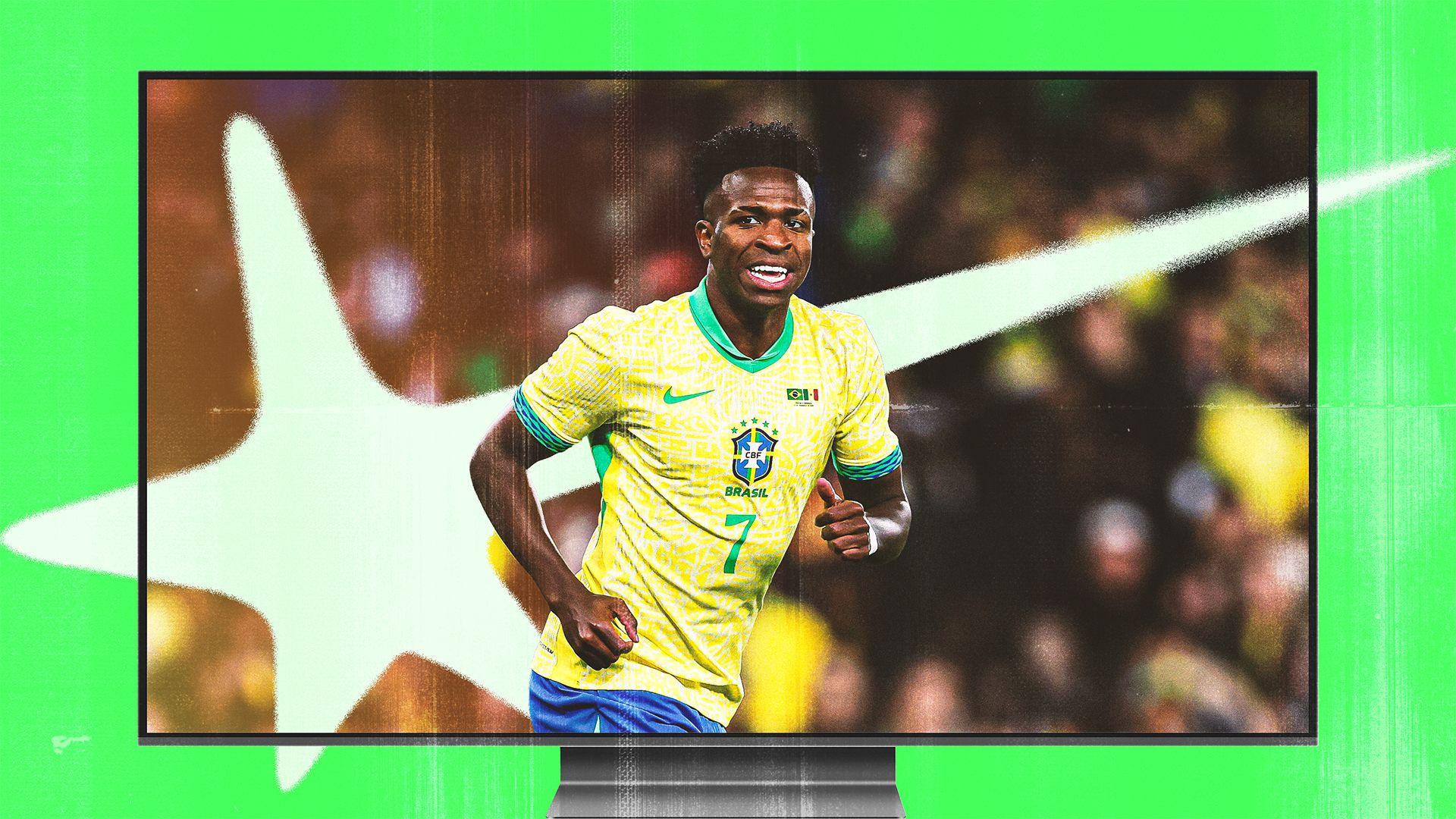
Yes, it was down to a moment of individual brilliance by Vinicius Jr after he cut back inside on to his right foot before lashing a brilliant strike into the roof of the net.
But as Brazil boss Carlo Ancelotti acknowledged afterwards, the hydration break enabled him to deliver fresh instructions to his players and tweak the system.
Having been second best, the five-time world champions suddenly had momentum.
"You can explain a problem to the players," the Italian coach said afterwards when asked what benefits could be achieved in the breaks.
"[You can] make a tactical adjustment that can be very good."
If hydration breaks are to help player welfare, should managers even be allowed to deliver fresh instructions?
United States women's boss Emma Hayes, speaking to ITV Sport, explained that stopping play for a break killed momentum for the team on top.
"It's advantageous for the team losing momentum - that's why I call them momentum breaks," she said.
"When you're on top, you don't want it; when you're losing, you do.
"Sometimes it's not even coaching [during the hydration break]. It's about taking on fluid and calming players. Sometimes it can be doing nothing, but that can be considered coaching as well.
"It's a shame. I can understand it in really warm parts of the country, but it seems like it could be something that could here for good."
Like Brazil, Canada also equalised soon after a hydration break - this time in the second half - when substitute Cyle Larin cancelled out Bosnia-Herzegovina's lead on Friday.
Scotland scored the only goal of the game in a win over Haiti shortly after a break - while Australia grabbed their opener in similar circumstances in a 2-0 win against Turkey.
Juan Mata, a World Cup winner with Spain in 2010, said he would have disliked a three-minute break in each half when he was playing.
"As a player I don't think it's great," he told ITV Sport.
"When you're losing, you want to score, and when you're winning you want to keep the ball. I think they break the momentum."

Morocco head coach Mohamed Ouahbi talks to Neil el Aynaoui during a hydration break against Brazil
'Another way of getting adverts into it'
So who are the losers, besides fans who have forked out high prices for tickets to see free-flowing, entertaining football - only for the game to be stopped in each half?
Well, World Cup debutants Curacao were in dreamland after equalising to make it 1-1 against Germany shortly before a first-half drinks break in Houston on Sunday.
However, the smallest nation ever to play at the World Cup, by size and population, were not the same when play resumed and lost 7-1 after the drinks break allowed the Germans to regroup.
The Czech Republic were on top during the first half against South Korea, but the hydration break abruptly ended that spell of pressure, and when play resumed, they lost momentum.
Despite taking the lead, they ended up losing the game 2-1.
Meanwhile, the Netherlands led Japan 2-1 going into the second-half hydration break in Arlington, Texas, on Sunday. They failed to hold on and drew 2-2.
Hydration breaks are not always the cause of these momentum shifts, of course.
But the further we go into the tournament, the more it should become clear whether the interruptions are becoming a major factor.
Former Arsenal and England forward Ian Wright made it clear where he stood on the breaks.
"I just think it's another way of getting adverts into it from an American point of view," he said.
US broadcaster Fox US overran adverts, external during a hydration break in the opening match of the tournament between Mexico and South Africa.
"They've used the fact that it's for the players, but it's not for me," added Wright.
While the breaks have their detractors, there are others who believe they are a positive introduction.
"I am always interested in the health of my players. I think it's the right measure, a pause, freshen up and continue," said Spain boss Luis de la Fuente before his side's opening game against debutants Cape Verde on Monday (17:00 BST).
That match is taking place in Atlanta where the venue has a retractable roof and is temperature controlled.
"Tomorrow, it's chilled temperatures in the stadium," added De la Fuente on Sunday.
"Throughout the week, we've seen huge temperatures. It's very difficult to be exposed to these temperatures for so long when you're working.
"In my opinion, the best thing to do is to drink lots of water. Take a break, let them breathe for a few seconds.
"It's not going to be that hot [on Monday] but we need to let them breathe and then one or two minutes to give them a couple of directions."
'I have already said enough' on hydration breaks - Van Dijk
Related topics
- Published15 June
- Published14 June
- Published15 June

- Published6 June