| 13 November 2014 |

| |
| BBC Homepage | | |
| |||
| Contact Us | | |
ProfilesYou are in: South Yorkshire > SY People > Profiles > Turning Point 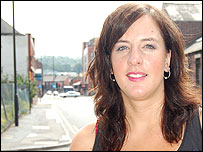 Vicky Ward Turning PointVicky Ward works with the kind of people you may not want to know. Drugs, drink and the chaotic… We’re talking about people who live on the street and in places you might never have known exisited. Turning Point is on Sydney Street in Sheffield, to you and me it looks like the rest of the surrounding buildings, a plain old boring office. Step inside and it’s a haven for those in need. Offering advice and help for the homeless, street drinkers and sex workers are just some of the people Turning Point helps. ‘Do you sell sex to fund your drug use?’ is not often the question we ask in our day-to-day lives but it's a question Turning Point asks regularly… Why would you work on the street with the people who live on it? Vicky Ward tell us why she does what she does… Vicky was born in Southampton in the 70's and lived and grew up on the south coast. At the age of 26 she moved up north, to Sheffield. 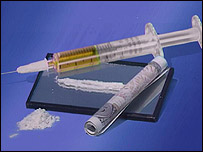 “I went to Portsmouth University and whilst I was there I worked for young people’s charities. When I left uni I went straight into work and co-ordinated mentoring projects. I decided I needed to do some professional training and used that to come up to Sheffield to train. “I decided to retrain at Sheffield University in social work. I thought why not? And fancied an adventure and thought, if I do it, I do it!” During the two year course at Sheffield University Vicky worked across two different charities, one being Turning Point. After she left University a job came up there and she has now worked there for four years. “I work as an outreach drugs worker for homeless people. That means I provide street based support to some of the most vunerable, chaotic, high risk drug users in Sheffield City Centre. All of my work is street based. “It’s about safer injecting, harm reduction and how people can continue to use drugs but more safely for themselves and the community. Turning Point helps those who are going into drug treatment and help them prepare themselves and support them through that.” Doing the doOf all the jobs, why choose working in the rain, sleet and snow when you could have a cosy office job? “The thought of an office doesn’t do anything for me, it’s my idea of hell. Working outdoors and the people I work with are very articulate and creative and I meet some amazing people. I see people survive every day and living with the issues they have, although it’s busy and challenging I learn a lot from them and it’s just very inspiring. I don’t know if I could survive their situations.”
Potential of peopleIs it difficult to see the people who you work with with so much potential wasting away? “Turning Point works with the needs of the individual people. You don’t have to fall under XYZ to receive help. It’s about their needs rather than my professional opinion, it’s working together with people, helping them achieve what they want to achieve rather than imposing. “It’s about gaining trust, building relationships, being a friendly face before even talking about treatment or where they are at. “I approach people, if I see a new face or new people I introduce myself. Because I’ve been doing the job for four years quite a lot of people know who I am so people will come and find me if they need support. “I work with anyone if it means somebody gets support." The challengeEvery day throws something different at you... 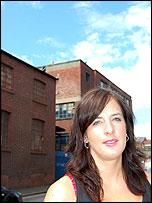 Vicky Ward “I am working with people who have a lot of issues, chaotic drink and drug problems. It’s difficult to know what you are going to be presented with, what their motivations are, how much time they have, have they got to do other things and safety – are people after them? “It’s become normal to sit down on a bench with someone, let them pour their heart out for 20 minutes and then they go off and do their own thing. It’s normal to me to walk down the road and talk to people about their injecting practises and then go your separate ways. “I’ve seen people come from having a drug problem and wonder how they are still alive with the amount of substances they’ve used and the amount of years they’ve done it. They come through – now in housing, have a job, partners and are drug/drink free. “But then you have those who you are maybe just trying to help them change their drug practises, changing from injecting to smoking. It’s not just about the big things but the small steps, they may seam insignificant to anyone else but it is massively reducing the risk.” When working with people on the street, it’s not as easy as giving them a call on their mobile or dropping them an email. How do you stay in touch? “You learn how to find people and you know who to speak to to get the word out and you become very streetwise. I often know where people’ll be, like squats and I always go assisted. Most people have my mobile number if they need to get hold of me too. “I have strong boundaries. Be professional, friendly. I am their friend but I’m not. I let people know where they stand. You have to be strong about confidential issues, what I can say and what I can’t. Clear about where I will and won’t meet people, like public places. It’s all common sense really. “There are drug lines and people know where to get support. It’s not just about looking after clients but also me as well.” Not in my back yardWorking with people who live on the street must be hard, working with attitudes of ‘not in my back yard.’ “Turning Point has been working with the Police, so when they are moving rough sleepers and homeless people in doorways we have been working alongside them and we go on their rounds. We go in and offer them support and help them get into treatment. Moving somebody on doesn’t resolve problems so now we provide options that can help a lot of people. 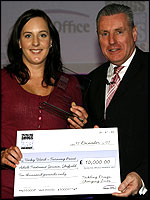 Vicky Ward receiving her award RecognitionIn December 2007 Vicky was awarded by the Home Office: Tackling Drugs Changing Lives National Drug worker of the Year Individual Award 2007. “I was nominated for the Yorkshire and Humber award and I didn’t know I was nominated until I won it. “We went down to London where the Home Office were handing out awards. There were two overall winners (individual and group award) and I won the individual award.” What does it meanAs well as the acknowledgment of her services, what does it mean for Vicky? “It was a real shock but it’s been brilliant, it’s nice to have that level of recognition. It’s been a privilege to work with the people I’ve worked with and to have supported them. They are the ones who have done the hard work. People have to make the choice to change and have that support, it’s as much for them as it is for me. It’s also about the team that I work with too. “As part of the award £10,000 was given to Turning Point in Sheffield and that money has been used for a six month project worker post. “I couldn’t have done it, if I hadn’t have had the team behind me. I work with drugs, housing, homeless day centres, nursing clinics. We all work together but we all have a specific role.” last updated: 03/09/2008 at 14:55 You are in: South Yorkshire > SY People > Profiles > Turning Point |
| | About the BBC | Help | Terms of Use | Privacy & Cookies Policy |