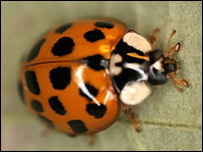
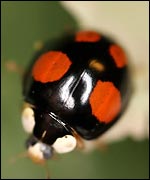
The harlequin is the world's most invasive species of ladybird, and since 2004 it has been spreading across the UK from southeast England, reaching our county in 2006. Dr Helen Roy, co-ordinator of the UK Ladybird Survey, said: "The species was first recorded in Somerset on 29 September 2006, and in total there have been 13 verified records from the county. "It was brought to Europe as a biological control agent to help control pest insects, and it is believed the species spread from mainland Europe to the UK." Spot the differenceThe harlequin has three main colour formations in the UK and is a large species (7mm): - orange/yellow with up to 21 black spots on the wing case (although some can lack all spots), brown legs and an out-turned edge to the wing case
- black with two red spots
- black with four red spots
Harlequins causing havocThe spread of the species could result in severe consequences for Somerset's wildlife and also affect its human residents. "They will directly eat our native ladybirds and out-compete them for food. "The species aggregates in large numbers often in houses during the winter, with reports from outside the county of thousands at a single site!" To help monitor the spread of the species in the county and beyond, the organisers of the UK Ladybird Survey would like anyone who finds a harlequin to fill in the online form and send a photograph to the survey. The website also includes more information on identifying the species. You can also write to Dr Helen Roy at Anglia Ruskin University in Cambridge with your records. Dr Roy added that the species isn't going to go away: "We are expecting records to increase in the county in 2007." |