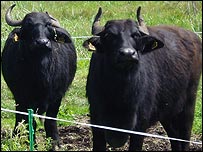
The reserve has borrowed three Romanian water buffaloes from Yeovil farmer Tony Corpe to help keep the site in pristine condition. Staff at the site wanted to use more sustainable and natural methods of maintaining the reserve, which is used by a large number of wetland birds, from herons to water rails, and mammals, such as otters and water voles. BBC Somerset Sound's Andrew Enever visited the nature reserve to talk to Ham Wall warden Sally Mills about the water buffaloes. You can listen to the interview by clicking on this link: Tasty reedbeds The site's important reedbed needs to be maintained in its current condition to remain a significant part of the nationally important wetlands of the Somerset Levels and Moors. 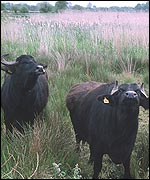 | | The water buffaloes, getting used to the reserve |
Warden Sally Mills said: "It took some time for the buffaloes to get used to their new surroundings, but now they are venturing further afield and have established regular wallowing areas. "They're also finding the invasive willow in the reedbed extremely tasty!" Munching technique Using grazing animals to chew back the vegetation creates a very different, and more varied structure, than mechanised cutting techniques. It also produces open areas, new growth and prevents unwanted species from taking over. The buffaloes' munching technique may also help create new areas, where a wide range of wetland species can both feed and nest, and open up spaces for visitors to view over. Sally added: "Working with local farmers like Tony, and his buffaloes, is an excellent way for us to be able to manage the site and to form partnerships with local businesses. "The reserve can then begin to work hand in hand with local communities and be an asset to them." |