

Meat to Beat?
summery
Are vegetarians weaker than meat eaters?
There are important micronutrients such as iron, creatine and carnosine that can only be found in meat-related products. While differences in creatine and carnosine levels between meat eaters and vegetarians have little effect in normal daily activity, when we are pushing our bodies – such as during sport – these micronutrients might make the difference between coming first or second and are paramount in performance.
Or are they? Are vegetarian athletes at a disadvantage compared to their meat-eating companions? Do they deserve to be considered weaker?
We took eleven female vegetarian amateur martial artists interested in seeing if meat would make a difference to their performance and persuaded six of them to start eating meat again, twice a day, for eight weeks. The other five were asked to eat vegetarian protein sources instead.
"the meat eating group were able to run for 9% longer"
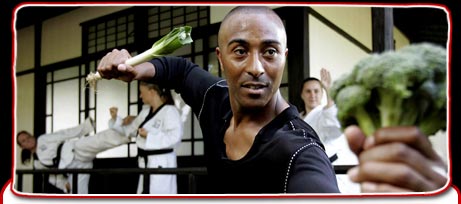
We also asked Colin Jackson to act as a control and become a vegetarian for eight weeks to see how much his sporting prowess depended on his meat intake.
The results? Well, anecdotally, Colin believed that being a vegetarian definitely made him weaker; he thought his muscle tone had reduced and he could manage five less push ups as a veggie than he could as a fully fledged carnivore.
But for the girls? Well, luckily for them, the results were inconclusive.
A larger, population-based study might find statistically significant differences in the strength and endurance levels between vegetarians and meat eaters. Vegetarians can for now ignore the taunts and stay true to their beliefs.
Take a look at the diet we introduced to our volunteers.
Watch the films in our interactive player and take a look at some Takeaway Tips on how to be the best.
Suggested recipes from BBC Food

