

Prayer aids
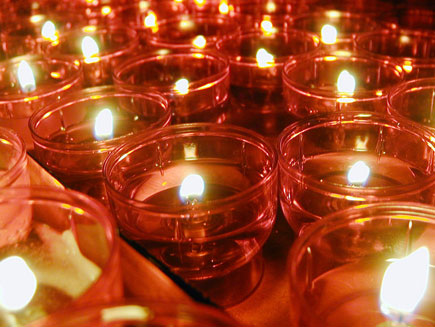
Candles
The use of candles is shared by most religions. They signify light in periods of darkness, and life overcoming death. From Diwali to Hanukkah, societies the world over use candles to represent the way to goodness. Candles remain amongst the most potent symbols of peace in our time.
Photo © unknown
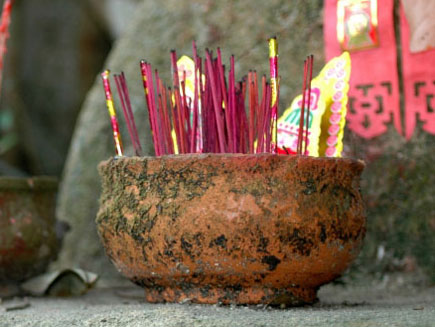
Incense
Incense has long been used to create the right 'mood' for worshipping. The smoke can symbolise prayers rising to the heavens. The sticks, made from natural materials, are believed by pagans to represent all the elements of the earth; air, fire earth and water. Incense is used by many Eastern religions, including Hindus and Shintoists.
Photo © iStockphoto.com/Christine Gonsalves
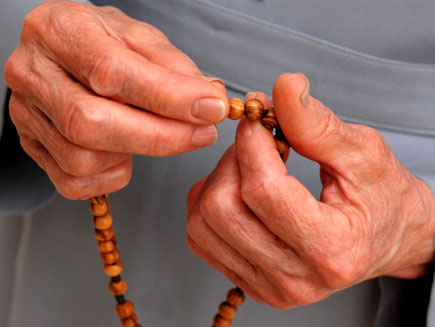
Rosary beads
Prayer beads are used to keep count of prayer repetitions or devotions and they are used in many religions. Catholics, and some Anglicans, use beads to pray the Rosary - a traditional set combination of prayers and meditations. Muslims, Buddhists, and Sikhs all use prayer beads as aids to counting.
Photo © iStockphoto.com/Elena Ray
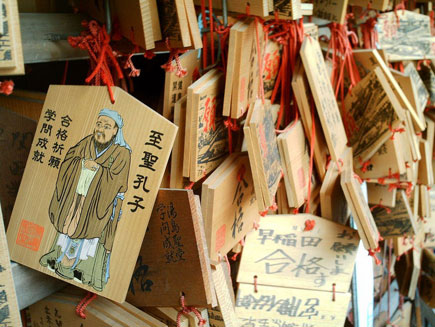
Prayer tablets
Before entering a shrine, Shintoists write a prayer on a wooden tablet engraved with a picture. The prayers are wishes that are sent to Kami, or nature spirits.
Photo courtesy stock.xchng
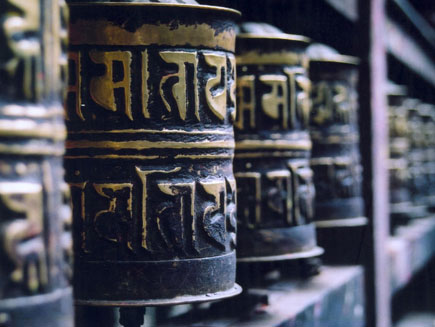
Prayer wheels
Mantras, or prayers, are written around the outside of wheels that are attached to spindles and spun. Buddhists believe that spinning the wheels has the same effect as saying the prayers out loud.
Photo © iStockphoto.com/Christine Gonsalves
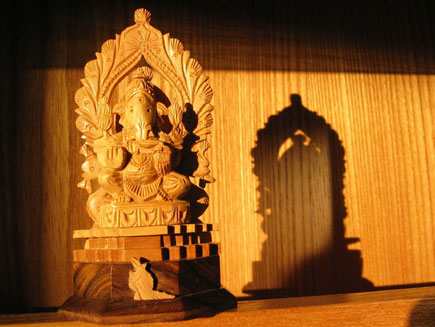
Idols
Idols are often representations of a higher power. Things which the human mind cannot understand are given human qualities and physical representations to allow the mind to concentrate more fully. Idols are important to Hindus, Jains, and Buddhists, and shrines are often created in the home specifically for worship and prayer.
Photo © iStockphoto.com/Jean-Yves Benedeyt
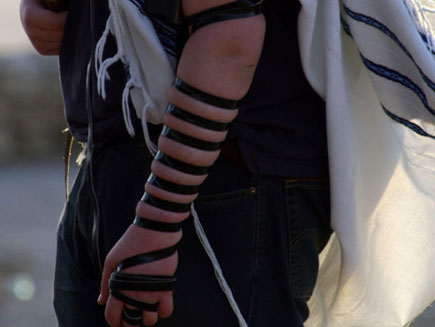
Tefillin
Tefillin are worn every weekday morning by practising Jewish men. The straps around the arm and the head, and the boxes placed close to the chest and head remind Jews of their covenant with God. Inserted in the two boxes are the four sets of biblical verses in which Tefillin are commanded.
Photo © iStockphoto.com/Lily Rosen-Zohar
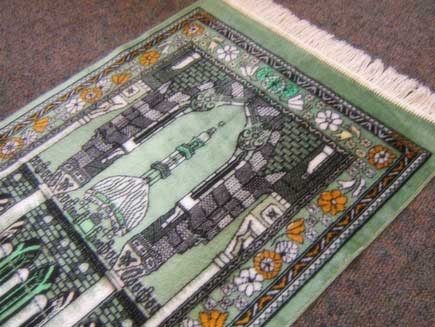
Prayer mat
The entire earth is a Mosque for Muslims, and anywhere that is clean may be used for prayer. However, a rectangular cloth, sometimes decorated with images of important mosques, is often laid down on the floor before prayer, to ensure cleanliness.
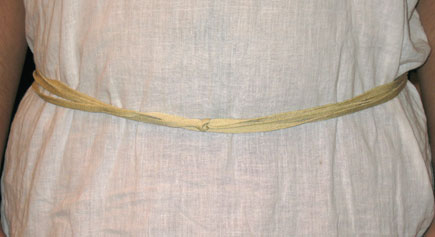
Kusti
The kusti is worn by some Zoroastrians to remind them of the maxim 'good words, good thoughts, good deeds', during prayer.
The kusti is a length of string long enough to be tied loosely three times around the waist and is made from 72 threads of white lamb's wool.
Photo © Paurush Jila, Zoroastrian Trust Funds of Europe
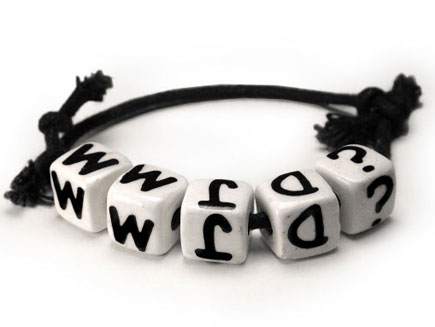
'What Would Jesus Do' bracelet
A modern Christian phenomenon that has grown in popularity especially amongst the youth. Christians wear a bracelet with the letters WWJD, representing the words 'What Would Jesus Do?' This is intended to remind them of the teachings of Christ in their daily lives.
Photo © iStockphoto.com/Hannah Gleghorn Design


