

An ethical Christmas?
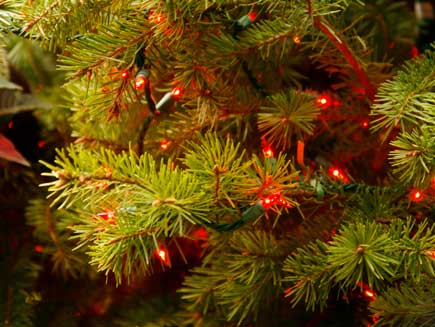
Christmas trees
Britons decorate and throw away over 6 million real Christmas trees during the festive season which produces an extra 9,000 tonnes of waste.
Many local councils provide services to remove and recycle real trees for free. The trees are then ground and turned into woodchips to mulch gardens and parks.
Photo courtesy stock.xchng
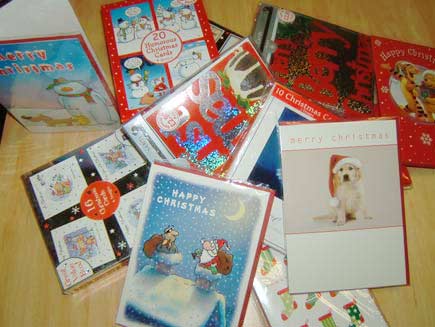
Christmas cards
The Royal Mail delivers as many as 150 million cards per day in the pre Christmas run up and up to 1 billion of those cards end up in the bin. These cards can take up to 30 years to decompose.
If all these cards were recycled rather than thrown away, it would help save the equivalent of around 248,000 trees.

Wrapping paper
Britain uses over 8,000 tonnes of wrapping paper over Christmas, which produces over 83 square km of rubbish - that's enough to cover Guernsey. You can do your bit by using recycled paper and making sure you recycle it again after use.
According to Friends of the Earth an additional 125,000 tonnes of plastic packaging are thrown away over Christmas. Photo © iStockphoto

Alternative gifts
In Britain, we create 3 million tonnes of waste in the festive season alone.
Consider alternative gifts that require little or no packaging such as vouchers. Or gifts that help sustain the environment such as planting a tree or sponsorship of an animal.
Photo © iStockphoto/Judith Bicking

Food waste
Around 16.5 million turkeys are bought every year, which is equivalent to one turkey for every three people in the whole of the UK. Roughly 4,200 tonnes of aluminium foil thrown away each Christmas.
The average family wastes around a third of the food they buy at Christmas. Plan menus carefully and put any vegetable leftovers in the compost bin.
Photo © iStockphoto/Sean Locke
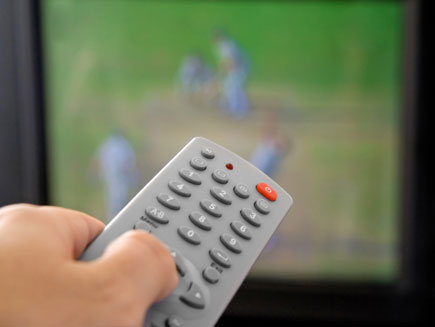
CO2
The average Briton watches thirty hours of television during Christmas week, using 61.5 million KWh of energy and generating over 28,000 tonnes of CO2, which is enough to fill the Royal Albert Hall 155 times!
Photo © iStockphoto/Matej Pribelsky
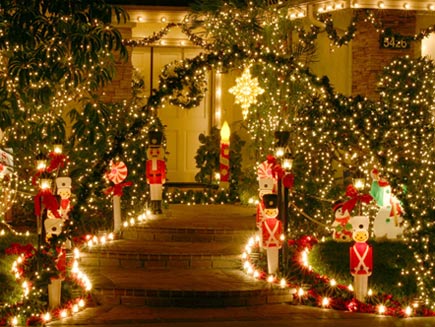
Christmas lights
Indoor fairy lights don't require much energy therefore they don't create much carbon dioxide.
If you're keen to cut your energy consumption you could swap your ordinary light bulbs for energy saving ones. Energy saving light bulbs last roughly 12 times as long and use a fraction of the energy of ordinary bulbs.
Photo courtesy stock.xchng


