

Dead Sea Scrolls
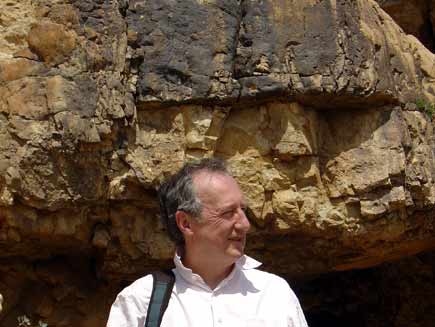
Cave 11
BBC presenter Roger Bolton travelled to Qumran - an ancient village on the northwest shore of the Dead Sea, 13 kilometres east of Jerusalem - to record Dead Sea Scrolls Revisited for BBC Radio 4.
Qumran is where the story of the Dead Sea Scrolls began. It was at this cave that Bedouin shepherds first discovered scrolls in 1947 and the years following.
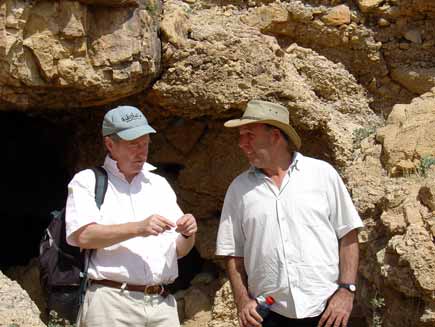
Roger Bolton with Prof Hanan Eshel at Cave 11
Professor Hanan Eshel is a leading archaeologist and is Roger's guide around the caves and excavations at Qumran.
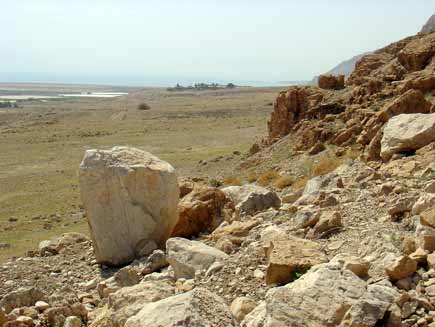
Looking from Cave 11 to Khirbet Qumran, with Dead Sea behind
Some of the caves are a mile or more from the Qumran ruins, causing speculation that the scrolls were hidden by others fleeing Roman forces at the time of the fall of Jerusalem.
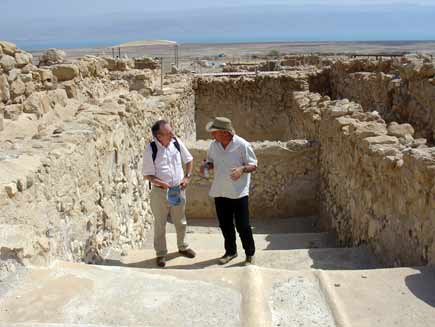
Roger Bolton and Prof Hanan Eshel discuss a Mikvah, a ritual bathing pool
Roger Bolton with Professor Hanan Eshel talking about Qumran's inhabitants, in one of the many ritual bathing pools found there. Or were they, as some claim, cisterns for gathering clay to make pottery?
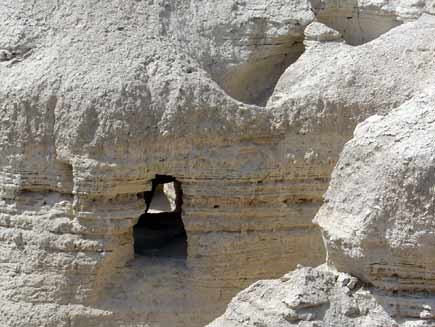
Cave 4, just a stone's throw from the Qumran ruins
Some caves are very close to the Qumran ruins, suggesting they were constructed to house the community's library safe from the fire which more than once destroyed the site.
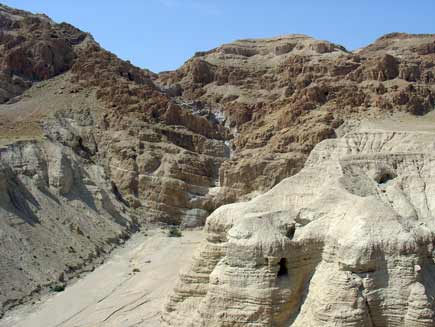
Wadi Qumran, and Cave 4
The Qumran community drew water from the winter floods which rushed down the wadi (a stream that is dry except during rainy seasons) from the mountains above. The community's buildings were constructed on a promontory formed naturally from the clay washed down in the floodwaters.
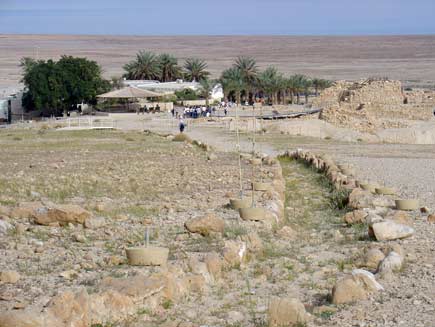
Aqueduct, leading to the cisterns and baths at Qumran
The aqueduct taking water from the wadi to the Qumran community has been excavated. This would have filled the baths and cisterns each winter.
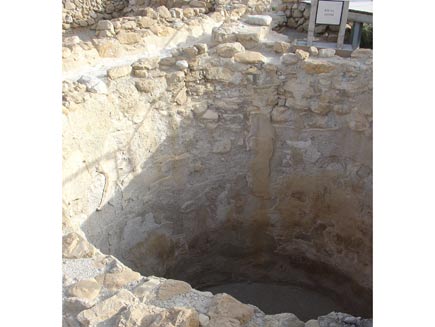
Water cistern at Qumran
A cistern at the Qumran site which would have provided fresh water throughout the year.
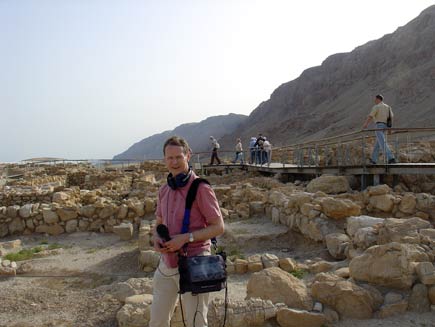
Producer Norman Winter in the Qumran excavations
Programme producer Norman Winter stands among the excavated ruins of Qumran.
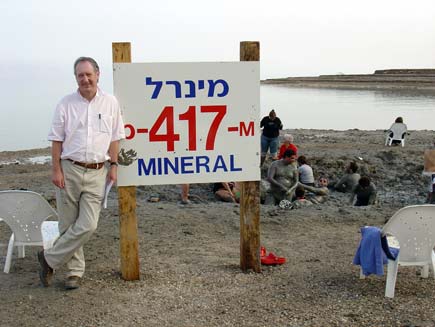
Roger Bolton joins bathers by the Dead Sea
Roger Bolton takes the opportunity to go to the lowest point on earth, and mix with bathers enjoying the delights of Dead Sea mud! Not far from here John the Baptist baptised Jesus in the River Jordan.
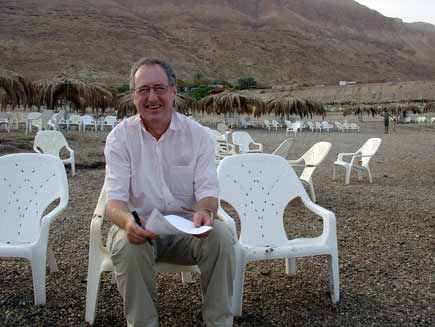
Scripting in progress
Time out for reflection on the beach among the palm trees.
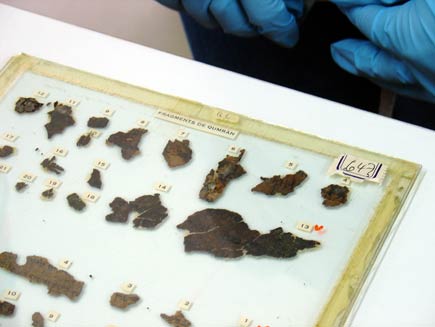
Scroll fragments under glass, as assembled by Fr De Vaux's original team
The first researchers in the 1950s were drawn from a Christian background, and worked in Jerusalem under the leadership of a French Dominican priest, Roland de Vaux. Fragments were preserved between glass plates, but their condition deteriorated as a result.
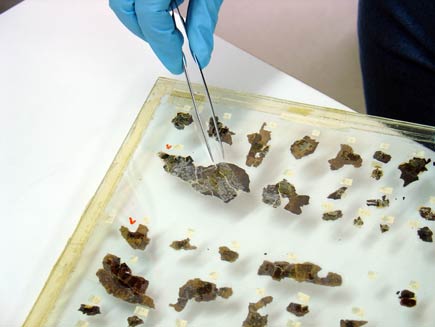
Scroll fragments taped together by earlier researchers
As fragments were pieced together, researchers used the newly invented 'Scotch tape' to stick them in place. Restorers are now painstakingly removing the tape, and keeping the scroll fragments in an artificial climate which mimics the caves where they were found.
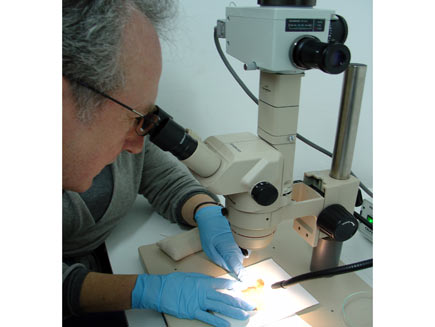
Roger Bolton examines a scroll fragment
Roger comes face to face with history, examining the detailed work being done by today's restorers at the Israel Antiquities Authority.
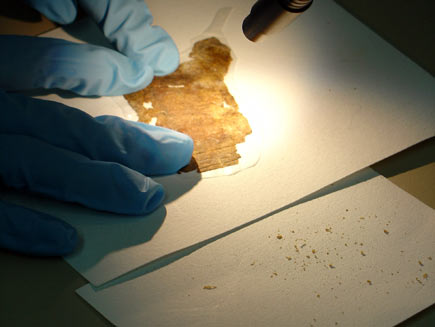
Restoration of scroll fragment at the Israel Antiquities Authority
At the Israel Antiquities Authority the fragments are being restored. All the dust and debris [bottom right] is preserved, as it may hold vital clues.
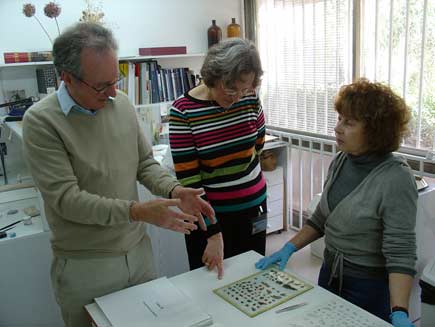
Roger Bolton with Pnina Shor and scroll restorer Elena
Roger Bolton meets Pnina Shor, who heads the restoration team, and Elena, a member of the team.
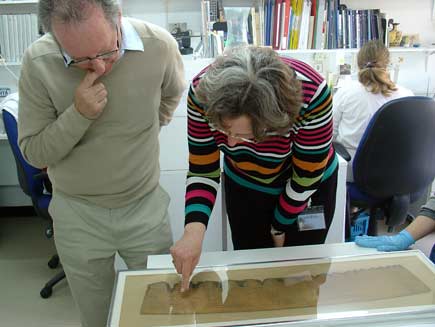
Roger Bolton and Pnina Shor examine a well-preserved scroll
Roger Bolton examines a large section of the Book of Deuteronomy, which includes the earliest copy of the Ten Commandments ever found.
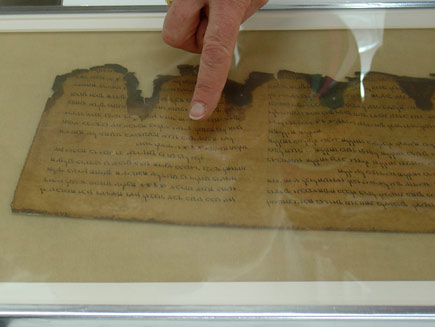
Detail of a scroll of Deuteronomy
The text of the Ten Commandments holds a surprise. It differs from the accepted version in the Bible. Do these and other texts throw doubt on the foundations of the Jewish and the Christian faiths, or reinforce their message?


