The London Bombings
Forensic explosives experts are tasked with examining the crime scenes after the London bombings to establish if the devices had the signature of any known terrorist organisation.
We look at the events of 7 July 2005 when terror came to London.
For the first time in British and western European history, suicide bombers were used to carry out attacks. The four bombers detonated their devices on three Underground tube trains and a double decker bus. It was a day of panic and terror, and the investigation needed to proceed maximum speed to identify the perpetrators and access any further threats to the capital.
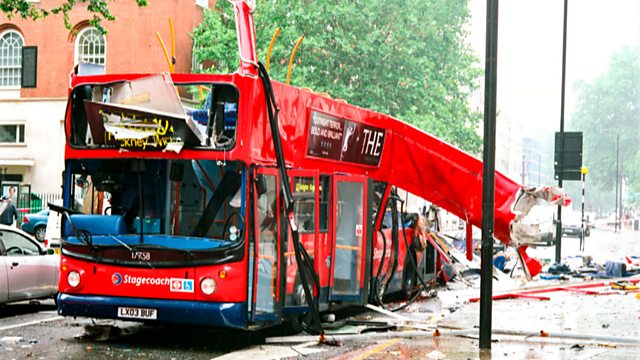
At 8.50am that morning, three explosions were reported on the London Underground. At first, Underground bosses blamed some type of power surge behind the blasts, but just under an hour later, a further explosion on a bus in Tavistock Square, Central London, brought the realisation that London was under attack.
Mass evacuation of the transport system ensued, and hordes of commuters were faced with uncertainty and fear. It became known that 52 people lost their lives in the explosions and almost 800 were injured, flooding the London's hospitals and stretching emergency services to their limit.
With no idea of who carried out these attacks or if there was a threat of more explosions, detectives and forensics teams began examining the crime scenes, at haste but with diligence, to piece the circumstances behind the bombings together.
Expert witnesses, forensic scene of crime officer Kim Simpson and forensic explosives officer Sarah Lancaster were tasked with examining the crime scenes and analysing any explosive materials found there to establish if the devices had the signature of any known terrorist organisation. This would link the attacks to their source and would give investigators a view on potential further threats.
Their swift and detailed analysis quickly uncovered how these devices were detonated and pointed directly to suicide bombers.
As the days went by after the attacks, investigators were able to focus on personal items found at the bomb scenes and link them to three individuals – Mohammad Siddique Khan, Shehzaad Tanweer and Habib Hussein – whose families had reported as missing. Police also discovered the trio had travelled from Leeds to London that morning, and their investigation switched to the Beeston area of Leeds and to properties known to be associated with the three men. One such property was 18 Alexandra Grove, and inside, it had all the hallmarks of a bomb factory.
It was up to the expert witnesses to analyse the property’s contents to discover how sophisticated these devices were and to link them to the device debris found at the scene.
After analysing the constituents and components found, the expert witnesses were able to conclude that the devices were homemade, improvised bombs using organic components like black pepper and hydrogen peroxide. This did not fit the modus operandi of any known terrorist group. The bomb makers had also used a high explosive called HTMD to create the charge and impact of each device – this substance was found at the bomb factory and the crime scenes in London. And giant blocks of ice in the property in Leeds were determined to have been used by the bombers to keep the volatile devices cool on their journey before they were detonated. Kim Simpson and Sarah Lancaster made a direct link to shards of plastic found in the aftermath of the bus bombing.
Detectives further identified a fourth bomber through CCTV and the four were proven to be an isolated terrorist cell, likely radicalised by online hate preachers.
As London returned to normality, just two weeks later, a copycat attack was attempted by four would-be suicide bombers. Their devices failed to detonate, and they fled each targeted location, leaving their backpacks and devices behind.
Expert witnesses Kim Simpson and Sarah Lancaster, having analysed the 7/7 devices, immediately recognised the crude, improvised nature of these latest devices and could quickly determine why they hadn’t exploded.
The four men were located, charged and convicted. They remain in prison.
This episode includes emotive interviews with a survivor of 7/7, Thelma Sober, who suffered life-changing injuries in the Aldgate Underground explosion, and with Graham Foulkes, who faced an agonising wait before finding out his beloved son David had been killed in the Edgware Road bombing.
Ronke Phillips, senior news reporter for ITV, also provides incredible insight from her time as lead reporter on the day terror came to London.
Last on

More episodes
Credits
| Role | Contributor |
|---|---|
| Presenter | Ashley John-Baptiste |
| Composer | Philip Guyler |
| Production Manager | Andrea McClelland |
| Executive Producer | Emma Barker |
| Executive Producer | Edward Hart |
| Series Producer | Lucy Wedlock |
| Producer | Catriona Wright |
| Production Company | Rare TV |
Broadcast
- Mon 13 Jul 202610:45
