
The Second Great Quintet
Kate Molleson and American jazz critic Nate Chinen discuss the Miles Davis sound of the 1960s.
This week, Kate Molleson explores the life and work of a cultural icon: trumpeter, composer and bandleader Miles Davis, who was born 100 years ago this week and remains one of the most innovative and influential figures in 20th-century music. Kate is joined throughout the week by the leading American jazz critic Nate Chinen. Together, they'll survey his vast recorded output, which spans five decades, prioritising his own compositions but also appreciating the art of improvisation as spontaneous composition.
Miles Davis was born in Illinois 26 May 1926 and grew up in East St. Louis. He enrolled at the Juilliard School of Music in New York City in 1944 but was quickly drawn to the bebop scene of 52nd Street, playing alongside Charlie Parker, with whom he made some of his first key recordings. From that point on, he was at the heart of almost every new development in jazz, from hard bop to post-bop, third stream, fusion and beyond, hand-picking key collaborators for his ever-changing sound, including composer-arranger Gil Evans, saxophonists John Coltrane and Wayne Shorter, keyboardists Herbie Hancock and Joe Zawinul and, in his later years, the bassist and producer Marcus Miller. He made it his mission to be at the vanguard culturally and musically, rejecting convention and tradition in favour of pursuing innovation and the new thing.
Today, Kate Molleson and Nate Chinen focus on one of the most celebrated units in the history of jazz, made up of key players of the time who were all to become future stars in their own right - teenage drum prodigy Tony Williams, pianist Herbie Hancock, bassist Ron Carter and saxophonist Wayne Shorter, whose own exploratory improvisations and original compositions were to be a defining element in the Miles Davis sound of the 1960s. We hear about the changing landscape for jazz during this decade with the advent of free jazz and the first seeds of fusion on the horizon.
To listen on most smart speakers, just say “Ask BBC Sounds to play Composer of the Week.”
Music featured:
Summertime (from Porgy & Bess)
Autumn Leaves (from Live at Antibes)
Seven Steps to Heaven (from Seven Steps to Heaven)
ESP (from ESP)
Circle (from Miles Smiles)
Dolores (from Miles Smiles)
Agitation (from Live at the Plugged Nickel)
Mademoiselle Mabry (from Filles de Kilimanjaro)
Produced by Felix Carey for BBC Audio Wales and West
Last on

More episodes
Music Played
![]()
George Gershwin
Summertime
Performer: Miles Davis. Music Arranger: Gil Evans. Orchestra: Miles Davis and His Orchestra. Conductor: Gil Evans.- COLUMBIA.
![]()
Joseph Kosma
Autumn Leaves
Performer: Miles Davis. Performer: Herbie Hancock. Performer: Ron Carter. Performer: Tony Williams.- COLUMBIA.
![]()
Victor Feldman
Seven Steps to Heaven
Performer: Miles Davis. Performer: Herbie Hancock. Performer: Ron Carter. Performer: Tony Williams. Music Arranger: Miles Davis.- COLUMBIA.
![]()
Miles Davis
E.S.P.
- COLUMBIA.
![]()
Miles Davis
Circle
Performer: Miles Davis. Performer: Herbie Hancock. Performer: Ron Carter. Performer: Tony Williams.- COLUMBIA.
![]()
Wayne Shorter
Dolores
Performer: Miles Davis. Performer: Herbie Hancock. Performer: Ron Carter. Performer: Tony Williams.- COLUMBIA.
![]()
Miles Davis
Agitation
Performer: Miles Davis. Performer: Herbie Hancock. Performer: Ron Carter. Performer: Tony Williams.- COLUMBIA.
![]()
Miles Davis
Mademoiselle Mabry
Performer: Miles Davis. Performer: Chick Corea. Performer: Dave Holland. Performer: Tony Williams.- COLUMBIA.

Broadcast
- Wed 27 May 202616:00BBC Radio 3
Featured in...
![]()
Miles Davis
Celebrating Miles Davis' music on the centenary of his birth

Beethoven Unleashed – the box set

The complete set of Radio 3 Beethoven Unleashed podcasts, with Donald Macleod.
What was really wrong with Beethoven?

Georgia Mann and neurosurgeon Henry Marsh examine the composer's numerous health problems
Composers A to Z

Visit the extensive audio archive of Radio 3 programmes about Composers and their works.
Who knew? Five eye-opening stories from Composer of the Week

The production team reflects on 5 of Donald Macleod’s best stories from the last 20 years
Five reasons why we love Parry's Jerusalem

What is the strange power of Jerusalem which makes strong men weep?
A man out of time – why Parry's music and ideas were at odds with his image...
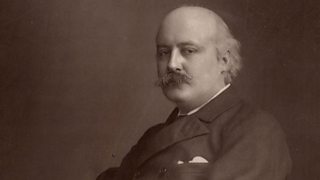
The composer of Jerusalem was very far from the conservative figure his image suggests.
Composer Help Page

Find resources and contacts for composers from within the classical music industry.
