8 things you may not know about Prince

Tuesday 21st April will be Prince Forever day on BBC Radio 6 Music, a day dedicated to the music and career of the legendary Minneapolis musician, marking a decade since his passing.
All day from 7am-7pm we’ll be reflecting his incredible artistic journey and playing his iconic songs, with guests including Elijah Wood, Chaka Khan, Wendy & Lisa, Robyn and more. We’ll also be broadcasting a session he recorded in the BBC Radio Theatre in 1993.
As part of the coverage, 6 Music has a special Artist Collection looking at amazing live moments, iconic Prince tracks, and an in-depth look at Prince’s seminal album Sign O’ The Times.
In these programmes we hear from famous fans, experts and colleagues of Prince, and we’ve gathered some of the best insights from Duane Tudahl (author and senior researcher at the Prince Estate), and Susan Rogers (a sound engineer and producer who worked with Prince from 1983-1987, on albums including Purple Rain, Sign of the Times and more).
Listen live on 21st April to celebrate Prince’s life and legacy, and read on to find out eight things we learned about Prince from 6 Music’s Artist Collection.
![]()
Prince Artist Collection
Celebrating the amazing talent, music and influence of the icon, Prince.
![]()
Sign O' The Times special
Mary Anne Hobbs celebrates Prince’s critically-acclaimed album Sign O’ The Times with insights from Susan Rogers, Duane Tudahl, Lizzo, and more

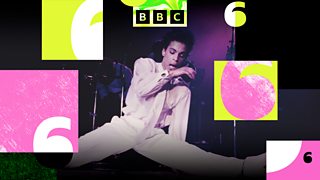

1. Prince was constantly full of ideas for creating new music
Susan Rogers: When Prince was awake, he wanted to have a musical instrument in his hands. And when he had a musical instrument in his hands he wanted to be recording, because his ideas were coming so quickly. So that meant in the years when I was with him we were pretty much joined at the hip. Whether we were at rehearsal, or we were at home, or we were on tour, he needed access to a recording studio because those songs kept coming and coming and coming.
Those songs kept coming and coming and coming.Susan Rogers
[…] Prince expected a lot from everyone who worked with him. He was the engine and the cars and the caboose of a train that was moving really fast. And the main thing we needed to avoid was that train stopping. My main role in the studio was just to keep current flowing through the wires so that ideas could get from his head onto the tape and from the tape back out onto a finished product that could be manufactured and sent out the door.
2. Prince pulled a lot of all-nighters
Susan Rogers: He would play an arena show, come off the stage after last song, he'd get in a car, go back to the hotel, shower, change clothes, and either play an after-party, or he would go into a recording studio and we'd work all night until we had to catch the bus or a plane to the next gig.
Duane Tudahl: Prince was a guy that burned his candle not only at both ends but in the middle. This is a guy who makes you wonder whether or not he understood that his time would be limited because in the 40 years he was recording, the amount of music he has created is stunning. If he wasn't in the studio with a band rehearsing, he was in the studio recording. If he wasn't there, he was on stage. Music was his life.

3. Prince would get involved in every step of the music-making process
Susan Rogers: He would leave me a note at the studio, sitting on the console, that would say, “here are the instruments I want set up”. And I've got one in my closet here at home because he accidentally wrote it in my notebook, not his.
Anything you said to him, any joke you told, any story or nickname was all potential fodder for a song.Duane Tudahl
He wrote in his almost childlike handwriting, “Mic the upstairs piano, mic the drum kit, we need a long reverb like on Purple Rain, and set up this, set up that,” and then down at the bottom of the note, he says, “The faster you work, the faster I can work”. And then he wrote, “Save my blood pressure, please!”
4. Prince was a “sponge to the world” - everything was material
Duane Tudahl: He was somebody that could take an idea from somebody and process it into music. And I think that was the thing about being around Prince, is anything you said to him, any joke you told, any story or nickname was all potential fodder for a song.
If you're going to be recording for all these different things, […] several albums that you're doing for yourself and for other people, you've got a machine you've got to keep feeding. So every idea or everything people would come to him with was potential for a song or a track or an idea or a riff. And that's how you do it. That's how you keep the machine going, is by being a sponge to the world. And I think he was.

5. Some of Prince's ingenuity came from improvising
Susan Rogers: He would make art with just about anything. [Once] our console was missing a power supply, and he was in such a hurry to get this idea out of his head and onto tape that he insisted, "I don’t care if this console’s ready or not, let’s just go!"
He used that bit of fate intervening in order to make art out of it!Susan Rogers
And we recorded ‘The Ballad of Dorothy Parker’. We spent a whole day in the studio, and when it was finally done, I just thought “Oh, how did he not hear that, how did he not hear that there’s no high end on this?” and when he was leaving the room he said to me, “I like this new console… it sounds kind of dull.”
He’d heard it, he just didn’t care! He didn’t care because the song was about a dream and the song sounds kind of underwater and dreamy like it’s got a blanket over it. It just served his artistic goal, he used that bit of fate intervening in order to make art out of it!
6. Prince was not a perfectionist
Duane Tudahl: [If you listen to Sign O’ the Times] with headphones, you hear background things, that you hear mistakes he made that he said, “You know what? I'm going to keep this mistake. It's what's supposed to be.”
Susan Rogers: We rehearsed at that time in warehouses that we could lease. So we would work in these acoustically less-than-ideal environments. But he didn't care. Prince has inaccurately been described as a perfectionist. And I like to correct people when they preface a question by saying he was a perfectionist - not the man I knew. He was less of a perfectionist than he was extraordinarily skilled.

7. Prince didn't always take centre stage
Susan Rogers:Consider for a moment that the man who sang like that could play piano like the best of the pop, rock, soul piano players, and play guitar in such a way that he could take your face off - just stunning you with his virtuosity - and yet chooses not to on every song. You would think that if you could play like that, you'd have a guitar solo on every song - [but] no, no, no, not Prince. He would have these incredible moments of virtuosity, just be a party guest on his songs.
When he had something to say, he said it on record.Susan Rogers
8. Prince was more open in his music than out loud
Susan Rogers: Because he wasn't very talkative, he saved everything for the studio and for a musical form of expression. I believe music was his favourite way of thinking and communicating.
So when he was recording, he was communicating with the people he wanted to know him, and that would be his fans. When he had something to say, he said it on record. So when he had that privacy, when he could do his vocals all alone, it allowed him to talk to the amorphous being that was his fanbase, and tell them about himself.
![]()
Prince Artist Collection
Celebrating the amazing talent, music and influence of the icon, Prince.
![]()
Sign O' The Times special
Mary Anne Hobbs celebrates Prince’s critically-acclaimed album Sign O’ The Times with insights from Susan Rogers, Duane Tudahl, Lizzo, and more
