Thousands of volunteers in Norfolk are contributing to the European Prospective Investigation Of Cancer (EPIC) study, a unique project to look at the relationship between our diet and cancer. The study, which has been running for 13 years, is looking into the eating habits of half a million people across Europe. Ann Offer is one of the volunteers. Every now and again she's asked to keep a diary of everything she eats. "It takes a few minutes every day. From the minute you get up, you put down everything that you eat and drink – even snacks," said Ann. "It just gets a bit more complicated if you're making something like a pie. You've got to put down all of the contents and say how many people will be eating it so they can work out what you will eat," she added. Research in NorfolkThe study needed 25,000 volunteers in Britain and scientists decided to come to Norfolk. "We chose Norfolk because a lot of people move to the county, but not many move out and for a study this long it helps if people stay where they are," said Nicola Dalzell from EPIC. Every few years, Nicola asks her sample group to undergo thorough medical checks and fill out their food diaries. The study is not there to pass judgment on what people eat. 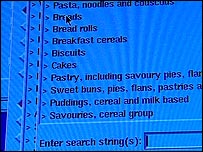 | | Details are added to the EPIC database |
"What we're looking for is trends, we're not trying to find the people who eat well, we're trying to get a cross section of people's eating habits," she said. "So we have some diaries where people are eating fish and chips more than they should, but we also have people who eat their five portions a day of fruit and vegetables," she added. Number crunchingThe information from the diaries is manually entered into a computer by a team at Addenbrooke's Hospital in Cambridge. It's laborious work - there are 200 thousand different food items listed on the database. "I think this is one of the most interesting studies that has ever been done," said Professor Kay-tee Khaw who's helping to interpret the data. As dieticians are now much more certain about what causes certain types of cancer "we've been able to confirm what people used to only suspect," she said. "We have clearly shown that a diet that is high in fibre is protective of bowel cancer, we've also shown that high red meat intake may be a risk factor for bowel cancer - but if you have high fibre intake that may protect you," she added. 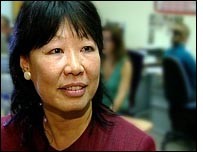 | | Professor Kay-tee Khaw |
During the BA Festival Of Science, Professor Khaw will announced that her team is now trying to find out what role fats may play in cancer. "Some of it may be beneficial, some of it may increase the risk, we want to be much more clear about what fats are good for us and what fats are bad for us," she said. Andrew Briggs from Besthorpe is another of the volunteers taking part in the study and he's happy to think his efforts could help people in the future. "It can seem a little onerous but it does get easier," he said. "If it does me and other people good in the long term, then I think it's a good thing to do and I'm happy to continue." - The EPIC team is currently trying to make contact with all the Norfolk volunteers because the latest round of medical tests is now taking place. Anyone who is part of the project is asked to contact their local coordinator.
| 








 Look East