What are carnivorous plants? New meat-eating plant discovered
- Published

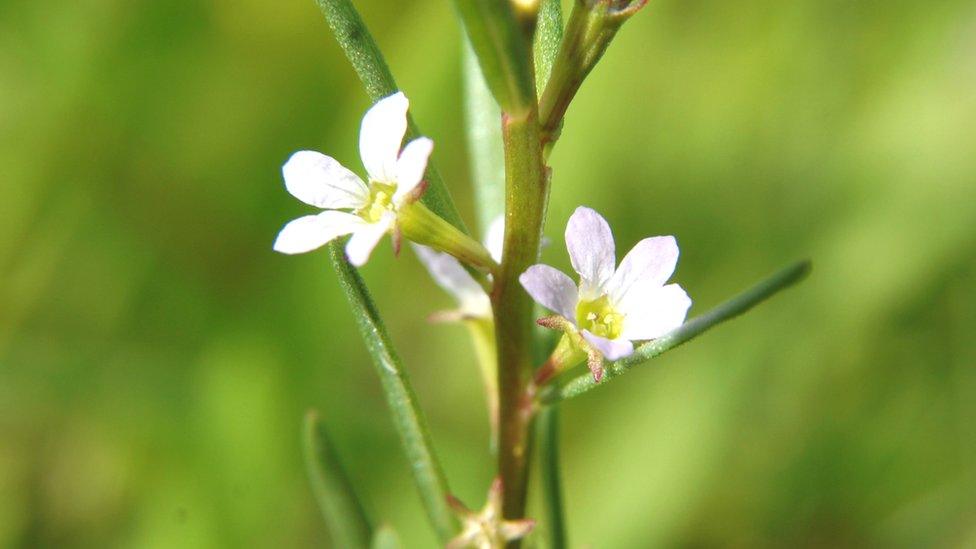
The flower traps prey with the sticky hairs on its stem
Scientists have found a new carnivorous plant in North America.
The white flower might look pretty but botanists discovered that it traps prey with the sticky hairs on its stem.
The plant that traps small insects, is called triantha occidentalis, and is the first carnivorous plant to be identified in 20 years.
Carnivorous plants attract, trap and digest animals for their nutrients
There is around 630 species
Most meat-eating plants eat insects but there are some larger plants that can eat reptiles and small mammals
Venus flytrap is one of the most well known carnivorous plants. Their leaves snap shut when prey lands
The flower traps prey with the sticky hairs on its stem
The meat-eating flower grows in boggy areas on the west coast of North America from California to Alaska.
They are found in major urban cities and the innocent-looking white flower might not be alone in its meaty ways.
It's thought that there may be many more carnivorous plants to be discovered.
Co-author of the study, Dr Sean Graham said: "Carnivorous plants have fascinated people since the Victorian era because they turn the usual order of things on its head: this is a plant eating animals.
"We're thrilled to have identified one growing right here in our own backyard on the west coast."

Triantha occidentalis is the first new carnivorous plant identified by botanists in 20 years
"What's particularly unique about this carnivorous plant is that it traps insects near its insect-pollinated flowers," said lead author Dr. Qianshi Lin.
"On the surface, this seems like a conflict between carnivory and pollination because you don't want to kill the insects that are helping you reproduce," he added.
The researchers found that although the hairs on the stem are sticky, they only trap midges and other small insects.
Which means larger bees and butterflies are not captured and they can pollinate the flowers as they pass from plant to plant unharmed.
- Published10 August 2021

- Published10 August 2021

- Published29 November 2020