 | 24 September 2014 |

| |
| BBC Homepage BBC Northern Ireland | | |
| |||
| » | Newsline Meet The Team In Pictures NI News Online Politics Show Let's Talk Hearts and Minds Good Morning Ulster Talkback Evening Extra Titanic Journey | | |
| Contact Us | | |
BBC NewslineYou are in: BBC Newsline > Official graves and battlefield burials 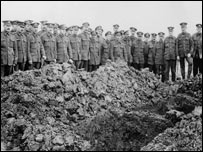 Official graves and battlefield burialsWhile the First World War raged on, soldiers who were killed in battle, like Robert Kelly Pollin, were often buried in mass graves close to where they fell. Though many bereaved families had hoped the remains of their loved ones would be returned after the war, the comradeship which developed among the soldiers themselves led to a communal wish to stay together, even in death. Under the circumstances, it was very unlikely that Robert Kelly Pollin's body was ever coming home, but many families wanted some kind of memorial where they could grieve, as Ranald Leask from the War Graves Commission explains. Help playing audio/video After the First World War, an operation to recover bodies and rebury them in official cemeteries began. However, many war graves has been disturbed by shelling in subsequent battles, making identification even more difficult. The thousands of soldiers who died at Passchendaele, both identified and unknown, were taken to nearby Tyne Cot cemetery, the largest Commonwealth War Graves Commission cemetery in the world. 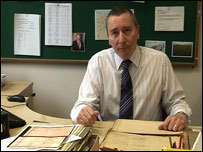 Nic Andrews with original burial records However, the process of recovering and identifying soldiers' remains still continues today. So is there a chance that the body of Robert Kelly Pollin could still be found and identified nearly a century after his death? The Commission's Records and Enquiries Manager, Nic Andrews, weighs up the possibilities. Help playing audio/video last updated: 07/08/2009 at 17:56 You are in: BBC Newsline > Official graves and battlefield burials
Latest Bulletins |
| | About the BBC | Help | Terms of Use | Privacy & Cookies Policy |

