 | 13 November 2014 |

| |
| BBC Homepage BBC Northern Ireland | | |
| |||
| » | Newsline Meet The Team In Pictures NI News Online Politics Show Let's Talk Hearts and Minds Good Morning Ulster Talkback Evening Extra Titanic Journey | | |
| Contact Us | | |
Latest StoriesYou are in: BBC Newsline > Latest Stories > Swine 'flu 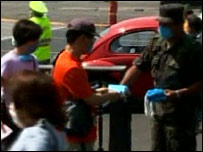 Swine 'fluSwine 'flu is presenting what the World Health Organisation is calling a global public health emergency Closest to us, there are two confirmed cases in Scotland. Fifteen other people in Britain are being tested. About a hundred people in Mexico have died with other cases in several American states, Canada and New Zealand. The first European patient was confirmed in Spain. Swine flu - so called because pigs are hit by regular outbreaks - is a contagious virus. Sufferers feel like they have the common flu and it normally only hits people who have been in contact with infected animals. Scientists, at this stage don't know why it's spreading to people outside the pig industry. So how worried should we be? It spreads in the same way as other 'flus - people cough and sneeze. The virus carries in the air and can land on all manner of surfaces, and in that way people come into contact with it and it can spread from person to person. The typical symptoms are also like other 'flus. They include a high temperature, fatigue, lack of appetite and coughing, often accompanied by a sore throat. You might also see other symptoms like vomiting and diarrhoea. There's no question it's dangerous. Like other 'flu viruses it can change or mutate because of a mix of different animal and human versions of the disease and that makes it difficult to develop vaccines. If that happens and people start to contract it easily it can spread around the globe and affect millions of people. Then it would be classified as a pandemic. The good news is that some antiviral drugs currently available - the best known of them is called Tamiflu - seem to be combating this current swine 'flu strain. Even a few isolated cases of people returning from an affected area wouldn't necessarily lead to an outbreak. What's clear is that the health authorities here - as elsewhere - are monitoring the situation very closely so as to protect the public as best they can. Help playing audio/video If it's called swine flu, is there any risk from eating bacon, pork and ham? And what about the many hundreds of people who either keep pigs or work in the local pork processing industry, are they now at risk? Here's our Consumer correspondent Martin Cassidy. Help playing audio/video last updated: 27/04/2009 at 20:01 SEE ALSOYou are in: BBC Newsline > Latest Stories > Swine 'flu
Latest Bulletins |
| | About the BBC | Help | Terms of Use | Privacy & Cookies Policy |

