Summary

  • The UK's inflation rate rises to 2.9% in the year to July, the Office for National Statistics (ONS) says

  • The rise had been widely expected and is an increase from June's figure of 2.6%

  • The ONS says it was driven by a "sharp increase" in gas prices following a rise in the household energy price cap

  • The Consumer Prices Index (CPI) inflation measure is based on a sample of everyday items and services - the Bank of England has a target of keeping it at 2%

  • A reminder: Inflation measures the increase in prices over time. Higher and lower rates refer to the pace of that increase - if the rate drops, it does not mean prices are falling

  1. 'The cost of living crisis is here to stay,' says founder of crisis support centrepublished at 07:32 BST

    Priya Patel
    Economics correspondent
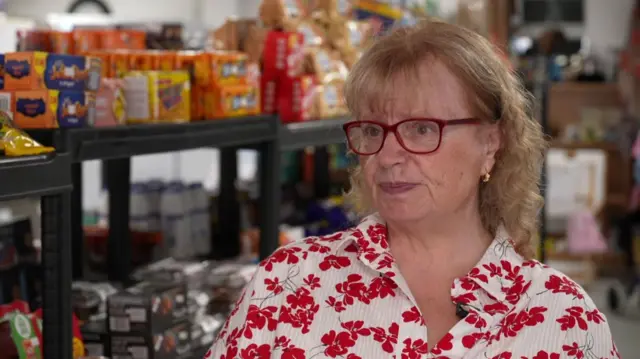
    Penny is pictured in a flowery shirt in a foodbank with supplies behind her

    Penny Keevil founded crisis support centre Second Chance Medway which runs a discounted food pantry two days a week.

    Speaking before today's announcement, Penny says the cost of living crisis is here to stay: "I think it’s going to get worse because of the weather and the pressure that puts on farmers."

    "Energy bills are still far too high and wages and incomes aren’t keeping up. There will always be a need for food banks, community supermarkets and pantries to help families feed themselves affordably," she says.

    Some people attend the food bank on a daily basis, she says.

    "It’s not just people on benefits. It's working people, homeless people, people in part-time work, people on benefits and everybody in between. The need for affordable food now reaches across every part of the community."


  2. Analysis

    Inflation rise more modest than some analysts feared earlier in the yearpublished at 07:28 BST

    Dharshini David
    Deputy economics editor

    Inflation felt the heat from higher gas prices earlier in the year, with the rise in the domestic energy bill price cap of July, pushing inflation up to close to 3% last month.

    That is actually more modest than some analysts had feared earlier in the year - in part because price movements in other items from petrol have been more muted.

    The pass through of higher energy costs hasn't materialised in items such as food; inflation there, at 1.3%, is at its lowest for close to five years.

    Those pressures may yet build in the coming months as they’re passed through supply chains, and economists expect inflation to hit 3.5% later in the year.

    That would still be a fraction of what was seen at the start of the war in Ukraine, and incomes for most - for now - are continuing to outpace prices.

    But if the war in the Middle East drags on, the inflation rate could risk creeping higher.

  3. Iran war continues to have impact, but economy 'resilient', says Healeypublished at 07:25 BST

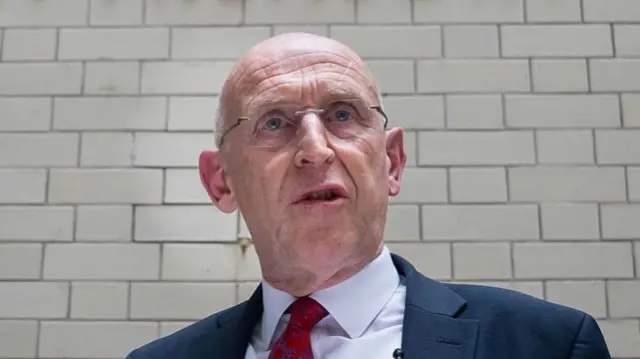
    Britain's newly appointed Chancellor of the Exchequer John Healey gives his first all staff address at HM Treasury in central London on July 21, 2026Image source, Getty Images

    UK Chancellor John Healey says the British economy is "resilient" as he reacts to the rise in the inflation rate.

    "Iran war inflation continues to impact prices here at home, but Britain’s economy is resilient," he says.

    "We have cut VAT on electricity bills and capped bus fares at £2 – to give breathing space to those feeling the strain," Healey adds.

    "There is more to do to restore hope and build a stronger economy where prosperity is shared more fairly across Britain."

  4. Increased rate driven by 'largest rise in gas prices in nearly four years' - ONSpublished at 07:17 BST

    July's rise in the UK's inflation rate was driven by a "sharp increase" in fuel prices, according to Office for National Statistics (ONS) deputy director for prices Mike Hardie.

    In comments shared by the ONS on social media, Hardie says that after the change to the energy price cap, "this was the largest rise in gas prices for almost four years".

    He goes on to say that other upwards pressures on the inflation rate included furniture prices falling by less than usual, as well as reduced discounting meaning a smaller fall for clothing prices.

    "The prices of raw materials and goods leaving factories slowed again, driven by a drop in the prices of crude oil and refined petroleum respectively."

  5. Inflation rate in line with market forecasts - largely due to rise in energy price cappublished at 07:03 BST

    Dearbail Jordan
    Senior business reporter

    Inflation for July is bang in line with financial market forecasts.

    This is mainly because of energy regulator Ofgem's 13% increase in the price cap on household gas and electricity bills which came into force on 1 July.

  6. UK inflation rate rises to 2.9%published at 07:01 BST
    Breaking

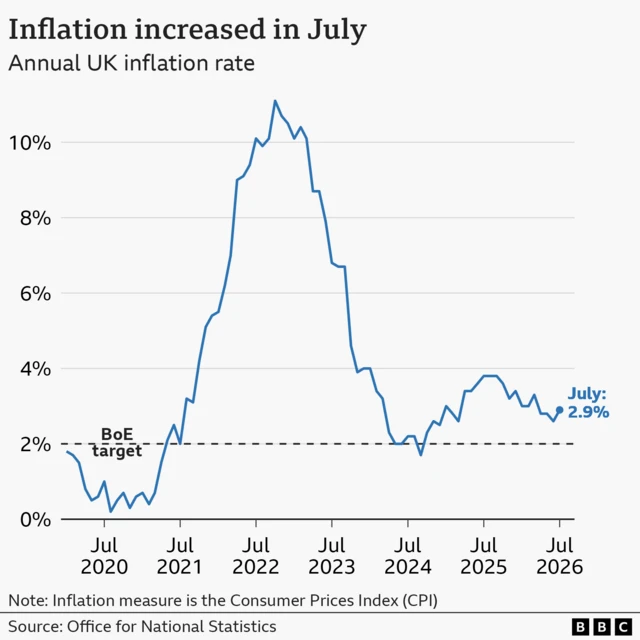
    The UK inflation rate has risen to 2.9% in the 12 months to July, the Office for National Statistics (ONS) has announced.

    This compares to the rate of 2.6% announced last month for the year to June.

    "Line chart of the UK's Consumer Price Index annual inflation rate, from January 2020 onwards In the year to January 2020, inflation was 1.8%. It then fell close to 0% in late-2020 before rising sharply, hitting a high of 11.1% in October 2022. It then fell to a low of 1.7% in September 2024 before rising again. In the year to July 2026, prices rose by 2.9%”
  7. How the latest UK inflation data compares to the G7published at 06:52 BST

    According to latest figures, inflation in the US is at 3.4% in the year to July, slightly lower than the 3.5% for June.

    Meanwhile the inflation rate for countries using the euro is expected to rise to 2.9% in July, up from 2.8% in June, according to EU data, external.

    Here are the latest inflation figures from the G7 in July:

    US - 3.4%

    Canada - 3%

    Italy - 2.9%

    Germany - 2.8%

    France - 2.4%

    As we've been reporting, many economists are expecting the UK inflation rate to rise to 2.9% in July, up from 2.6% in June. Japan's rate is also forecast to rise to 1.8%.

  8. Has the summer VAT cut on family days out impacted inflation?published at 06:48 BST

    Dearbail Jordan
    Senior business and economics reporter

    One area that may have put some downward pressure on inflation in July is the VAT cut on family days out during the school summer holidays.

    In one of her last major announcements as Chancellor, Rachel Reeves reduced VAT from 20% to 5% on things like tickets for theme parks, zoos and museums as well as kids' meals.

    The cut came into force on 25 June and lasts until 1 September so it could have had an impact on inflation for last month and August.

  9. Conflict in the Middle East continues to impact UK economypublished at 06:36 BST

    Last month, the governor of the Bank of England, Andrew Bailey, said a rise in inflation was expected this year due to volatile oil and gas prices caused by conflict in the Middle East.

    UK inflation eased to 2.6% in the year to June, when diesel and petrol prices fell during a brief lull in hostilities between the US and Iran.

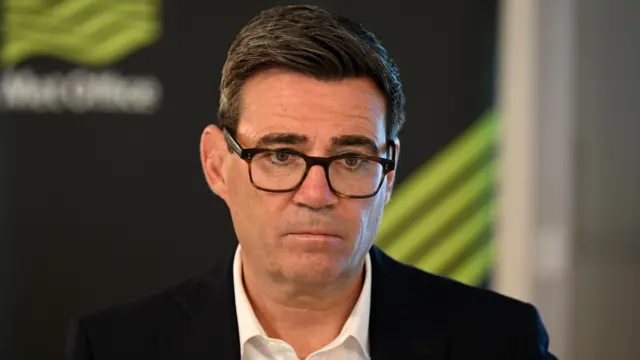
    Andy Burnham, a man wearing glasses.Image source, PA Media

    Meanwhile, internal Treasury modelling - confirmed by Treasury sources - presented to Prime Minister Andy Burnham has warned the UK economy could barely grow next year, if disruption in the Strait of Hormuz continues to the end of 2026.

    Under that modelling, inflation would peak at 4.3% in the first three months of next year under that scenario.

    Official figures show GDP grew by 0.4% in the second quarter, from April to June, but was down from 0.6% growth in the January-March period.

  10. Change in energy price cap expected to push up today's inflation figurepublished at 06:25 BST

    Dearbail Jordan
    Senior business and economics reporter

    A person holds a smart energy meterImage source, EPA-EFE/REX/Shutterstock

    Inflation is widely expected to have ticked up to 2.9% for the 12 months to the end of July, compared to 2.6% in June.

    The main reason for the increase, according to some economists, is the increase in the price cap for household gas and electricity bills which came into force on 1 July.

    Millions of British homes will see a typical annual energy bill rise by £221 to £1,862.

    A big question on days when inflation figures are released is what it means for the Bank of England and interest rates.

    A rise in the inflation rate would mean it has moved further away from the Bank of England’s 2% target. The UK’s central bank uses interest rates to control inflation - higher inflation makes higher interest rates, and so a higher cost of borrowing, more likely.

    Want to know why you should care? Check out my video explaining it all here.

  11. Inflation eased to 2.6% in the year to Junepublished at 06:13 BST

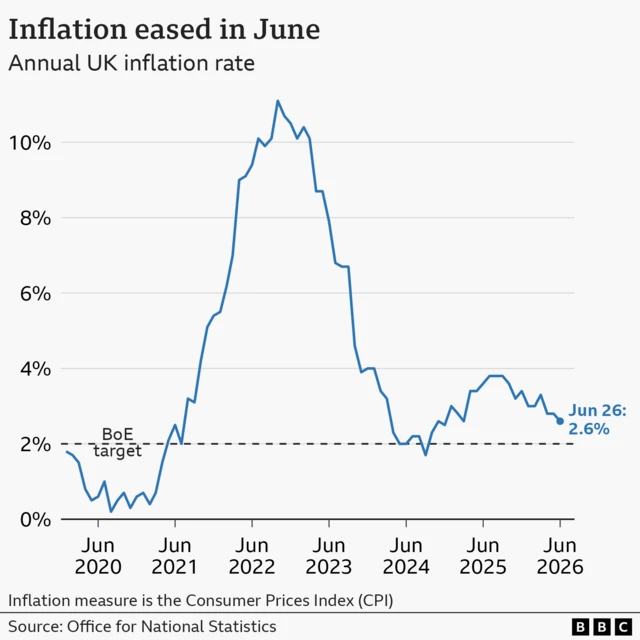
    The most recent figures we have ahead of today’s release show that the UK inflation rate eased to 2.6% in the year to June, down from 2.8% in May.

    This was in part due to an easing in the cost of filling up a car with either petrol or diesel - linked to the US and Iran having agreed to re-open the Strait of Hormuz. But there has since been a resumption in hostilities, and the key shipping route for oil and gas remains restricted.

    An easing in the cost of certain foods also contributed to the lower rate - the ONS found the cost of margarine, pizza and quiches fell, while inflation slowed for items including sugar, chocolate and beef.

    Line chart of the UK's Consumer Price Index annual inflation rate, from January 2020 onwards In the year to January 2020, inflation was 1.8%. It then fell close to 0% in late-2020 before rising sharply, hitting a high of 11.1% in October 2022. It then fell to a low of 1.7% in September 2024 before rising again. In the year to June 2026, prices rose by 2.6%.
  12. What is inflation?published at 06:11 BST

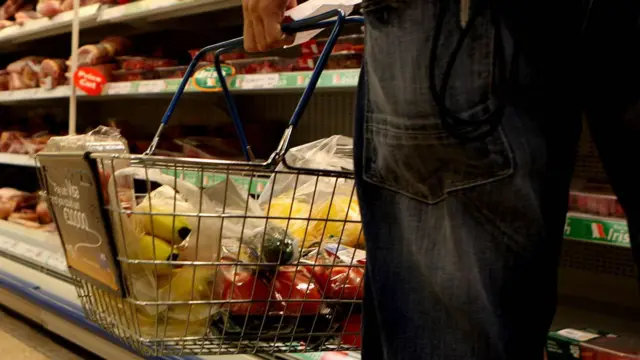
    A man holding a shopping basket in a supermarket.Image source, PA Media

    Inflation is the increase in the price of something over time.

    For example, if a bottle of milk costs £1 but is £1.10 a year later, then annual milk inflation is 10%.

    If it had risen to £1.05 instead, then the inflation rate would be lower, at 5%. That would still have been an increase, but a smaller one. When we say the inflation rate has fallen, that often means prices are still rising, just not as quickly.

    The price of hundreds of everyday items and services, including food and fuel, are tracked by the Office for National Statistics (ONS) to produce the Consumer Prices Index (CPI), with the latest figure published monthly.

    This "basket of goods" - intended as a representative sample of consumer spending - is regularly updated to reflect shopping trends, with alcohol-free beer, dashboard cameras, and pet grooming equipment among items added in 2026, while premium bottled lager, some categories of wine and sheets of wrapping paper were removed.

    Benefits, pensions and interest rate decisions are all affected by inflation. For example, the Bank of England has a CPI target of 2%, and will often raise interest rates if the number gets too high.

    It's worth noting that CPI does not include costs associated with buying, renting or maintaining a home, or the costs faced by manufacturers - those measures of inflation are released separately.

  13. Latest UK inflation figure set to be releasedpublished at 06:08 BST

    A shopping basket with items in it as a person walks in a supermarketImage source, Getty Images

    The latest UK inflation rate figure will be released shortly, showing how quickly the cost of goods rose in the year to July.

    The Consumer Prices Index (CPI), measured by the Office for National Statistics (ONS), was 2.6% in the 12 months to June - we'll get today's update at 07:00 BST.

    Economists expect it will show a rise to about 2.9%.

    The figure is calculated using a sample of hundreds of everyday items like food and fuel, and impacts decisions made by the Bank of England on setting interest rates, which in turn determine the cost and return on borrowing and savings.

    Separately, the ONS will also release the latest data on changes to the prices that producers pay for materials and goods, and on private rents and house prices.

    We'll bring you the latest inflation figure when we get it - we'll also have analysis and explainers on what it all means for you.