Summary

  • The Israeli military has carried out strikes on the southern Lebanese city of Tyre - a day after Iran called for attacks on Lebanon to stop

  • Lebanese media report that at least eight people have been killed by Israeli strikes in the country's south today

  • On Monday, Iran and Israel said they would pause strikes after both sides breached the ceasefire - how we got here

  • Israel says it is targeting Hezbollah in Lebanon, as Iran calls for an end to attacks on the country

  • Iran's new leaders appear less cautious than the old guard - a shift that is reshaping the region, our international editor Jeremy Bowen writes

  1. BBC Verify

    Verified video shows strike on town outside Tyre in southern Lebanonpublished at 15:34 BST

    By Tom King

    We have verified a video of an Israeli strike in Aabbasiyyeh, a town in southern Lebanon north-east of the city of Tyre.

    The video, which was filmed on Tuesday from a hill overlooking the town about 1km (0.6 miles) away from the strike, shows a column of smoke and dust from the impact engulfing buildings and spilling into fields.

    We were able to confirm the video was recorded next to a school by comparing a nearby building and football pitches, as well as the surrounding landscape, to satellite imagery.

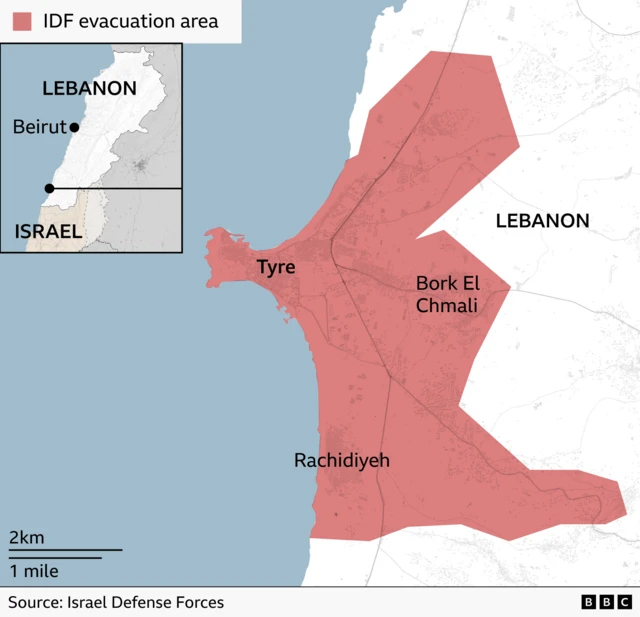
    The impact falls within the area near Tyre covered by an evacuation order posted this morning by the Israeli military.
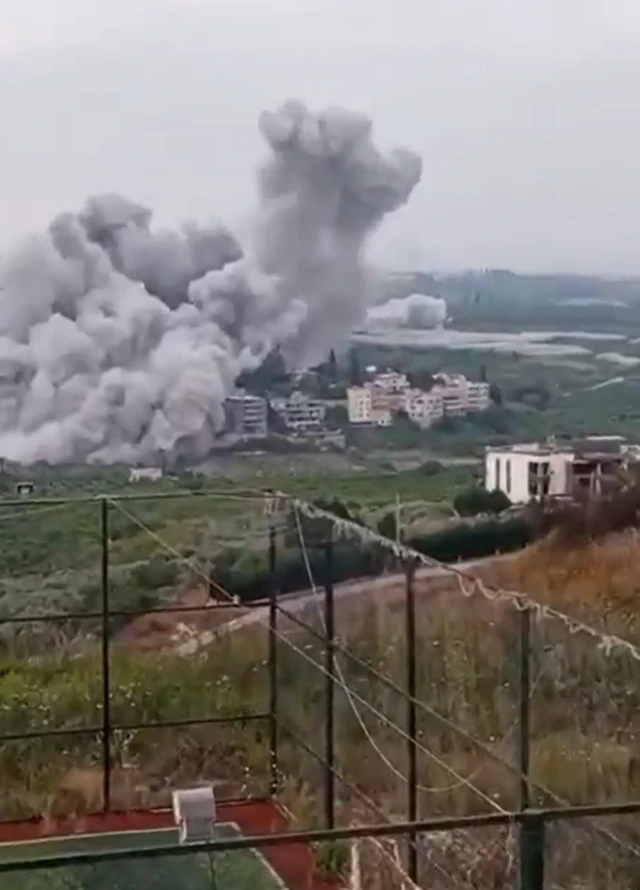
    A large smoke cloud rises in the centre of several buildings, in the foreground a caged football pitch is visibleImage source, X
  2. UN chief 'deeply alarmed' by renewed strikespublished at 15:07 BST

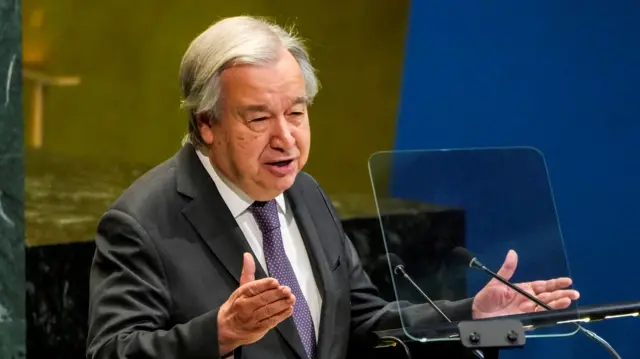
    Antonio Guterres gestures as he speaks to delegates during a meeting at the United Nations headquarters in New YorkImage source, Reuters

    Antonio Guterres says he is "deeply alarmed by the renewed escalation in the Middle East".

    In a post on X, the UN secretary general calls for "all attacks" to stop "immediately", saying that ceasefires in Lebanon, Iran and Gaza "must be fully respected".

    "There is no military solution to the conflicts in the Middle East," he continues. "The only way forward is through dialogue and negotiations."

    He ends the post urging "all concerned to work towards diplomatic solutions that advance regional & international peace & security".

    What is the state of each ceasefire?

  3. Resumption of conflict in no one’s interest, says UK foreign secretarypublished at 14:27 BST

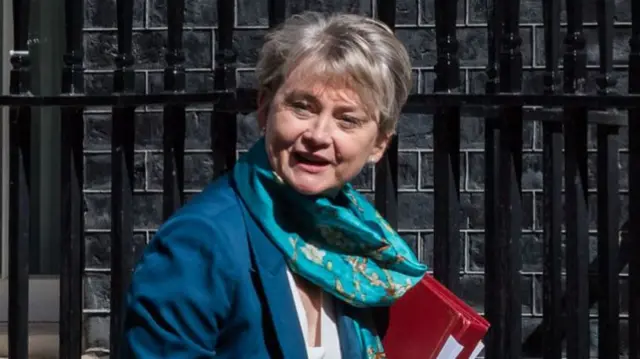
    Yvette Cooper, wearing a blue suit and turquoise scarf, walks along the pavement into Downing Street while carrying a red folder and turning her head towards the cameraImage source, Getty Images
    Image caption,

    Cooper outside Downing Street earlier today

    UK Foreign Secretary Yvette Cooper says the strikes carried out by Israel, Iran and Hezbollah over the last few days mark "one of the most dangerous moments since the fragile ceasefire was agreed".

    "The resumption of conflict is in no one’s interest and I spoke to the Iranian foreign minister on Sunday evening to convey this directly," she tells the House of Commons.

    Cooper welcomes the pause in strikes between Iran and Israel, but condemns the attacks carried out by the IDF in southern Lebanon this morning, describing them as "disproportionate".

    She also "strongly condemned" the attacks carried out by Hezbollah against the Israeli military, urging both parties to uphold the fragile ceasefire brokered by the US.

  4. Trump promised regime change but Iran's confidence has been boostedpublished at 14:00 BST

    Jeremy Bowen
    International editor

    It is worth remembering how this conflict was viewed when it began on 28 February. Both Donald Trump and Benjamin Netanyahu framed the military action in historic terms.

    Netanyahu said he had been waiting his entire political life for the opportunity to confront what he sees as Israel's greatest enemy, and finally had a US president willing to support him.

    Trump appeared to believe a swift victory was possible, telling Iranians that the moment was approaching when they could reclaim their country.

    But none of that has happened. Instead, Iran has emerged with a new leadership. This is not the regime change Trump has claimed.

    However, with many senior figures killed, a new generation has taken their place. They remain deeply ideological but appear less cautious than the old guard.

    Their confidence has been boosted by developments during the conflict, not least the impact of disrupting shipping through the Strait of Hormuz.

    That shift is helping reshape the region. The trajectory now looks difficult, perhaps impossible, to reverse.

    The consequences extend far beyond Iran and Israel, affecting countries across the Gulf. States such as the UAE, whose economies depend on stability, have already seen significant damage from the disruption caused by the conflict.

  5. Funeral for Iran’s late supreme leader could take place in June, reports suggestpublished at 13:40 BST

    Ghoncheh Habibiazad
    Senior reporter, BBC Persian

    Iranian outlets have been publishing more details about the funeral processions for Iran’s late Supreme Leader, Ayatollah Ali Khamenei, quoting organisers.

    Khamenei was killed when Israel and the US attacked Iran on the first day of the war, 28 February. Iran is yet to hold funeral processions and burial for him. His son Mojtaba Khamenei succeeded him in early March.

    The organisers have said that the processions will be held after the 10th day of the first month in the Islamic calendar, which is expected to fall on 25 or 26 June.

    Iranian outlets had previously reported that the funeral processions will be held in Tehran, the holy city of Qom, and then in another holy city located in north-eastern Iran, Mashhad, Khamenei’s birthplace, where he will also be buried.

    Khamenei's burial plans have been repeatedly postponed amid war-related security concerns. The attack on his Tehran compound also reportedly killed several top military commanders.

  6. Israel and Iran pause fighting again: A timeline of the negotiationspublished at 13:18 BST

    28 February - The US and Israel begin military operations against Iran. US President Donald Trump says the bombing will go on "as long as necessary to achieve our objective" in a post on Truth Social.

    14 March - Trump tells NBC News "Iran wants to make a deal" but says he’s not ready to end the war "because the terms aren’t good enough yet".

    23 March - US military halts strikes on Iranian power plants after Trump cites "very good and productive conversations" with Iran. Iranian officials deny any talks had taken place.

    29 March - Trump tells reporters on Air Force One that negotiations with Iran are ongoing and says a deal "could be soon".

    5 April - In an expletive-laden post on Truth Social, Trump threatens to destroy Iran's power plants and bridges if it doesn't open the Strait of Hormuz. He later tells Fox News there is a "good chance" a deal would be reached.

    7 April - The US and Iran agree to a two-week conditional ceasefire.

    12 April - Peace talks are held in Pakistan, but both sides are unable to come to an agreement. JD Vance says Iran will not commit to halting its nuclear programme.

    21 April - The US extends the temporary ceasefire with Iran indefinitely to allow more time to create a "unified proposal" to end the war.

    23 May - Trump says an agreement with Iran has been "largely negotiated" and will include reopening the Strait of Hormuz.

    8 June - Trump tells reporters at JFK Airport in New York that the US and Iran are in the "final throes" of a deal "that will not allow in any way, shape, or form nuclear weapons".

  7. Eight killed in Israeli strike on Tyre - Lebanese mediapublished at 13:06 BST

    Eight people have died following an Israeli air strike on Tyre, Lebanon's state-run National News Agency reports, citing the country's health ministry.

    In a statement, the agency says work is ongoing to clear the rubble while 32 people have sustained injuries.

  8. Talks to continue between Israel and Lebanon, US ambassador sayspublished at 12:54 BST

    Israel and Lebanon are expected to engage in further negotiations in Washington "soon", even as a ceasefire between the two countries struggles to hold, according to the US Ambassador in Beirut Michel Issa.

    The last set of negotiations on 3 June culminated in the renewal of a ceasefire between Israel and Lebanon but as we’ve been reporting, attacks by Israel and Iran-backed Hezbollah have continued to take place.

    Issa met Lebanon's President Joseph Aoun in Beirut on Monday, after which the US ambassador said negotiations would resume despite the latest military escalation, telling Aoun negotiations were on the "right track".

    Issa then told the press: "We have reached a point of no return – the ice is broken – and we will continue to help Lebanon emerge from its crisis."

    Aoun, meanwhile, said in comments published by CNN yesterday that ongoing discussions with Israel centred around establishing a non-aggression pact, followed by a "just and comprehensive peace".

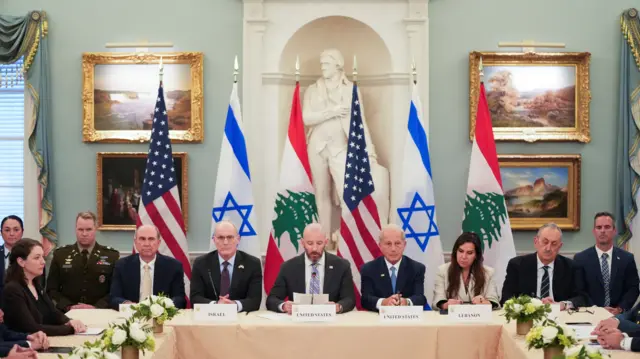
    A group of Lebanese, Israel and US officials sat around a table during a meeting hosted at the State Department in WashingtonImage source, Reuters
    Image caption,

    Israeli and Lebanese officials met in Washington last week to announce a ceasefire between the two countries

  9. Confrontation continues in Middle East after strikes on Lebanon - a recappublished at 12:44 BST

    Charlotte Hadfield
    Live reporter

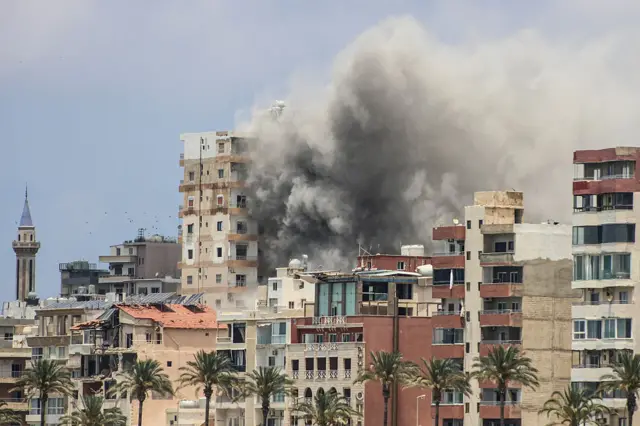
    Smoke rises following an Israeli airstrike in Tyre on June 9, 2026Image source, AFP via Getty Images

    The Israeli military is continuing to strike southern Lebanon, a day after Iran called for the attacks to stop and threatened a "severe response" if they didn't. If you're just joining us, here's what you need to know:

    Strikes hit southern Lebanon: The southern city of Tyre was struck this morning, hours after evacuation warnings were issued by the Israel Defense Forces.

    Lebanese media reported that at least three people were killed in separate Israeli strikes earlier in the day. The Israeli military is yet to comment on Tuesday's strikes.

    Iran and Israel pause fighting: The two countries said they have halted attacks on each other after Donald Trump urged both countries to stop "shooting" immediately on Monday.

    Two Iranian servicemen killed: Iranian outlets report two army air defence servicemen were killed during Monday's attacks by Israel. It comes after Iran and Israel fired at each other for the first time since the April ceasefire.

    US helicopter crash: Elsewhere in the region, the US military is investigating the cause of a crash which saw one of its Apache helicopters go down off the coast of Oman on Monday - two crew members were rescued safely.

    Trump's eager for a deal: Last night, the US president said the US and Iran were in the "final throes" of a deal. We're yet to hear from him today. The Strait of Hormuz is still closed andas the weeks pass the economic consequences are becoming increasingly severe, writes our international editor.

  10. BBC Verify

    Verified footage from Tyre shows smoke and damaged buildings from Israeli strikespublished at 12:24 BST

    By Luke Unger

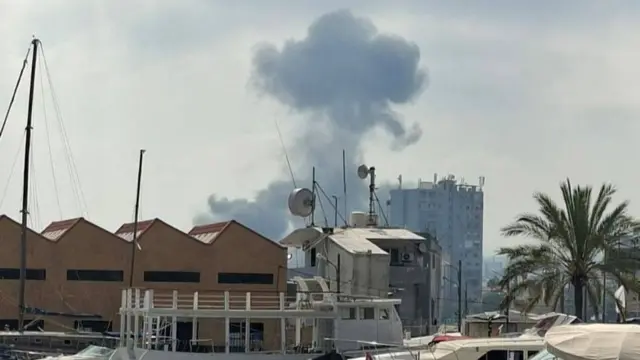
    A large smoke cloud rising, boats can ve seen in the foregroundImage source, X

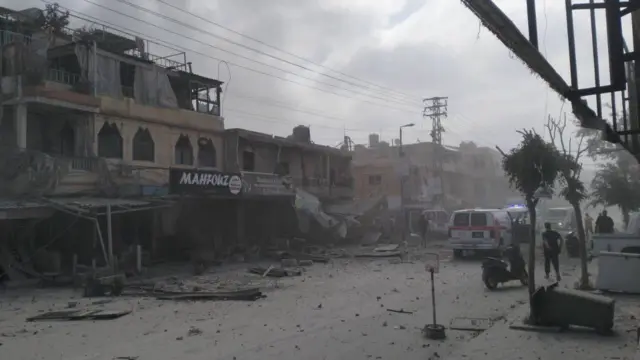
    We’ve just verified two images and a video showing the aftermath of Israeli air strikes this morning in the city of Tyre, southern Lebanon.

    One image, taken from a marina in the old town, shows a large plume of smoke billowing from the city centre.

    A further image and video, recorded at a road junction in the centre of the city, shows the aftermath of these strikes. Several buildings are completely destroyed with rescue workers and ambulances on the scene.

    A building has been destroyed and rubble is strewn on a road, three ambulances can be seen next to itImage source, X

    An Israeli military order earlier this morning called for residents of Tyre to evacuate the city, adding it was responding to Hezbollah's "violation of the ceasefire agreement".

  11. What to know about Tyre, the Lebanese city where strikes continuepublished at 12:12 BST

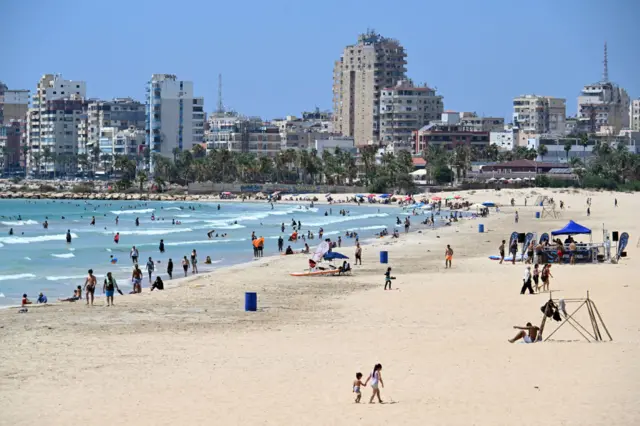
    A view of Tyre, Lebanon, from the beach during July 2024.Image source, Getty Images
    Image caption,

    A view of Tyre from the beach during July 2024

    Tyre is one of Lebanon's largest cities and is the largest south of the Litani River - a key demarcation line throughout the current and past conflicts, and the area hardest hit by Israeli attacks.

    Israel has struck the city again on Tuesday after issuing an evacuation order for residents.

    Located on the Mediterranean coast, Tyre is one of the oldest continuously inhabited cities in the world, and is recognised by Unesco to contain important archealogical sites, many from the Roman era.

    There is little reliable data about its demographics, but Tyre is known to have a large Shia Muslim majority, as well as Sunni and Christian communities.

    Three official Unrwa Palestinian refugee camps are located near the city, as well as other unofficial areas with large Palestinian populations.

    Hezbollah has an established presence in the city and surrounding areas. Southern Lebanon is the heartland of the country's Shia Muslim community, which is Hezbollah's main support base.

    Tyre has at times been a place of refuge as people fled from areas further south during the ongoing conflict. And Tyre has also come under direct aerial attack - with people fleeing for safer areas further north.

    A map of part of southern Lebanon, with an area in red showing the area affected by the IDF evacuation order. It covers Tyre and much of the surronding area
  12. Two Iranian servicemen killed in Israeli attacks - reportspublished at 11:56 BST

    Ghoncheh Habibiazad
    Senior reporter, BBC Persian

    Iranian outlets report two army air defence servicemen were killed during Monday's attacks by Israel.

    The funeral for Bahman Hosseini and Alireza Abiri will be held later today in Tehran.

    According to reports, they were "carrying out their duties" when they were killed.

    This is the first report of army casualties since the attacks yesterday.

    Iranian outlets had reported about strikes on Tehran, among other cities.

  13. US investigating Apache helicopter crash near coast of Omanpublished at 11:39 BST

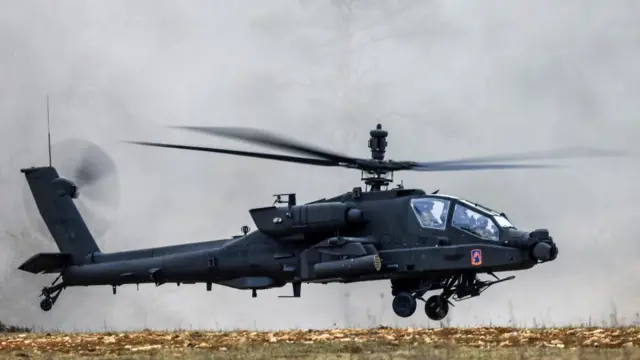
    A US Army Apache helicopter hovering just off the ground in March 2025 in GermanyImage source, EPA
    Image caption,

    A US Army Apache helicopter pictured in March 2025 in Germany

    US Central Command (Centcom) says it has launched an investigation after a US Army Apache helicopter went down off the coast of Oman on Monday.

    In a statement published on X, Centcom says two crew members involved in the crash were "safely rescued within approximately two hours" of the crash and are both in a stable condition.

    It says the helicopter was lost at sea following the incident, which occurred while the crew was on patrol, and that the cause of the crash is under investigation.

    US President Donald Trump told reporters on Monday night those involved in the crash were "fine".

  14. Hezbollah claims it targeted Israeli forces advancing in southern Lebanonpublished at 11:23 BST

    Hezbollah claims it fired rockets at advancing Israeli forces in southern Lebanon on Monday night.

    In an update on Telegram, Hezbollah claims Israeli forces were trying to advance from the town of Bayyada towards Bayt al-Sayyad, but were forced to retreat after "successive rocket barrages".

    Israel has not yet commented on any confrontation, but its military is carrying out ground operations in southern Lebanon in what it says is an attempt to stop Hezbollah attacking northern Israel.

  15. Air strike shown hitting tower block in Tyrepublished at 11:09 BST

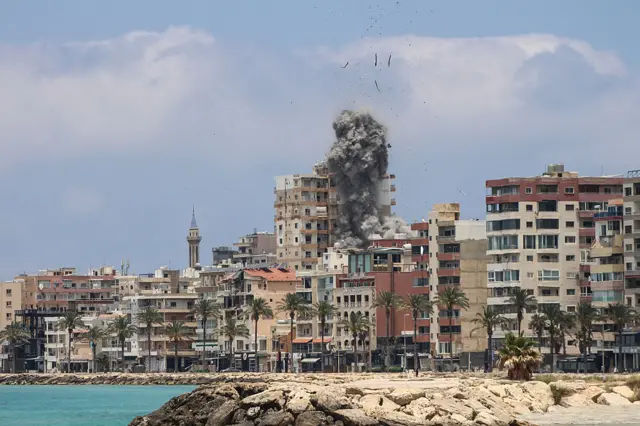
    Smoke rises following an Israeli airstrike in the southern city of Tyre on June 9, 2026. Residents of south Lebanon's Tyre including the Christian quarter fled on June 9, an AFP correspondent said, after Israel's army for the first time warned the entire city to evacuate ahead of strikesImage source, AFP via Getty Images
    Image caption,

    Smoke rises following an Israeli air strike in the southern city of Tyre on Tuesday

    We're now seeing imagery of an air strike hitting the southern Lebanese city of Tyre, while Lebanese media also reports Israel has carried out an attack on the city this morning.

    It comes just hours after the Israeli military told residents to urgently leave their homes in Tyre and the surrounding neighbourhoods and move north of the Zahrani river.

    The state-run National News Agency (NNA) says Israeli warplanes carried out a "heavy airstrike" in Tyre.

    The Israeli Defense Forces is yet to confirm it has carried out strikes in the area.

  16. Analysis

    Israel and Hezbollah pave way for more confrontation - not de-escalationpublished at 10:49 BST

    Hugo Bachega
    Middle East correspondent in Jerusalem

    Israel says its war against the Iranian-backed militia and political party Hezbollah will continue in Lebanon.

    This conflict started when Hezbollah fired rockets into Israel following the killing of the Iranian supreme leader at the start of the US-Israel war against Iran.

    Israel, in response, launched a devastating bombing campaign in Lebanon, killing more than 3,600 people including many civilians, and now occupies a significant part of the south, where entire villages have been destroyed.

    Israel says the goal is to create a security zone along the border, Hezbollah-free, to protect its northern communities from the group’s rockets and drones.

    In Israel, there is public support for the war to continue. But, as Donald Trump has limited Israeli actions in Lebanon to try to defuse tensions, it is not clear what else Israel’s attacks can achieve in significantly degrading Hezbollah.

    The group is isolated domestically but, so far, has rejected calls to disarm. Lebanon’s government says this can only happen through diplomacy and not force.

    With neither side showing indications of being willing to back down, they are paving the way for more confrontation and not de-escalation.

  17. Volatile situation facing southern Lebanon as air strikes continuepublished at 10:33 BST

    Lina Sinjab
    Middle East correspondent, reporting from Beirut

    A photograph taken from the southern city of Tyre shows people sunbathing on the beach as smoke rises from the site of an Israeli airstrike in the village of Deir Qanoun Ras al-Ain on June 8, 2026Image source, Getty Images
    Image caption,

    An Israeli air strike on a village near Tyre, in southern Lebanon, on Monday

    Dahieh in the south of Beirut is for now spared any further attacks after Iran and Israel said they would stop striking each other.

    But the country's south has always been out of any equation, and almost on a daily basis the strikes continue.

    Now, for the first time in this conflict, the evacuation order came to an entire area in the city of Tyre which is a Christian neighbourhood. It shows the violence and aggression on the south is still continuing.

    The Iranians, according to local newspapers and local journalists, want to show the regional powers and the US that they have to be part of the equation and that they still have a say in both Lebanon and in Yemen.

    But the situation in the south of Lebanon is still volatile, with continuing evacuation orders and air strikes.

  18. More towns targeted in southern Lebanon, state media reportspublished at 10:17 BST

    Lebanese media reports air strikes have targeted Srifa and Haris, two towns in the south of the country.

    The National News Agency also reports a drone attack targeted Borj Qalaouiye, which is also in southern Lebanon.

    The Israel Defense Force has not yet confirmed if it launched strikes on those areas.

  19. Fighting continued in Lebanon despite the April ceasefirepublished at 10:09 BST

    A plume of grey smoke rises from an area with what appear to be residential buildingsImage source, Reuters
    Image caption,

    Smoke rises from the site of an Israeli strike in southern Lebanon on Saturday

    While Sunday marked the first time since the April ceasefire that Israel and Iran had exchanged fire, Israeli strikes on Lebanon - and Hezbollah attacks on Israel - had continued.

    A US-brokered ceasefire between Israel and Lebanon on 16 April failed to stop the fighting, with both sides blaming the other for repeated violations.

    Hezbollah - an armed group backed by Iran - continued rocket and drone attacks. Israel continued strikes on Lebanon, and expanded a ground offensive in the south of the country - moving beyond its original demarcation line of the Litani River.

    A renewed ceasefire was agreed between Israel and Lebanon earlier this month, with the agreement "contingent on a complete cessation" of attacks by Hezbollah, among other conditions. Both sides have continued strikes since then.

  20. Three killed in Israeli strikes in southern Lebanon - reportspublished at 09:58 BST

    Lebanese media report that at least three people have been killed in Israeli strikes in southern Lebanon this morning.

    The state-run National News Agency (NNA) said first responders recovered the body of one person after several buildings were hit by Israeli air strikes in the eastern al-Massaken al-Shaabiya area of Tyre. The L’Orient Today website reported that two other people were missing.

    NNA said another two people were killed in a pre-dawn Israeli drone attack in the town of Kfar Roummane, which is located in the mountains north-east of Tyre.

    There were also air strikes this morning in the nearby towns of Nabatieh and Kfar Sir, while Jibchit was hit by artillery shells, according to NNA.

    On Monday, Lebanon's health ministry said Israeli strikes in southern Lebanon killed at least 14 people, including seven in Nabatieh district and five in Tyre.

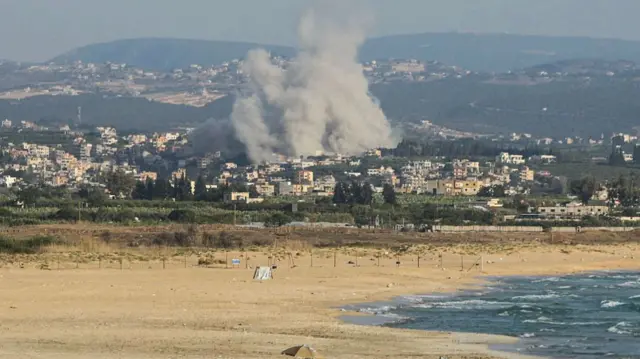
    A cloud of smoke billows over a Lebanese town.Image source, Reuters
    Image caption,

    An Israeli strike on Monday, as seen from the Lebanese town of Nabatieh, where further strikes have been reported today.