Summary

  1. Merseyside prefers down-to-earth Reform, says Faragepublished at 11:36 BST

    BBC Radio Merseyside

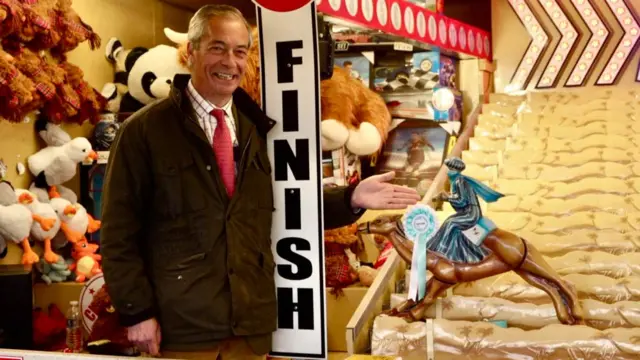
    Nigel Farage, wearing a checked shirt, red tie and dark jacket, smiles as he stands by the Finish sign of a fairground attraction featuring racing camels. The winning camel has a Reform UK rosette pinned to it. Prizes including stuff toys can be seen in the background
    Image caption,

    Nigel Farage makes a stop at the Adventure Coast theme park in Southport during a visit to meet local election candidates

    Reform is attracting disillusioned Labour voters on Merseyside because they are more in touch with people than the Conservatives, Nigel Farage told BBC Radio Merseyside.

    "The Tories are seen as aloof and out of touch while we are seen as more down-to-earth," he said.

    Farage, who visited Southport earlier this month, added: "We seem to be doing well in Sefton and in St Helens. From what I can see of the evidence, we are doing very well indeed."

    There's just over a week to go until we find out whether that translates into significant gains for Reform in these local elections.

  2. Reform looking at radical social care options, says Faragepublished at 11:27 BST

    BBC Radio Sussex

    With no local elections having taken place in Sussex for the past two years, it's not yet clear what level of support Reform UK has in the county.

    Half of East Sussex County Council's net service spend goes on adult social care, while West Sussex County Council spends 40%. This does not include spending on education, which is ring-fenced.

    When quizzed by BBC Radio Sussex, Nigel Farage said a Reform-led council would run adult social care in the same model as both county councils. He added the adult social care bill was "enormous" and a "huge burden" on local authorities.

    He said while Reform don't have a clear plan on how they would run this service, they were "looking at radical options". This included how contracts would be rewarded.

    The party was running several local councils already, he said, and was "gaining experience" in the practical way.

  3. Finding the balance can be a challengepublished at 11:18 BST

    Tony Bonsignore
    Political reporter, BBC Westminster

    Parties often find it tricky to make their pitches at local elections - and that's come through in the questions raised by BBC Essex presenter Ben Fryer (see the post below).

    On the one hand, these are local elections, which should in theory be focused on local issues, of which there are plenty, from potholes to bin collections to social care.

    But on the other, they are inevitably judged on their national policies and record - and Farage wants these elections to be seen as a referendum on Sir Keir Starmer's Labour government.

    Panoramic view of Houses of Parliament and Westminster Bridge reflected in River Thames at dusk.Image source, Getty Images
  4. Why are national issues in party's local election leaflets?published at 11:09 BST

    BBC Essex

    Nigel Farage has told BBC Essex he believes two-thirds of people will vote in May's elections based on national issues, not local ones.

    Presenter Ben Fryer had raised that some of the party literature posted through voters' letterboxes in Essex included a pledge to "stop the boats". He pushed him on why it was on the literature and how Essex County Council could stop migrants arriving by boat.

    Farage replied: "Because people are voting with both objectives in mind. One, they are voting on what they want to happen in Essex and I think the debate about how it is organised and run is a very important one. And secondly, they are voting for which party the believe in at a national level. In any form of election that is unavoidable."

    The Clacton MP said there were "plenty of local issues we are fighting on as well", adding his party was against local government reorganisation plans that would cut the current 15 councils in Essex to five all-purpose unitary councils.

  5. Farage pledges to act on law and orderpublished at 11:03 BST

    BBC Radio London

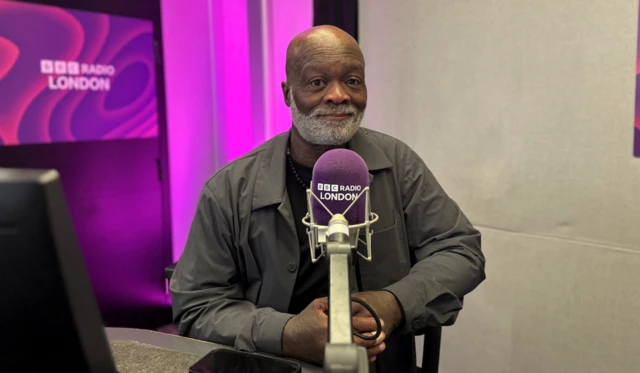
    Eddie Nestor sits with his hands clasped behind a purple BBC Radio London microphone in the studio, with a purple screen featuring the station's name in the background

    Nigel Farage told BBC Radio London’s Eddie Nestor (pictured) that his party would act on issues of “law and order” in the capital.

    Farage said: “[We will] genuinely begin to work with police to change the culture, to implement policies that will begin to start to make London safe again.

    “Right now, people are leaving London, they’re fleeing London, they’re moving to other parts of the country or going abroad because they are scared for their kids on the street - and there is absolutely no denying that whatsoever.

    “We do absolutely subscribe to the broken windows theory that if you allow so-called small-scale crime like shoplifting et cetera to go unheeded, it leads up through the chain and makes the whole place less safe.”

    When questioned by Nestor over how the party would fund this, he said he could not “wave a magic wand”, but councils run by Reform had cut expenditure and kept council tax lower “than comparable authorities”.

  6. Mixture of enthusiasm and experience vital, Farage sayspublished at 10:56 BST

    Tony Bonsignore
    Political reporter, BBC Westminster

    One of the main criticisms levelled at Nigel Farage and Reform UK is the number of former Conservatives at the top of the party and the quality of their candidates standing in these and other elections.

    Nigel Farage says his party does have a lot of former Tories, but also defectors from other parties, including Labour.

    It is vital, he says, that the party has a mixture of "enthusiasm and experience".

    The majority of Reform candidates, he adds, have never been in politics, but think the country needs real change.

    He says there are vetting issues but no more than in other parties.

  7. Farage accused of talking region downpublished at 10:51 BST

    BBC Radio Newcastle

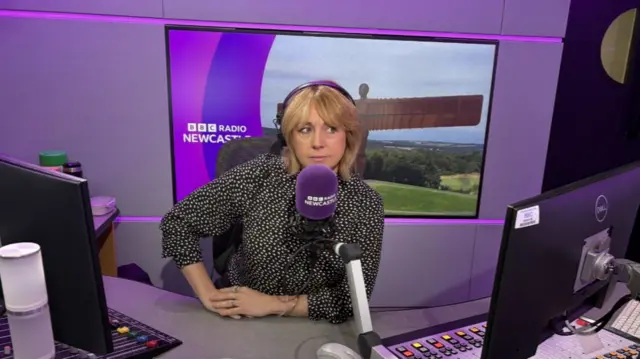
    BBC Newcastle's Anna Foster (pictured) asked Nigel Farage why he has talked down north-east England.

    The Reform UK leader has previously described South Shields as a "town in decline", while standing next to a £100m development, and his party described parts of Sunderland's regeneration as "vanity projects".

    Farage said South Shields was "not the same town he walked down in 2013" and his comments reflected what people told him on the ground.

    "The North East needs industry and without it, I am afraid, you will see economic decline," he said.

    He said he wanted to see regeneration which created long-term jobs and pointed to growing the region's fishing and energy sectors as paths to growth.

    Anna Foster, wearing a polka dot top and headphones, sits behind the microphone in the BBC Radio Newcastle studio, with mixing desks and other equipment in from of her
  8. Listener shares views on far-right extremismpublished at 10:46 BST

    BBC Radio Leeds

    Gayle Lofthouse also played Nigel Farage a recording of Inaya from Bradford, who was speaking about how to deal with far-right extremists. She said: "The only way we can deal with this issue is to invite them for a cup of tea and some pakoras. We are just like them."

    In response Farage said his councillors would encourage community cohesion. He said they were “people who were united by understanding this country, its history and its heritage and wanting togetherness, and being very worried about the divison and the fear that is being caused by extremism.”

  9. Reform candidates are fresh voice in politics, says Faragepublished at 10:41 BST

    BBC Radio Leeds

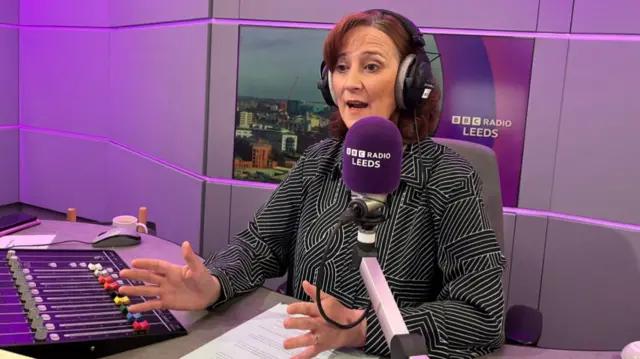
    Gayle Lofthouse, wearing headphones and a black and white shirt, gestures with both hands as she talks into the microphone at the BBC Radio Leeds studio, with a mixing desk visible to the left and an image of the city on the wall behind her

    Farage told BBC Radio Leeds’ Gayle Lofthouse (pictured) that Reform UK were a “fresh voice and force in British politics made up of people from a very wide range of backgrounds” – however, she challenged him on this, pointing out that most of his party members were male and many were former Conservatives.

    He said: “We have two female MPs and we do have a lot of ex Conservatives, but equally we have senior Labour figures who have joined us as well.

    “Most of our candidates that are standing in these elections in Leeds, and Bradford, in Calderdale and all around Yorkshire, they have never been in politics before. They are getting into politics because they think this country deserves real change and that starts from the bottom up.”

    He agreed there had been issues with the views of some candidates, and said: “Have we had a problem with some of them? Yes we have.

    “Very often they don’t tell us their correct social media handles or they don’t tell us the truth. But the other parties have had a bit of that too.”

  10. Reform's ambitions for local electionspublished at 10:29 BST

    Tony Bonsignore
    Political reporter, BBC Westminster

    Nigel Farage has long viewed these elections as a vital stepping stone in Reform UK’s bid to win the next general election.

    The hope is for four-figure gains in English council elections, to hammer Labour in its traditional heartlands, to gain control of the Welsh Senned and to win second place in Scotland.

    Success in these elections would give Reform UK a bigger local network, an established record in local and devolved government, and a renewed sense of political momentum after a period in which the party’s poll lead has narrowed and Farage’s stance on the Iran war has been questioned.

    The party has spent much of the campaign talking about its plans to ease the cost of living crisis and cut taxes, and to clamp down on immigration - both legal and illegal. But Reform’s main message for these elections is simple: "Vote Reform, get Starmer out."

    A black dog with curly fur sitting next to a large sign that says 'polling station'Image source, PA Media
  11. Who is Nigel Farage?published at 10:19 BST

    Tony Bonsignore
    Political reporter, BBC Westminster

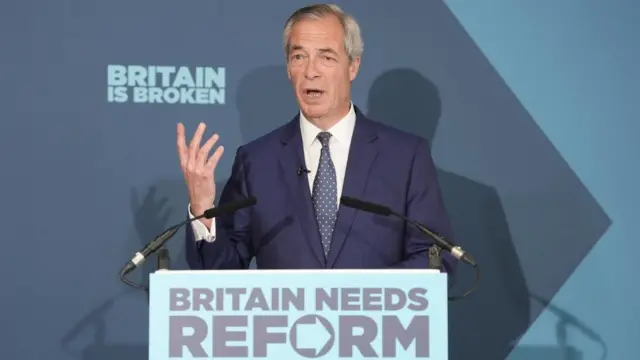
    Nigel Farage, wearing a blue suit, white shirt and blue tie, on stage at a Reform event. He is gesturing with one hand and standing at a lecturn that reads Britain Needs ReformImage source, PA Media

    There remains a fundamental tension at the heart of Reform UK’s approach to its leadership.

    On the one hand, Nigel Farage is the party’s biggest draw and the dominating figure behind all of the key decisions. Keeping him front and centre is central to Reform’s electoral prospects.

    But Nigel Farage also understands the dangers of appearing to be a one-man band and the need to assemble a top team that looks like a government in waiting.

    That in turn has meant sharing the spotlight and bringing in outsiders, including Tories like Robert Jenrick and Suella Braverman, who were once sworn political enemies of Reform UK.

    Farage - a former UKIP and Brexit Party leader - has also spent the last year battling accusations of racism from his school days and facing questions about his commitment to his constituency in Clacton. He has dismissed these claims as being politically motivated.

  12. Watch live as the interviews beginpublished at 10:09 BST

    Reform UK leader Nigel Farage has started his round of interviews with BBC local radio stations and is currently facing questions from BBC Radio Leeds presenter Gayle Lofthouse.

    You can follow along by tapping on the watch live button at the top of this page

  13. Which elections are taking place on 7 May?published at 10:03 BST

    This is going to be the biggest set of elections since the 2024 general election.

    Voters in Scotland and Wales will elect representatives to their national parliaments, while a number of local council and mayoral polls will take place in England.

    This includes elections in 30 English councils that will now go ahead after the government abandoned previously announced plans to delay them.

    In Northern Ireland, local council and Assembly elections are scheduled for May 2027.

    You can check what elections taking place in your local area here.

  14. Welcome to our live coveragepublished at 09:56 BST

    Reform UK leader Nigel Farage is about take part in a series of interviews on BBC local radio stations in England. It's part of our countdown to the local elections on Thursday 7 May.

    Zack Polanski (Green Party) and Sir Ed Davey (Liberal Democrats) have faced questions from our presenters so far, with Kemi Badenoch (Conservatives) to follow on Thursday. Labour have also been invited to take part.

    Today is a chance for us to quiz Farage on his party's policies. First on his schedule is BBC Radio Leeds - he's due on air shortly after 10:05 BST.

    He’ll also be appearing on BBC Radio Newcastle, BBC Radio London, BBC Essex, BBC Radio Sussex, BBC Radio Surrey, BBC Radio Merseyside and BBC Radio WM.

    Stay with us for updates and analysis on all the key lines. You'll also be able to follow the interviews as they happen by tapping the watch live button at the top of this page.