Summary

  1. Jarvis faces awkward questions from Labour MPspublished at 15:54 BST

    Jack Fenwick
    Political correspondent

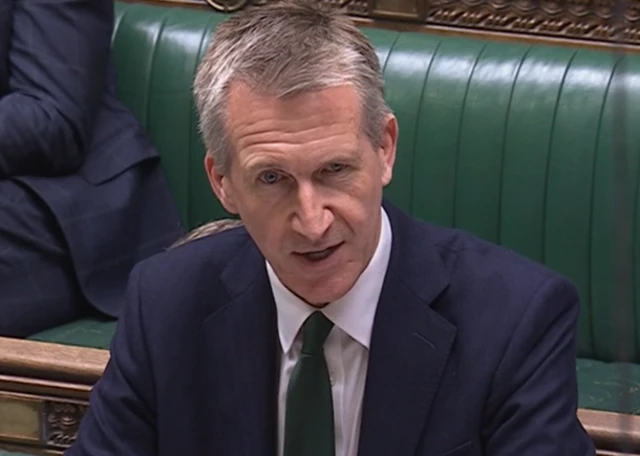
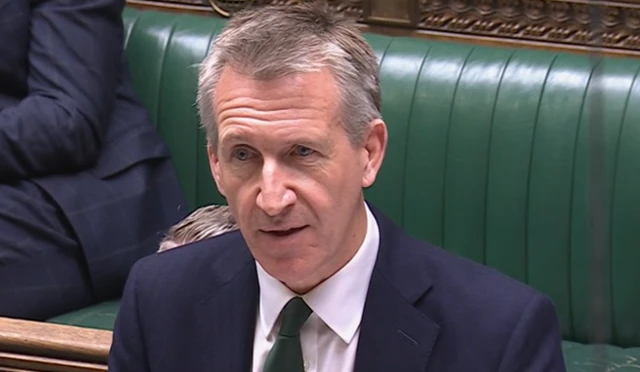
    The most awkward moments for Dan Jarvis have come not from interventions on the opposition benches, but his own side.

    A number of senior Labour backbenchers have stood up and told the new defence secretary that the government must do more.

    John Healey’s intervention is likely to grab the most headlines, but he was far from alone.

    Tan Dhesi, who chairs the defence select committee, said the governed had not provided a “clear pathway” to spending three per cent of GDP on defence.

    Dame Meg Hillier, who chairs the Treasury select committee, warned the government against avoiding scrutiny. I’m told that her committee has struggled to get anyone from the treasury to appear before them to discuss defence spending in recent months.

    And the former Health Secretary Wes Streeting said today’s announcement was “a good foundation to build on, but there’s more to do”.

    The government may have found an extra £1.5bn for defence in recent weeks, but this is an issue that isn’t going away and could well provide an early test for the next prime minister.

  2. Iain Duncan Smith hones in on Nato's 3.5% GDP targetpublished at 15:49 BST

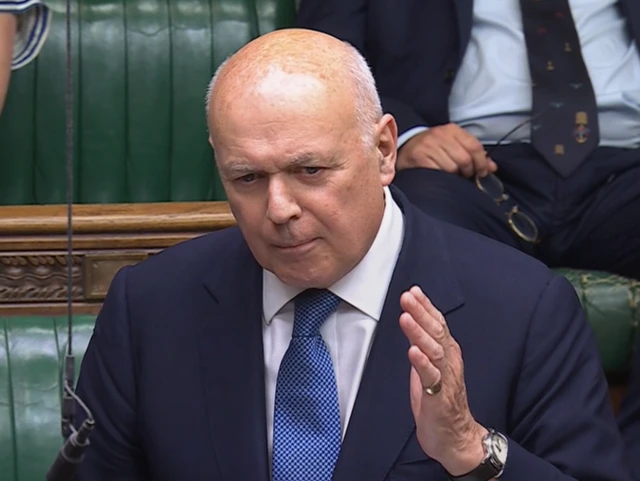
    Conservative MP Iain Duncan Smith

    Turning back now to the Commons, where Conservative MP Iain Duncan Smith says the defence plan leaves the UK £9.3bn short every single year.

    He says the government will not be able to reach the Nato minimum requirement of 3.5% of GDP by 2035.

    Jarvis says he does not agree with Duncan Smith and says he has been very clear about the need to spend more on defence.

    He insists that the next spending review will provide the resources required to chart the trajectory from 3% to 3.5%.

  3. Government to fund roll-out of veteran support programmepublished at 15:44 BST

    Prime Minister Sir Keir Starmer delivers a speech during a visit to Malloy Aeronautics in Berkshire following the publication of the long-delayed defence investment plan (DipImage source, PA

    The defence investment plan (DIP) also outlines a number of ways the government intends to help veterans.

    This, it says, includes funding the "roll out of VALOUR, the first of its kind one-stop-shop for veterans' support".

    It's a national programme designed to make it easier for veterans across the UK to access care and support.

    The DIP says this will be in the form of centres across the country, providing in-person support in areas including health, housing and employment.

    It says the government will "invest £70m in support for Veterans, through the Office for Veterans Affairs", and later adds there will be a £12m investment in a new fund for reducing veteran homelessness.

  4. Between 20% and 25% of MoD budget to be spent on nuclear deterrentpublished at 15:39 BST

    Turning our attention to the defence investment plan (DIP), which has just been published, and it outlines the funding for maintaining the UK's nuclear deterrent.

    Spending on the Defence Nuclear Enterprise (DNE) - which operates and maintains the nuclear deterrent - will increase to between 20-25% of the Ministry of Defence's overall budget, it states.

    In cash terms, there's an increase of more than £20bn in investment in the DNE over the next four years, compared to the previous four. That puts the total spend in that period, excluding workforce, to £63.6bn.

    Breaking it down, the plan says this includes £47bn to be spent on submarines (including maintenance and infrastructure), £13bn on warhead, and £1.7bn on nuclear fuels.

  5. Jarvis doesn't rule out joining defence investment bankpublished at 15:36 BST

    Jack Fenwick
    Political correspondent

    Dan Jarvis does not rule out the UK joining a defence investment bank being championed by the Canadian prime minister Mark Carney.

    The Treasury has previously not been keen on the entry costs that would come with the Defence, Security and Resilience Bank.

    But as we revealed on BBC News earlier this month, John Healey was pushing for it when he was the defence secretary.

    Former health secretary Wes Streeting asked Jarvis if the government would reconsider joining.

    The defence secretary says he hasn’t had time to look at all the options, but that he’s not ruling anything in or out and he will listen to what allies say about the funding mechanisms available.

    A group of Labour MPs have been pushing for membership of the DSRB for months, which they hope would unlock low-cost funding for defence projects.

    But critics worry that it would simply be another way of borrowing more money.

  6. Jarvis asked if he will fight for more defence fundingpublished at 15:32 BST

    Tanmanjeet Singh Dhesi, chair defence committee, says there is no clear pathway to reach 3% of GDP on defence spending there is no full 10 year expenditure plan.

    He says much of the defence investment appears to be backloaded beyond 2030 and asks if Jarvis can commit to fight for more funding.

    Dhesi also asks when his committee will be given the full details of the plan so that parliamentary scrutiny can be taken.

    Jarvis says he is grateful for the scrutiny and that he will of course commit to fighting for the funding defence needs.

    He says that involves working very closely with Nato allies and providing them with certainty towards long-term defence funding, and it will require the UK showing a trajectory to the 3.5% commitment it has made.

  7. We must learn lessons from Ukraine, but we are not Ukraine - Jarvispublished at 15:27 BST

    Al Carns, the Labour MP and former armed forces minister who resigned over the plan earlier this month, says there are lessons to be "learned from Ukraine" on scale and capacity.

    He asks about "the percentage of the defence budget" that's been spent on uncrewed systems - and whether that's docked into the defence industrial strategy.

    Jarvis responds by acknowledging the work Carns has previously done in this area and says "there has been a sharpening of the plan" to ensure we "learn lessons from Ukraine".

    "While we must learn the lessons from Ukraine, we are not Ukraine," Jarvis says.

  8. Key points from the defence investment planpublished at 15:24 BST

    Frank Gardner
    Security correspondent

    • Largest increase in defence spending since the Cold War in the 1980s
    • £270bn earmarked over the next four years
    • Seismic shift to smaller, cheaper, uncrewed and autonomous systems
    • £63bn for the nuclear deterrent
    • £11bn to replenish the weapons and munitions sent to Ukraine
    • £8bn for the next generation combat aircraft
    • £790m for air and missile defence
    • £330m for protecting Britain’s undersea cable
    • Regular Army to be increased to 76,000
    • "Some tough choices" and programmes sacrificed
  9. Jarvis pressed over whether he thinks defence investment is enough to keep Britain safepublished at 15:22 BST

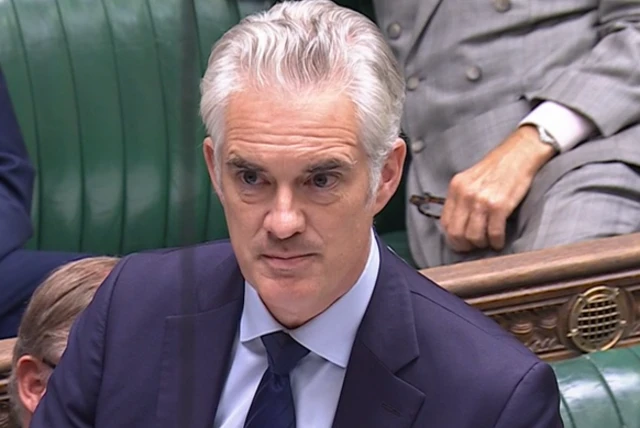
    Liberal Democrat spokesperson for defence, James MacCleary, says the delayed defence investment plan is lacking in ambition and the current funding is not enough.

    He asks the defence secretary if the experts and the former defence secretary were wrong about the need for more funding - or does he truly believe this defence plan is enough "to keep Britain safe".

    MacCleary also raises what he calls the "sorry state" of forces' housing and asks about funding for improvements for those living in "mouldy homes".

    Jarvis says the defence plan represents a big increase in funding and he's absolutely committed to making sure the armed forces have an appropriate quality of housing.

    The defence secretary says he remembers living in armed forces accommodation himself that hadn't been properly maintained - but he says the plan has to be costed and has to be responsible.

    He adds that he's pleased with plan, but we do need to do more at next spending review, when defence spending will be "the number one priority."

  10. Healey says government must find way to get to 3% of GDP on defencepublished at 15:17 BST

    Jack Fenwick
    Political correspondent

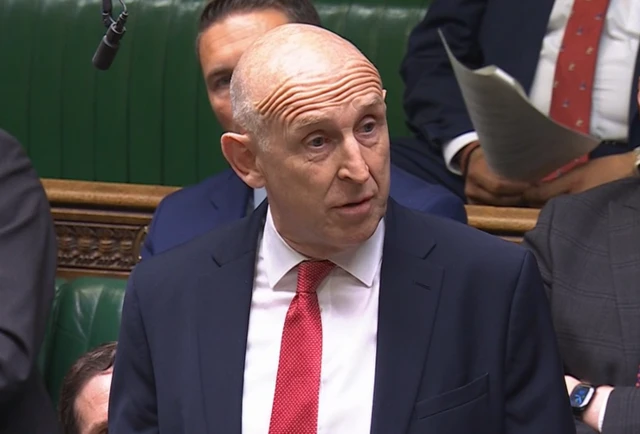
    The former Defence Secretary John Healey has made abundantly clear that he still does not believe this investment plan offers enough money for the armed forces.

    Healey resigned over what he perceived as a lack of funding in the plan earlier this month.

    Since then the government has found an extra £1.5bn for defence.

    But Healey says “more needs to be done” beyond this plan.

    He says that 2.7% of GDP going on defence by 2030, which this plan wound deliver, is not enough and points out that NATO have warned members to be prepared for a Russian attack that year.

    Healey says the government must find a way to get to 3%.

    Dan Jarvis says “he’s right that we need to do more” and commits to further funding in future government spending reviews. But Healey and those who agree with him are likely to want assurances well before then.

  11. More action needed to develop 'credible funding plan' to tackle threats from Russia - Healeypublished at 15:14 BST

    Former Defence Secretary, John Healey

    Former Defence Secretary John Healey is up next.

    He says European security is "at stake" and threats are still growing. Today's plan, Healey says, means Britain will be spending 2.7% of its GDP on defence in 2030 - the date that Nato warns "we could now face a Russian attack".

    More needs to be done "to develop a clear, credible funding plan" to tackle this, he says.

    Jarvis says Healey is "right" that the government needs to do more and that is why it is a "clear commitment that that will be a number one priority at the next spending review".

  12. Jarvis says Labour has announced largest ever drone investmentpublished at 15:11 BST

    Defence Secretary, Dan Jarvis

    James Cartilidge says the drones promised by Labour "will mainly enter service in the 2030s".

    "Far too late in this fast-changing world of tech-driven warfare," he says.

    Responding to Cartilidge's comments, Jarvis says Labour have just announced the largest ever investment in drones in the country's history and questions why the shadow secretary would criticise that part of the plan.

    He says that we have a "moral duty" to support the armed forces with the best possible living conditions.

    Jarvis says the government inherited 2.3% defence spending from the Conservatives and it is currently at 2.5% and will be at 2.7% by the end of this parliament.

    He repeats that defence spending will be at 3.5% of GDP by 2035 and that defence spending will be the government's number one priority at the next spending review.

  13. Analysis

    Britain to fail reaching Nato target of 3% of GDP on defence spending by 2030published at 15:08 BST

    Frank Gardner
    Security correspondent

    The newly-announced Defence Investment Plan (DIP) will delight some, while still falling well short of what others demand as being the bare minimum needed to keep Britain safe.

    This, as the government says, is the largest increase in defence spending since the Cold War in the 1980s, with £270bn earmarked for defence over the next four years.

    The plan includes £63bn for the nuclear deterrent, £8bn for the next generation of combat aircraft, £11bn to replenish the weapons and munitions sent to Ukraine and £330m for protecting the UK’s vulnerable undersea cables.

    Above all, it marks a radical transformation of the military towards multiple cheaper, uncrewed and autonomous systems, ie drones. It’s a lesson learnt from the recent wars in Ukraine and the Strait of Hormuz.

    But buried in the detail is the fact that Britain will fail to make the target 3% of GDP spent on defence by 2030, as mandated by Nato. Instead, it will be 2.7%.

    Russia currently spends in excess of 7.5%. There is an intention to meet the target of 3.5% by 2035 but as the former Defence Secretary Ben Wallace points out, the threat from Russia is now, not in the 2030s.

  14. Starmer has published defence plan 'in search of a legacy' - Cartlidgepublished at 15:05 BST

    Cartlidge continues his retort to Jarvis.

    He asks if the Defence Minister can confirm that the defence investment plan includes cutting millions of pounds on forces housing and "shifting it into the next Parliament".

    Cartlidge also asks if Jarvis agrees that the "top priority" must be to back our former soldiers and scrap the Northern Ireland troubles bill.

    He adds that Starmer has published the investment plan "in desperate search of legacy, but it is a legacy of failure".

  15. 'Too little, too late' as threat facing UK is right now, says shadow defence secretarypublished at 15:02 BST

    Shadow Defence Secretary James Cartlidge

    Shadow Defence Secretary James Cartlidge says the plan is too little, too late.

    He says the plan is months overdue, and much of the capability it contains won't be in service until the 2030s, when the threat facing the UK, is "right now".

    Cartlidge says the plan is barely half of what the chief of defence staff said was needed - £28bn to fund the armed forces over the next four years.

    "This plan is barely half that requirement," he tells MPs.

  16. Jarvis praises work of ex-defence minister Al Carnspublished at 14:58 BST

    Jack Fenwick
    Political correspondent

    When Al Carns resigned as the armed forces minister earlier this month, he had some very specific criticisms of the government.

    In his letter, he said: “We are still purchasing capability suitable for the last war while our adversaries arm for the next one.”

    And Dan Jarvis nodded quite obviously to that criticism in the Commons just now.

    As well as achieving extra money overall, he said he had decided to “reprioritise” £1bn of spending within the DIP to more modern forms of warfare.

    He then immediately praised the work of Al Carns, who is sat three rows behind.

  17. Defence plan published in full - more details to comepublished at 14:57 BST
    Breaking

    While MPs debate the government's spending plans, the Defence Investment Plan itself has been published in full, external on the government's website.

    We're looking through the 80-page document now and will bring you key details from it.

    Meanwhile, the debate in the Commons continues...

  18. Jarvis says government's commitment to Nato is absolute in a more dangerous worldpublished at 14:54 BST

    Jarvis commits £9bn over a decade to raise the conditions of military family housing "to match the service and sacrifice of those living in them".

    He says that the UK has made a promise to its allies to raise defence spending to be 3.5% by 2035.

    He says its commitment to Nato is absolute in a more dangerous world and it will reach 3% in the next parliament with funding set out in the next spending review, where defence will be the number one priority.

    He says Britain has also met its Nato spending commitments. He adds that Britain has always stood with its allies and under this government it always will.

  19. Jarvis gives more details on key funding areaspublished at 14:52 BST

    Defence Secretary, Dan Jarvis

    Jarvis says Britain needs an integrated high low force that can fight across every domain.

    He announces the government will be committing £8.6bn to the global combat air programme with Japan and Italy.

    The UK will invest £26bn for "extensive" naval base upgrades, £790m to protect overseas bases from air drone and missile threats and £11bn for munitions and weapons to increase UK stockpiles, Jarvis adds.

    He says £64bn will go towards funding new Dreadnaught and AUCUS submarines, adding the UK's nuclear deterrent is the "ultimate guarantee of our security".

    Jarvis adds there will be £3bn in funding for space capabilities, £4bn in cyber and £400m to protect undersea cable and pipelines.

  20. Defence plan will see UK's largest investment in drone warfare - Jarvispublished at 14:49 BST

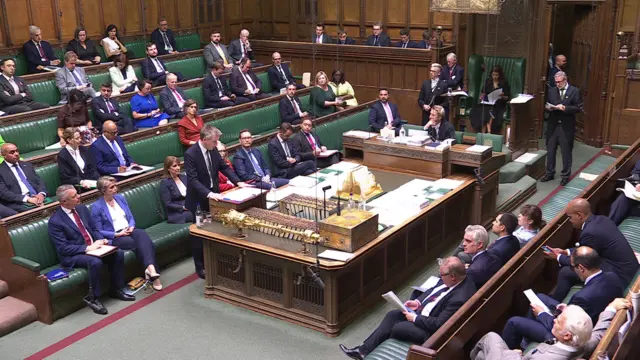
    Dan Jarvis speaks in the House of Commons in a wide shot that shows MPs on both sides of the room.Image source, House of Commons

    Jarvis says there will be a further £1bn in the defence investment plan "to better reflect how war is waged today".

    He continues and says AI capabilities are "no longer capabilities of the future" - and they will now have investment.

    He says the plan includes "the UK's largest ever investment in drone warfare".