'Scheme replacing fit notes gave me my spark back'

 BBC
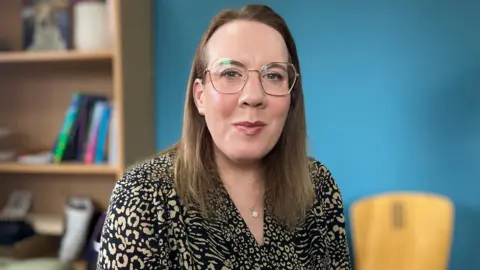
BBCAfter months of staying at home with a chronic illness, Alison Hume said she felt isolated and had lost confidence.
Now, after support through an NHS-backed work programme, Hume, from Rubery, is preparing to start a new job.
"It just really gave me that spark back," she said.
Hume is among the many people in Birmingham and Solihull to benefit from new government trials aimed at overhauling the way fit notes are used.
From July, patients in some parts of the UK who have been signed off sick by their GP, will be referred for extra support designed to help them stay in work or return more quickly.
The pilots in Birmingham and Solihull, Coventry and Warwickshire, Cornwall and the Isles of Scilly, Lancashire and South Cumbria, will link patients with an existing NHS WorkWell programme.
The schemes will cover up to 100,000 appointments over the next year, offering support including physiotherapy, mental health help, confidence coaching and advice about workplace adjustments.
In Birmingham and Solihull all patients with fit notes will be referred to a new support service led primarily by non-clinical staff including social prescribers and work and health coaches, while in Coventry and Warwickshire patients will be able to access a service made up of both clinical and non-clinical staff.
More than 11 million fit notes, which advise on how health problems affect a patient's ability to work, are issued every year, with the numbers increasing since the Covid pandemic. The government says more than nine in 10 of the notes sign people off work entirely.
Prof Kamila Hawthorne, a GP and chair of the National Academy for Social Prescribing, said many doctors felt the current system was no longer working.
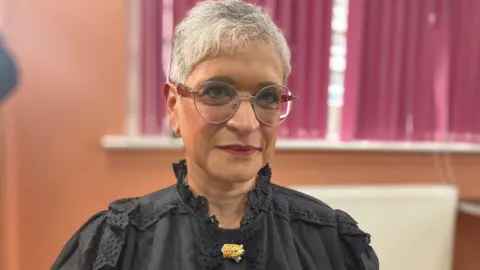
"All of us are dealing with 10, 15 requests for fit notes every day, maybe more sometimes," she said. "These pilots that are just being introduced are really interesting. It's actually going to be a lot more attention given to the individual to actually find out what matters to them, why it is they can't work, what might need to be done to enable them to work."
Hume lost her job as a health and wellbeing coach in January and was diagnosed with myositis, an inflammatory condition, around the same time.
"I was worried about finances because I have a mortgage to pay but obviously my health was the priority," she said.
She said being referred to WorkWell through her GP helped her regain confidence after months of illness and uncertainty.
"They really looked at me as a whole," she said. "They didn't just jump me into work… they listened to me, what matters to me, what I was passionate about, how my health was."
She is due to start her new role in June after WorkWell supported her in applying for jobs.
Maria Edwards, from Birmingham, also said WorkWell had helped her rebuild confidence after she was signed off because of menopause symptoms, chronic pain and surgery.
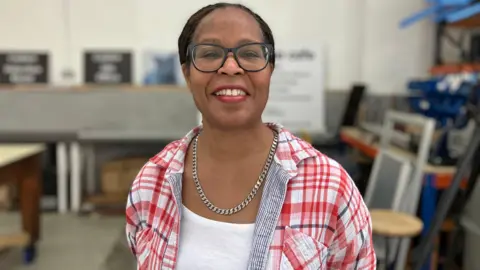
She previously worked for a housing provider and has recently been volunteering at Better Packaging, a social enterprise in Birmingham.
"Some of the participants that attend, it's nice to talk to them and remind yourself that you can still be in the real world talking to people which will help going forward, going to work," she said.
Work and pensions secretary Pat McFadden said the pilots would test whether earlier support could prevent people becoming disconnected from work for long periods.
"Too often people are signed off but not really offered help with a back-to-work plan," he said. "What we're trying to do is get beyond the simple fit note to get real help to people."
Follow BBC Birmingham on BBC Sounds, Facebook, X and Instagram.
