Card games replace phones after school ban

 Jonathan Coates / WMG Academy Coventry
Pupils at a school that has banned smartphones are returning to card games and conversations following the move, according to their head teacher.
WMG Academy in Coventry introduced its phone-free policy after the May half-term, barring students from bringing them or any other smart technology on to the site.
Associate principal Adele Wallis said that, despite expecting resistance from students aged 14 to 19, she had largely found the opposite.
"There seems to be a return to socialisation," she told BBC CWR. "The atmosphere has transformed in one week."
Wallis said their decision followed consultation with their governors, trustees, parents and students.
"You've got people bringing in Uno and cards and playing games and talking to each other," she added about the ban's impact.
"They're [saying] it's quite nice not to have the phone and to have that breather.
"I thought there was going to be a bigger pushback but it hasn't, it's gone down remarkably well."
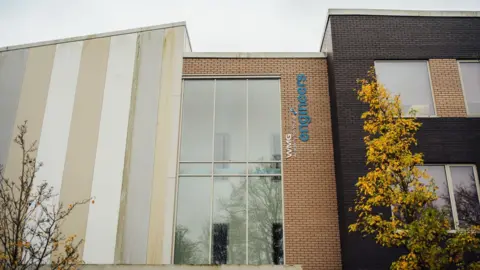 WMG Academy Coventry
Students who need a phone for their commute are allowed to bring a basic "brick" phone, according to the school policy, but this must be stored in a locker during the day.
Sixth form students, meanwhile, are permitted to use smartphones in designated areas only.
"There's overwhelming national evidence about the negative impact of smartphones on mental health [and] anxiety," Wallis explained.
"Many of our low-level behaviour issues are because they've got this over stimulation and the phone is just pinging constantly.
"We wanted to establish a distraction-free learning environment where lessons could flow, learning was uninterrupted and students could focus on being young people."
Meanwhile, a grassroots campaign group, Smartphone Free Childhood (SFC), claimed the average age when children currently received a smartphone was about nine years old.
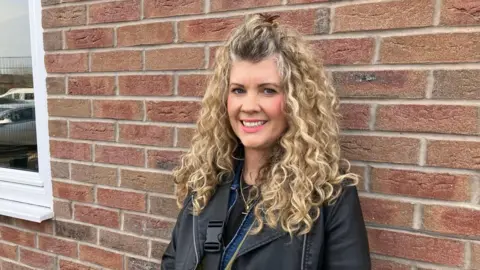
Tess Burgess, Shropshire lead for SFC, said the organisation was "pushing for a change in culture", and that children should not have a smartphone until they are 14, with no access to social media until aged 16.
She told BBC Radio Shropshire: "I think the nation has woken up to understand the harms of smartphones and social media, and I think everybody is welcoming advice and guidance, which will then change the culture.
"It will make it much easier for us as parents to say no if we know that our child is not alone and they're not socially isolated at key stage of their development, which is normally the time when they go up to secondary school.
"At the moment it's a right of passage to get a phone, and we absolutely want to change that."
A Department for Education spokesperson previously said the majority of schools already prohibited phones and that mobile phone policies would be monitored as part of Ofsted inspections.
Follow BBC Coventry & Warwickshire on BBC Sounds, Facebook, X and Instagram.
