

EXPLORE EPISODE NINE - 8 to 5
Local Navigation

Bringing to life spectacles of natural wonder on our doorstep
No.7
Bluebells
There are three different kinds of Bluebell in the British Isles – native (Hyacinthoides non-scripta), Spanish (Hyacinthoides hispanica) and a hybrid. Both the native and the Spanish grow in woodland and hedgerows. The hybrid is more popular in gardens.
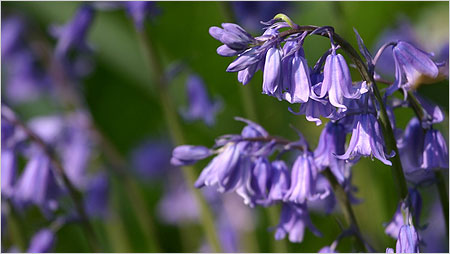
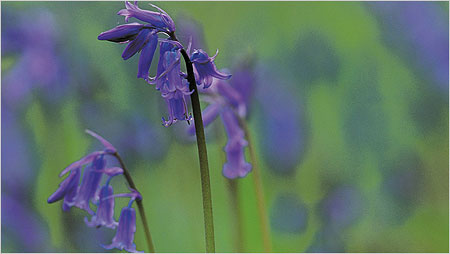
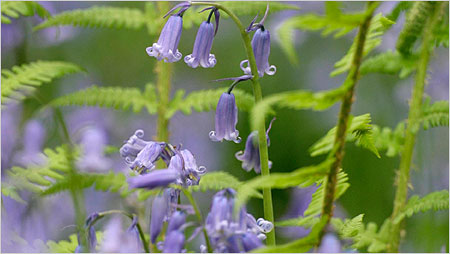
Native Bluebells have smaller flowers, drooping stems with flowers on just one side and the petals of the flowers curl back on themselves. Spanish Bluebells have larger flowers on both sides of an upright stem. Their flowers have straight petals so they’re easy to tell apart. Although there is the complication of the hybridised bluebell which looks somewhere in between the two.
Despite the name, native Bluebells can also be white, but if you see a pink one then it’s likely to be a Spanish Bluebell. There has been concern about the spread of the Spanish Bluebells in Britain and the possibility that the hybridised variety could threaten the survival of the native Bluebell. The Head of Conservation at the Wildlife Trusts has advised people not to plant hybridised or Spanish bulbs in the countryside or near native Bluebells.
Bluebells flower between April and June. They are well adapted to living under the canopy provided by trees. The shoots emerge from the ground in January giving them a head start over other woodland plants. And they can grow and sow seeds before the trees fully develop their leaves putting the Bluebells into the shade.The UK’s Bluebell woodlands are reputed to contain up to half of the world’s Bluebells.
Find out more about Bluebells
Weblinks
The Woodland Trust guide to Bluebell woods
Natural History Museum Bluebell survey
The BBC is not responsible for the content of external internet sites.
Photo gallery
Watch and Listen
Mike Dilger visits a 'cathedral' of bluebells in Wiltshire... It's bluebelltastic!
Help playing audio/video
Tips
Tips for viewing this species:
- The Woodland Trust has information about where you can see Bluebells around the country. Just take a look at the website.
- Good places to see Bluebells include West Woods near Marlborough in Wiltshire and Skomer which lies to the south west of the Marloes Peninsula of Pembrokeshire in Wales. Visitors can see Bluebells in abundance during the Spring.
- Pack plenty of snacks and drinks in Skomer as it does not have cafés.
- Skomer is accessible by boat from Martin's Haven on the Pembrokeshire coast. The ferry service runs early Spring to late Autumn from Martin's Haven. The local wildlife trust is a good place for information if you’re planning to visit the island.
- Local Wildlife Trusts organise Bluebell walks in the spring… Find one near you by searching for Bluebell on the Wildlife Trust website.
- Don’t dig up Bluebells to take home and plant – it’s illegal!
- Get down low – lie on the ground to get a close up view.
- Be careful not to trample on them.
Habitat
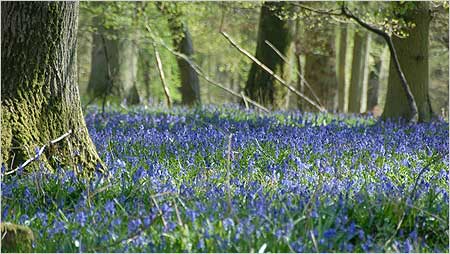
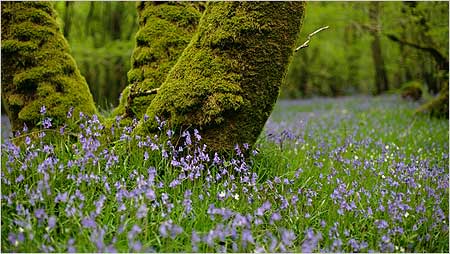
Bluebells like moist, shady conditions, so woodlands are ideal. But they can also be found in other places such as hedgerows and even by the sea. Many woods across Britain are carpeted with Bluebells in the spring, and in areas like Skomer off the coast of Pembrokeshire, the presence of the flowers suggests that there were once large areas of woodland. There are also plenty of Bluebell spectacles to be seen in Northern Ireland.
In the East of England Bluebells are only found in woodland whereas in Western Britain some grow on open ground - grassland, heath, sea cliff - with bracken as substitute woodland.
In folklore it was said that Bluebell woods were frequented by fairies, summoned by the ringing of the Bluebells… anyone else who heard the flowers ring would not have long to live!
In Queen Elizabeth I’s time Bluebell bulbs were dug up to provide a starch for stiffening muslin and ruffs. It was also used as adhesive for bookbinding and the toxicity of the bulbs meant this kept the books free from moths and silverfish.
The toxins in the bulbs are now the subject of much medical research. They protect the flower from serious infection and researchers are trying to find out if they could do the same for people.
No. 8 - Dancing Adders
The 'dance' is the way that Britain's only poisonous snake establishes who's boss.
Best places to see - Widespread in the countryside with Thorne Moor in Yorkshire a particular hot spot.
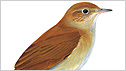
No. 6 - Bird Song
In the spring you can hear all the UK’s native birds at full volume during dawn chorus... one of nature's noisiest spectacles.
Best places to see - UK-wide, from your back garden to the local park and further afield!
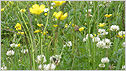
No. 5 - Summer Flower Meadow
Find out how various projects are helping one of nature's most understated spectacles make a come back.
Best places to see - Around the UK including North Oxford which is featured in the programme.


Also on Nature's Top 40
BBC Nature & Wildlife
More from bbc.co.uk nature

BBC iD
BBC iDBBC navigation
BBC links

BBC © 2014The BBC is not responsible for the content of external sites. Read more.
This page is best viewed in an up-to-date web browser with style sheets (CSS) enabled. While you will be able to view the content of this page in your current browser, you will not be able to get the full visual experience. Please consider upgrading your browser software or enabling style sheets (CSS) if you are able to do so.
