Ruth Madeley, India Amarteifio and The Rapture cast and creatives on the heatwave thriller that's "more relevant now than ever"
Filmed in Wales, the series is written by award-winning performance artist, playwright and screenwriter Bryony Kimmings and Rebecca Manley
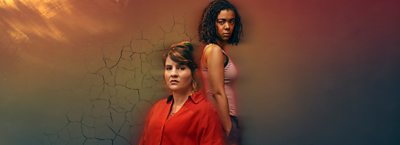
Ruth Madeley and India Amarteifio star in The Rapture, a psychological thriller adapted from Liz Jensen’s bestselling novel and produced by Mammoth Screen, part of ITV Studios, for BBC iPlayer and BBC One.
Filmed in Wales, the series is written by award-winning performance artist, playwright and screenwriter Bryony Kimmings (Last Christmas, Bogwitch) and Rebecca Manley (Berlin Noir) and directed by Eva Sigurđardóttir (Little Disasters, Domino Day) and Jennifer Perrott (Rain Dogs, Gentleman Jack).
Set during a heatwave, The Rapture is a high-stakes thriller that crackles with wit and danger. After a life-altering car accident killed her husband and left her paralysed, psychologist Dr Gabs Fox (Ruth Madeley – Years and Years, Then Barbara Met Alan, The War Between the Land and the Sea) starts a new job at a psychiatric hospital where she is assigned 17-year-old inmate Bethany Krall (India Amarteifio – Queen Charlotte, The Midwich Cuckoos).
Two years before, Bethany was sectioned for the brutal murder of her mother, Carys Krall. The case shocked the nation, not least because Bethany’s father, Leonard Krall (Sam Hazeldine – The Lord of The Rings: The Rings of Power, Slow Horses), is the charismatic leader of the Faith Way, a spiritual movement with millions of online followers.
Bethany seems to know private details about Gabs’ life and insists she can see visions of the future, which she communicates through disturbing sketches of disasters: storms, fires and floods. Bethany’s nurse Rafiq insists Bethany’s predictions always come true, but Gabs is sceptical, determined to find a clinical explanation.
As the heat intensifies, Gabs begins to notice unsettling connections between Bethany’s prophetic drawings and the world outside, forcing Gabs to re-examine her assumptions. Could Bethany be innocent after all? If she didn’t kill Carys Krall, who did and why?
With the help of journalist Dick Carwyn (Iwan Rheon - Those About to Die, Game of Thrones) and engineer Frasier Melville (Jack Farthing – Industry, Rain Dogs), Gabs digs deeper into the history of the Kralls. As she falls further down the rabbit hole, Gabs is forced to question – is Bethany telling the truth, or is she being manipulated by a deeply troubled teenager?
The cast also includes Stephen Campbell Moore (The History Boys, Masters of the Air), Lisa Palfrey (Sex Education, Cobra), Siena Kelly (Black Mirror, Domino Day), Naby Dakhli (House of David, Messiah), Richard Elis (The Pact, Creisis), Dean Rehman (The Kite Runner, Until I Kill You), Robert Rhodes (28 Years Later, House of the Dragon) and Ruth Jones (Gavin & Stacey, Stella).
Rebecca Durbin, Executive Producer for Mammoth Screen says: “Although The Rapture tackles timely and important themes, at its heart the series is about an unlikely relationship between two women and the surprising, ever shifting power dynamic between them. Has Gabs been taken in by a manipulative psychopath, or is Bethany a teenage prophet? This thrilling and unexpected story will leave audiences questioning what, and who, to believe.”
Liz Jensen, author of The Rapture, says: “The story feels far more timely now than when I wrote the book. The series foregrounds contemporary issues like climate anxiety, corruption, spiritual yearning and the deep bonds we form in times of crisis – to thrilling effect.
"Bryony Kimmings’ and Rebecca Manley’s scripts have huge charisma, with Ruth Madeley and India Amarteifio capturing the fraught relationship between two spirited but vulnerable characters with huge empathy, verve and nuance. I’m especially glad that we now live in an era where we can see a disabled actor playing a disabled character in a story that isn’t solely about disability.”
The Rapture is a Mammoth Screen production for BBC iPlayer and BBC One. The 5x60’ series is written by Bryony Kimmings and Rebecca Manley. The series is directed by Eva Sigurđardóttir and Jennifer Perrott and Series Produced by Betsan Morris Evans and Joanna Crow. Mammoth’s Creative Director Rebecca Keane has overseen the development of the series.
The executive producers are Rebecca Durbin, Tom Leggett, Ruth Madeley and Damien Timmer for Mammoth Screen. Danielle Scott-Haughton was the executive producer for the BBC, alongside Nick Andrews for BBC Wales. The Rapture was produced with support of Creative Wales and will be distributed internationally by ITV Studios.
Watch The Rapture on BBC iPlayer from 6am on 26 July and on BBC One at 9pm the same day.
LV
Meet the cast and creatives
Ruth Madeley (Gabrielle Fox)
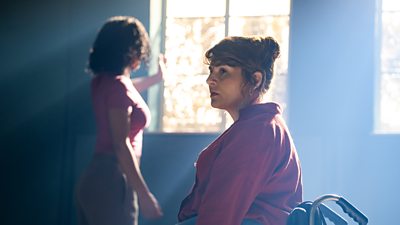
Describe your character Dr Gabrielle Fox
Gabs is a clinical psychologist for adolescents. She is a wheelchair user with an acquired disability following a spinal cord injury from a car accident and is now living in Wales after having spinal rehab.
We meet Gabs two years after her accident, as she returns to work at a psychiatric unit, where she meets a very interesting patient. She is newly disabled and having to navigate a life in a new place with a new job. She’s also still grieving, having lost her husband in the accident. She’s processing a lot and dealing with a lot of change, but she wants to get back to work because that’s where she’s most confident and most herself.
Could you talk about the journey she goes through?
Gabs is very strong and quite stubborn. I haven’t been typecast, I swear! I’m not going to give too much away, but she doesn’t always do things the right way, which I love. Thinking about why a character makes the choices that they do fascinates me.
She grows a lot over the series - the character arc is huge. She becomes more confident as a wheelchair user and does a lot of firsts in her new life. One thing that I love that never changes is how good she is at her job, and the very essence of who she is - even though it feels like she’s lost it a little bit from the accident, grief and navigating her new life. She’s still so “Gabs” throughout the whole thing. She’s strong and determined, knows what is right, and does what she needs to do to protect the people around her.
Describe the relationship between Gabs and Bethany played by India Amarteifio.
Gabs is intrigued by Bethany, but feels uneasy around her. She’s a very interesting patient. Bethany is in Oxsmith psychiatric hospital for apparently killing her mum, but she is adamant that she didn’t do it, and she’s trying to convince Gabs of that. She also says that Gabs came to Oxsmith for a reason, and the reason was to help her.
Bethany tells Gabs that she had a vision of her coming. Gabs works with many children with psychological issues, but there’s something about Bethany that feels a little bit different. As they continue to work together Bethany gets more visions, she’s able to draw them out and show Gabs, and Gabs sees things coming true from these drawings. She is slowly getting reeled in, and we don’t know whether she’s being led down this wild path or whether Bethany’s telling the truth, or if Gabs is in danger.
What are the main themes within The Rapture?
There are so many themes. There’s climate change, there’s mental health issues, there’s disability, there’s general female life. The great thing is that the story is so compelling. It’s a psychological thriller, so there’s a lot going on, and its high stakes all the time. The way these subjects are woven into the world of The Rapture is really beautiful.
What drew you to the project?
When The Rapture first came to me, I fell in love with the character – her story, her grief, her flaws. Seeing a disabled lead is always really exciting and knowing I can play that well and be the right person for it is even more exciting. I love her flaws. I never want to play a character who’s too perfect. It’s not real.
The book has been around for a while, but the way Bryony Kimmings and Rebecca Manley have written the script makes it feel really relevant to the world today. If I wasn’t in it, I would absolutely be all over this as a viewer. The psychological thriller aspect for me is so exciting. That’s the kind of stuff I love to watch, and being able to work with a female team is an incredible honour.
What do you think Wales as a location has brought to the show,?
I want it on record that we were in Port Talbot in 33-degree heat. I wouldn’t have believed it if I hadn’t been there myself. When we knew that we were filming in Wales, and the script reflected that, weirdly, it seemed to all fit. It almost made the story make more sense. The nature of the locations are stunning, the scenery here is unbelievable. It looks so beautiful. You can only get that in Wales.
What’s been the biggest challenge?
The biggest challenge has been the physical aspects of it - remembering not to move my legs, because my own disability is very different to Gabs’. So that’s interesting to me, to have a different experience of not being able to move. I’ve had that throughout my life, where that’s been my reality, not being able to move after surgery and stuff, and obviously navigating the world as a wheelchair user, but I am ambulatory, whereas Gabs isn’t. That’s been the biggest challenge, wanting to do that justice.
What was it like working with India?
India is incredible. I love to watch her in anything, purely as a viewer. I’m always excited to see her performance but to have the opportunity to act opposite her and share a screen with her has been a true privilege. I think she is the perfect Bethany.
There’s a bond between Bethany and Gabs that is established, a role that another woman can have in your life, and that is really beautiful for me. It’s an interesting way to tell the story of two women… it’s very cat and mouse throughout.
What’s your favourite on-set memory?
Working with Ruth Jones, two days of therapy! Having Ruth Jones as your therapist? Come on. You can’t write that stuff. It’s incredible. So, getting to share the screen with her, act opposite her, that was a beautiful moment.
India Amarteifio (Bethany Krall)
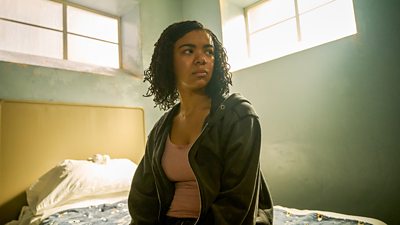
How would you describe your character, Bethany Krall?
I would describe Bethany as misunderstood and passionate. In her youthfulness and naivety, she sees the world as binary – things are either the best or the worst. She’s dead set on finding who’s murdered her mum, which affects her behaviour. She’s steadfast and focused on that goal.
How are we first introduced to Bethany?
It’s pretty intense. She’s sprinting out of her house running away from the police, which I think is quite telling of her character. We slice into a part of the series that you’re like, “What the hell is going on?” It allows room for suspense, because this scene isn’t necessarily representative of who she is...
What journey does she go on as a character?
Bethany goes on a huge journey. It’s a journey of regaining trust in herself, in the adults around her, and in authority and people in authority. She begins to have an understanding that there is corruption within the people that you’re supposed to depend on the most, her understanding of her own faith is like a through line throughout the whole series, but also just growing up in general.
Can you tell us about your character’s relationship with Gabs?
The relationship with Gabs and Bethany is a key part, definitely. Part of the reason Bethany can trust Gabs so much is because she sees her in her visions, she feels like she can rely on her. Gabs has kind of stepped into that maternal role when Bethany doesn’t have her mother, or her father. Gabs is not only helpful in the sense of how the story goes, but also for Bethany personally. It’s important for her to have someone in her corner, it’s important in terms of her journey.
Can you describe what it’s been like playing scenes with Ruth (Madeley)?
It’s been fun, because we’re very unlike our characters. When we cut, we’re chatting, having a hug, or just talking, and then we turn over and we’re both in very different mindsets. I think Bethany is someone who’s very lost in life. It’s quite typical for someone like that to push away the people who are closest to them, because they are testing if they’ll come back. The fact that she pushes and pushes, and Gabs still comes back each time, is what allows Bethany to start breaking those walls down.
Do you agree that some of the themes in the book resonate heavily with the world that we live in today?
What’s amazing about Liz Jensen’s book is that it was written over a decade ago, but if anything, it’s more relevant now in terms of climate change, how we treat people with mental health needs, and how we also, as a society, ostracise people who need the most help. It’s important to talk about that, because it is an actuality of what’s going on. I guess the fact that we get to tackle those issues head on is something I’m proud to be a part of.
When you first read the scripts, what did you think, particularly because you already knew the book?
I think the beauty of this project is that it is similar enough to the book that you will enjoy seeing these characters, situations, and settings come to life, but it still feels really fresh and modern, because we’ve spun it into a contemporary version of the story.
I’m a massive book reader, and I love watching adaptations, because sometimes it’s exactly how you’ve pictured it and sometimes it’s not. I think we’ve taken it in a slightly different direction, which will be great for audiences. They can get a feel for the book, but they also get a different take on it. It will almost be like experiencing two versions of the story.
The show is obviously set in Wales. What’s it been like working there for you?
I’ve filmed briefly in Wales before, but this is the first time I’ve spent a longer period here, and it’s been unreal. I’m such a country girl, so it’s been perfect. I’ve been staying on a farm, so after a really intense day, going back to see the horses, the cows, and the beautiful green meadows has been amazing. I’ve also loved learning more about Wales by being here and speaking to the crew and cast.
What do you think Wales as a location has brought to the show?
So much. I’ve heard there are a lot of projects filming here now, and it seems to be a place where you can film throughout the year because different locations are easily and readily available very close together. It’s honestly been perfect. We’ve really been able to home in on the beauty of the landscape, which is what the show is about. It’s about celebrating and looking after the planet, and Wales is a great place to show that.
What has been the biggest challenge of playing Bethany for you?
I think the biggest challenge has been not realising how physical this character would be. I love dance and movement, but every day I feel like I have to morph into an almost lazy, teenage girl, and that can take a toll on your body. At the same time, you want to be giving energy in the scenes and making sure that in every take you’re delivering the same level.
When you’re using, or not using, different parts of your muscles over and over, it can really take a toll. There are also moments where I’m being restrained, or scenes where I’m sprinting. But it’s kind of cool when that’s what I’ve done for my job, like, “Today, I got tackled by a stunt person onto the floor.” It’s a really rewarding kind of tiredness. I feel like my body’s actually worked and done something.
Bethany has a unique ability in the show. Would you like to be able to predict the future?
I actually don’t think I would! The visions she has are terrifying. They keep her up at night, and she ends up in a psychiatric unit because she’s seen some really grisly, ghastly things. I also think seeing the future might incite anxiety that doesn’t need to be there. I like living in the present. I would like to draw like she does, though, I think that’s pretty cool.
Can you talk about the use of art in the drama?
I’ve always been quite jealous of friends who could sit in class and draw eyes and things like that. I’ve never really understood it. But our artist Mike Fischetti, who has done most of the drawings alongside Julian (Luxton, production designer), has gone step-by-step through how he approaches them. Again, it’s another thing I’ve learned on set.
I haven’t done any of the drawings myself, but learning different techniques, like how to hold the pen and when to apply pressure, has been really enlightening. It’s actually made me want to pick up a pen and do some drawing myself or get back into art again.
Sam Hazeldine (Leonard Krall)
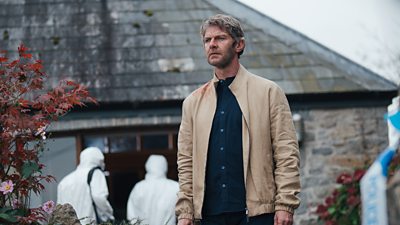
What’s the premise of The Rapture?
Well, the premise is that my teenage daughter, Bethany, has visions, and she expresses them by making detailed drawings that are quite foreboding. One drawing is a premonition of her mother being brutally killed – and then weeks later it happens, so she becomes a suspect. We don’t know if that’s the case or not, but she’s taken into a psychiatric unit, and that’s where she meets Dr Gabrielle Fox.
Who is Leonard and what is his background?
Leonard was a vicar in a church in Cardiff, but he has now started his own National movement, which is trying to be more inclusive – not so much worshiping a Christian God, but the idea of God as a higher power that’s more universal and offers a place of hope for people to come in times of uncertainty and anxiety.
What’s his relationship like with Bethany?
His relationship with his daughter is very strained, of course, because of the death of his wife, her mother. He loves his daughter and he wants to reconnect with her, but he hasn’t been allowed to see her for a while because she’s in the psychiatric unit.
Which cast members you have particularly enjoyed working with?
It’s great working with Iwan Rheon. He’s a fantastic actor, lovely guy, very funny, and I’ve admired his work for a long time. It’s been great working with him. And Jack Farthing too. I worked with him on a BBC show called Rain Dogs a few years ago. He’s a fantastic actor. And also Michael Elwyn who plays the vicar. My dad was an actor, and Michael had worked on a TV show with him many years ago. We had a lovely chat about that.
What’s it been like working in Wales?
It’s always lovely working in Wales. I did another BBC show here called Requiem back in 2017, that was also filmed in Cardiff. The crew we’re working with are absolutely fantastic on this job. Tireless. And lovely and funny and warm. It’s just been great.
What’s been your favourite location?
I’d say filming at Margam Park Ruins, it’s a very popular location but it’s so beautiful. I didn’t actually get a chance to look around all the grounds and the main building, but we were filming in the ruins and it has a real energy about it.
Jack Farthing (Frasier Melville)
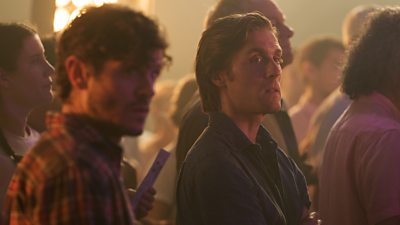
Describe your character Frasier Melville and his relationship to Gabs?
Frasier is a Geologist working in renewable energy, he’s recently moved from London to South Wales to work on a new wind farm and make a change in his life. He meets Gabs (Ruth Madeley) at a fundraising event and immediately seems to find a kindred spirit; someone who finds the whole thing just about as boring as he does. They click, and on a whim decide to escape for dinner, and something grows from there.
He seems an ambiguous character, would you agree? Does that make him more interesting to play?
He's ambiguous for sure. Maybe not from the start, but as we get to know him more, and as Gabs digs deeper into everything surrounding Bethany. He has a whole slice of his life he'd rather not discuss with Gabs, for obvious reasons, and demons of his own to overcome. And yes, of course that makes him much more interesting to me, and hopefully to viewers. He's complicated and contradictory, and human.
Tell me about working with Ruth Madeley, how were your scenes together?
Ruth is magic. A wonderful, natural and nuanced actor, but also just a very beautiful person. She carried this show with ease and elegance, and somehow managed to keep everyone laughing along the way.
What would you say are the most important themes to The Rapture?
There's lots in there. The backdrop of climate change and a heating planet is central, but more specifically, I think it's the social and political effects of that environmental change and how it can be exploited. And of course, there's a lot about grief and carried trauma and how we live our lives in the wake of the obstacles we face. Heavy stuff, but because Gabs is Gabs, and Ruth is Ruth, there's somehow a beautiful humour and lightness to it all too.
What was it like filming in Wales? This is set in the middle of a heatwave but that’s not necessarily what Welsh weather is known for…
Yeah, we did get some sun, but there was definitely a lot of being very cold and pretending we weren't. Wales is wonderful though. I've filmed a fair bit there and being in that landscape and on the south coast is always very lovely.
Iwan Rheon (Dick Carwin)
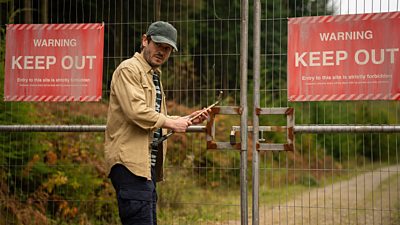
How does your character fit into the story?
Dick is a journalist who’s a bit washed-up, and he’s lost everything. He was investigating the Faith Way and beginning to look at Bethany’s vision when Carys Krall dies. He was quite high-flying, but he’s lost everything. He feels very bitter about that, he has developed a bit of an alcohol problem. When you meet him in the story, he’s at a low point in his life. But his passion for the story and telling the truth is reignited when Gabs arrives and he starts to get a bit more meaning in his life. He’s good fun to play.
How would you describe the tone of The Rapture?
What’s interesting about it is the whole show is incredibly hot, which is something that we know a bit about now, even in Britain. We’re trying to play the stifling heat, so the tone of it is made very tense through that that hot, sweaty summer vibe. There’s a lot of mystery about it, and slowly, the whole thing starts to unravel. It lets the audience in bit by bit, so hopefully it’ll keep the viewers guessing right until the end.
What attracted you to the project?
Well, firstly, the story is really interesting. I really enjoyed the relationship between Gabs and Bethany and how you get let into the world through their interactions. I like Dick as a character. What was interesting is that this came along when I was looking for lighter parts, and Dick just felt perfect for that. He can be serious, but he’s quite a light-hearted person. He’s a bit fun and silly.
What did you think when you first read the scripts?
The story was incredibly compelling. I read through the scripts really quickly, wanting to know what happened. I think it’s going to make people question how things are run and how big corporations and government interact and whether that is in the public interest or not. It brings what is a very current theme into the drama without it being preachy, and I really enjoyed that dynamic.
Do you have any favourite filming locations?
Well, it’s always nice to come back and film in Wales. There have been quite a variety of locations. Margam Park, which is really nice. We filmed a lot in Port Talbot, and it was like 35 degrees, which is bizarre, because I don’t think it’s ever been that hot there! But yes, it’s quite nice to be in various locations all around South Wales. And Dragon Studios, of course. It’s been lovely. I love coming back here.
What do you think Wales as a location has brought to the show?
Because Wales has such a diverse range of locations, it offers so much to the filmmaker. For this, they wanted a variety – from a slightly run-down town to open forests and ruins - so you’ve got that real dynamism, which is great to see on screen. So, from a seaside town that has seen better days to nature and history, it offers filmmakers the opportunity to make a lot of different places look pretty much like anywhere.
Bryony Kimmings (Writer)
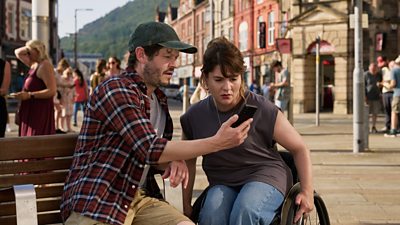
Why did you want to be involved with The Rapture?
The book really spoke to me - the idea of two unlikely reluctant heroes. Two people with a lot of their own problems really not wanting to be called into action. That felt interesting, the fact they were women with huge mental loads that ALSO needed to help with the planet, that felt real and true to my own story. That is fresh. The hard not heroic fodder that’s reality. That’s honest.
Do you recall how you felt upon the first reading of Liz Jensen’s book?
I felt very excited by the way the women spoke to one another. Like real people. Like I do my mates. Taking the piss, being rude, criticising, sometimes manipulating but also loving and supporting. The characters felt full and real. I loved Liz’s concept too. It felt fresh and new. And we need new stories around the climate. Lots of them and quick. Ones that are relatable, not dystopian hellscapes. This presented that.
How does your script differ from the book – in terms of the overall story, characters etc
The book leads towards a large disaster, whilst our show isn’t doing that. I decided to make the disaster more of an emotional and internal one. We moved from solving a tidal wave to investigating a potential miscarriage of justice. Again, simply because we know 17 years later after the book came out what the cost to the systems of the earth are if we continue with our growth and our extraction.
And how do you think it now resonates with a modern audience?
I think it couldn't be more pressing to find new ways to talk about the climate crisis, the oil crisis, the ecological crisis in ways that aren't our old ways. This is an example of how to do it differently; with humour and love and some politics strapped in, but not rammed down your throat or trying to make you angry. The modern audience need some kindness and solutions... not dystopias and loads of information about how it’s too late. Because it isn't. I think it has some mirrors to modern life and the questions we all need to be asking ourselves. Hopefully it will feel fresh and new.
Tell me about your lead characters – Dr Gabrielle Fox and Bethany Krall?
Gabs is a psychologist who is just back at work after a car accident that killed her husband and made her a wheelchair user. She is traumatised and grieving, but too proud, and it’s too much of a busman's holiday to get real emotional help. She is an island, living away from home, trying to keep her head down. The last thing she wants is a problem or a cause.
Bethany is her patient. Not that she wants to be. She hates doctors. She is in a secure unit for supposedly committing matricide but she swears she has been wrongly accused. She thinks she has magical powers. Hence why she's in a psych unit and not a prison. She is the daughter of a rising star of the Faith Way which is a powerful religious movement. And she does NOT like her dad.
What has the BBC ever done for me?
Follow For More
Latest from the Media Centre
All newsSearch by Tag:
- Tagged with DramaDrama
- Tagged with WalesWales
- Tagged with Media PackMedia Pack
- Tagged with Latest NewsLatest News
