
On the 26th November 1983, six armed men broke into the Brink’s-Mat security depot near London’s Heathrow Airport, and inadvertently stumbled across gold bullion worth £26m. What started as 'a typical Old Kent Road armed robbery' according to detectives at the time, became a seminal event in British criminal history, remarkable not only for the scale of the theft, at the time the biggest in world history, but for its wider legacy.
The disposal of the bullion led to a vast international money laundering operation, provided the dirty money that helped fuel the London Docklands property boom, united blue and white collar criminals and left controversy and murder in its wake.
Inspired by extensive research and interviews with some of those involved in the events, The Gold is a pulsating dramatisation which takes a journey into a 1980s world awash with cheap money and loosened morals to tell this extraordinary and epic story for the first time in its entirety.
The Gold (6x60’) is written by Neil Forsyth (Guilt, Eric, Ernie & Me) and is a co-production between Tannadice Pictures, an Objective Fiction partner, and VIS, Paramount’s international studio division. The series will premiere in the UK on BBC One and BBC iPlayer, and then be made available on Paramount+ in the US and all international markets where the service is available.
The Gold (6x60’) is the first commission from Tannadice Pictures, the joint venture set up by Neil Forsyth and Objective Fiction, part of Objective Media Group, an All3Media Company. Executive producers are Tommy Bulfin for the BBC; Neil Forsyth and Ben Farrell for Tannadice Pictures; and Kate Laffey and Claire Sowerby-Sheppard for VIS. Charlie Leech (The Aliens, Lovesick) is producer. The Gold is also directed by Academy Award-winning Aneil Karia (The Long Goodbye) along with Lawrence Gough (The Last Bus, Snatch, Misfits).
The Gold airs from Sunday 12 February at 9pm on BBC One and iPlayer with all episodes available as a boxset on iPlayer from launch.
JS
The Gold Cast
Brian Boyce – Hugh Bonneville
Nikki Jennings – Charlotte Spencer
Tony Brightwell – Emun Elliott
Kenneth Noye – Jack Lowden
Edwyn Cooper – Dominic Cooper
John Palmer – Tom Cullen
Marnie Palmer – Stefanie Martini
Gordon Parry – Sean Harris
Micky McAvoy – Adam Nagaitis
Archie Osbourne – Daniel Ings
Isabelle Cooper – Ruth Bradley
Brenda Noye – Nichola Burley
Sienna Rose – Ellora Torchia
Assistant Commissioner Gordon Stewart – Peter Davison
CS Cath McClean – Amanda Drew
AI – Anil Desai
DCI John Fordham – Hadley Fraser
DI Neville Carter – Sean Gilder
Jackie McAvoy – Lily Knight
Garth Chappell – Robin Laing
Jeannie Savage – Dorothy Atkinson
Neil Murphy – Chris Coghill
Matteo Constantino – Vernon Dobcheff
Max Goodman – Paul Thornley
Brian Reader – James Nelson Joyce
Kathleen Meacock – Sophia La Porta
Freemason Julian – Martin Carroll
Santiago – Anton Antoniadis
Senesie – Deenie Davies
Billy Jennings – Danny Webb
Brian Robinson – Frankie Wilson
Harry Bowman – Silas Carson
The Gold Creative Team
Writer – Neil Forsyth
Directors – Aneil Karia and Lawrence Gough
Casting Director – Olivia Scott-Webb
Hair & Make-up Designer – Lisa Mustafa
Costume Designer – Grace Snell
Commissioning Executive (BBC) – Ayela Butt
Composer – Simon Goff
Executive Producer (BBC) – Tommy Bulfin
Executive Producer (Vis UK) – Kate Laffey and Claire Sowerby Sheppard
Cast Interviews
Interview with Hugh Bonneville (Brian Boyce)
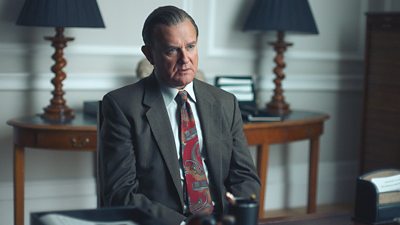
Describe Boyce to me, what he does and what kind of a person he is.
Brian Boyce is a trustworthy, by the book police officer who started off in the army. He’s a very skilled and dedicated man, a natural leader and it’s his job to head up the investigation into Brink’s-Mat. What makes Brian Boyce good at his job is that he’s determined to be the best policeman he can possibly be. He believes in right and wrong, justice and doing the right thing by society. I think that is at the core of his being. He grew up through the war and his father taught him right from wrong, in no uncertain terms. That’s not to say his father was a harsh man, but he was a fair man that had a strict code of ethics. In joining the police he soon realised that he was right for the detective side of things and so that’s where he started. He was in Brixton for a long time and then joined Nipper Reid and the famous knocking down of people like Ronnie and Reggie Kray.
What did you glean from meeting the real Boyce and what was he like?
I had the pleasure of meeting Brian Boyce, who’s now in his eighties but still as alert as you like and full of fascinating stories about his career. He took me through the story of his policing life which led to him being given charge of this particular operation. It’s been documented elsewhere that there was a significant amount of corruption in the police throughout the ‘60s, ‘70s and ‘80s – but Boyce was clearly a man who was not going to be corrupted, which is why he was trusted by both the Security Forces and by those high up in the establishment. I often think about characters in terms of their pulse rate and one of the main things I took away from my meeting with him was that he has a slow pulse, a calm pulse. He’s a man who considers, reflects and he’s a good delegator. He trusted his team, or needed to trust his team when he couldn’t trust those around him and he kept those he could trust particularly close.
The story is inspired by the real robbery but there are some fictional elements to it as well. To what extent have you based your Boyce on the real Boyce, or have you taken what you need from the script?
When you’re playing anyone who’s either living or in recent memory, you have an obligation to try and portray them as accurately or as fairly as you can, and obviously meeting him adds a different dimension. I got the measure of the way he viewed the world and the way he operated within his team. I got a sense of a man who was fair and considered and wouldn’t speak off the cuff. He would think through what he was going to say and what he was going to do. Not a man of impulse, I’d say. It was incredibly helpful to get the measure of the man in that regard.
What was Boyce’s role in the investigation?
This was the year of the stereotypical view shown in The Sweeney, and the beer drinking at lunchtime - all going down to the pub and taking their policing as seriously as their pints. Boyce put a stop to that: he basically came in and said, ‘Right, everyone’s going for a run every lunchtime’, ‘You’re not fit’. Boyce was a fit man, he was a committed man and wanted his team to be as alert and as dedicated as he was, and that didn’t quite suit all the guys at the time. It was a very male, chauvinistic environment. Boyce was a man who wanted to play with a straight bat and when Brink’s-Mat came along, it was decided that a completely separate building, operation, and hand-picked team would be required to undertake the task of trying to piece together what had happened.
What fires Boyce up about being actively involved?
What Neil Forsyth (creator/writer) has brilliantly etched into the character of Boyce is a man who liked to be at the frontline. He’s a great example of someone who would only ask his team to do what he would do himself. He’s a man who’s prepared to put himself at the front. It’s very nicely etched into the story when his team are on surveillance, the tension is rising and he realises that being in the safety of HQ, behind a desk, is not where he should be. So he heads to Kent to be with his team and of course there he witnesses a major part of the story unfold.
Did you do any research beyond meeting the real man?
I’m a great believer that if it’s not in the script, you can’t play it. Our writer, Neil Forsyth, had done an incredible amount of research and had spent a lot of time with people like Brian Boyce and read up on everything to inform his scripts. I did watch the documentaries from design and costume point of view. I mean, for me, someone in their 50s, the ‘80s feels like yesterday but this is suddenly a period piece! I can remember 1983 vividly, you look at it now - at the fashion and the cars for instance - and you think ‘My gosh it is becoming part of history’.
What did you enjoy about playing Boyce and about being involved in this production?
What I found particularly enjoyable was revisiting a story that I thought I knew. When it first came up I thought ‘Oh yes, that was that robbery in west London’ and ‘they got more gold than anyone’s ever got before’. But what I hadn’t realised was the surprise of it, that they really didn’t realise they were going to be coming across the amount of gold that they did. I believe they thought that it was going to be some cash and a bit of gold. But they found three tonnes of gold bullion and had to work out what to do with it. There’s a fascinating thing of the amateurs, if you like, trying to become professional very, very quickly. The storytelling is really the eyes and ears of the audience because we are trying to piece together where all the gold is going and where could potentially it go next. It’s proper cops and robbers. The sheer audacity of what they do is extraordinary.
How would you describe The Gold?
The Gold is a classic heist. Deceit, corruption, cops and robbers. Good guys versus bad guys. Cat and mouse. Bullion, greed, avarice, people trying to better themselves. Everyone trying to climb up the greasy pole in some way, shape or form, be it in terms of their social standing, their economic standing, their career standing. How far do people go to try and better themselves? Does greed have its comeuppance? Does good triumph over bad?
What do you love about Neil Forsyth’s script and style?
Neil is able to weave terrific dramatic tension with dark humour in The Gold, just as he did with Guilt. You’ve got a big, big story about the nature of society in the ‘80s, shot through with dark humour. The sheer audacity of the way that the team operated, the sheer audacity of the way that these individuals came together and unwittingly spread out this network of corruption and gold across the country and across the world is riveting.
Tell me a bit about Boyce’s costume and going back to the ‘80s. Is it quite amusing to revisit what you might have worn back then?
Boyce is a relatively conservative character and obviously with his military background, he’s quite neat and tidy. He’s not going to be wearing garish shirts or anything like that. What was shocking was when the costume team were pulling out clothes, I recognised some of it that I might have worn back in the day! It was the era of early Simon Le Bon, Bucks Fizz hair and Joan Collins – not that Boyce was wearing Joan Collins outfits. Boyce had a particular double-breasted suit that he was photographed wearing at the trial which we had copied and made for me. I was actually very comfortable - I think it’s going to make a comeback!
What was it like being on set for The Gold?
The Gold was a really big production. We had well over a hundred characters several different storylines buzzing at once. On set and bringing it to life was a miracle of organisation, so hats off to the production team and logistics and locations and everybody else. Any film crew is a big army moving and this is a particularly big crew having to be very nimble on its feet and adjusting. The pressure was on, as it always is, but the producers and the directors have given everybody space to explore their characters and the nuances of the story. It was a big machine that was steered with great finesse and style by the directors Aneil (Karia) and by Lawrence (Gough).
Interview with Charlotte Spencer (Nicki Jennings)

Tell me a little bit about Nicki Jennings’ look?
I love the eighties look, particularly the amazing power suits! I had my hair cut for this role. It was so long and I've never had short hair before and I love it. I'm bringing back the bob I hope.
What are you finding about the sets and designs interesting, delving back in the era?
Being an actor is just dressing up, playing pretend and delving into different worlds. The set design completely immerses you into the world, which is helpful as I was born in the nineties! I'm a little bit obsessed with the wired phones - I kept picking them up, and pretending, like a child, to talk on them like I'm at playschool because I just love them so much.
Can you describe Nicki Jennings?
Nicki Jennings is determined, clever and gritty. She's very determined to go up in the world and to be seen and listened to, and she's good at her job. She doesn’t come from a well-to-do background. She's working class and her dad’s a criminal and she chose to go against how he was.
Is Nicki Jennings based on a real person?
Not quite, Nicki Jennings is based on a number of women in the police at the time. There were actually lots of women in the Flying Squad because, as women, they were least suspected when on surveillance.
Can you tell me how the dynamic between Jennings, Brightwell (Emun Elliott), and Boyce (Hugh Bonneville) evolves?
The three of them - Jennings, Brightwell and Boyce - are completely different characters and that’s what makes it work. Boyce oversees the whole thing. Jennings is the quick, clever one that always wants to get going and Brightwell basically… Brightwell’s really chilled out. He's been doing it such a long time that he calms Jennings a lot of the time.
What did you find most enjoyable, and most challenging about playing the role?
The cast of The Gold is truly quite amazing, it was so incredible to watch the rest of the cast at work. It was really a lesson! What I found the most difficult about playing Jennings is that I find a lot women come in and play a feisty character, and in doing so they try and emulate men. I didn’t want her to be that, I thought it was very important that she's still feminine. You can still be powerful and feminine. You don’t have to just ‘bloke it up’. Jennings is feisty but she still wears nice clothes and makeup, and I kind feel that there's power in that.
What do you like about Jennings?
I think Jennings is great. She's gritty. I'm a bit feisty myself so I understand that feeling of wanting to be respected and to be heard. She's a nice character to play.
What do you find fascinating about it? What grabbed you about it?
What I liked about the scripts, and the story in general, is that there is physical gold. It’s something you just don’t hear of anymore, and the fact that it got smelted down and dispersed, to the point where any gold that now exists, after the eighties will likely have a little bit of Brink’s-Mat in it. Go and check your jewellery now! You’ve probably got Brink’s-Mat on your wrist or in your ears. I found that fascinating.
As an actor what grabbed you about the script and the craft of his writing?
Neil’s script is so intricate and amazing, and it’s such an ensemble piece. There are so many people involved, not just the robbers and the robbery itself, but the police, and the bank managers, and the people on the street, and the wives: it’s so intertwined that you have to be a good script writer in order to tell this story.
Have you got into all the eighties music?
I like to create a playlist for each character I play, so I’ve created one for Jennings. She’s about 30 in the drama and so would have been born in the fifties or sixties, so she would have ranged from stuff that her dad played her – perhaps a bit of Elvis and The Beatles - then going into like her own stuff like Bowie and ‘Don’t You Want Me Baby’. There's some decent songs on there!
Three reasons to watch The Gold?
Because. The. Eighties.
Interview with Jack Lowden (Kenneth Noye)
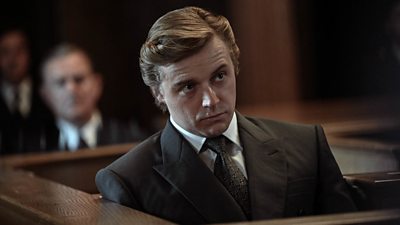
Tell me about Kenneth Noye
Kenneth Noye was officially described as a builder from Kent but it quickly became evident that he was not just a builder. He was many different things, namely a ‘fence’ to stolen goods.
Explain how they set about cleaning the gold?
Kenneth is brought to the gold in a lock-up with Micky McAvoy, and he’s shown the gold bars. He then takes one of the gold bars to John Palmer, who is a gold expert, to talk about how they’re gonna break it down. And essentially John Palmer smelted it down, but it was too pure, too traceable. That amount of gold can’t suddenly appear on the market, or on the black market, it would have been too suspicious. So, they washed it, essentially by throwing in copper coins, jewellery - anything really - before selling it or depositing it in far flung banks.
Did you do your own research?
I think it’s very important, when playing real people, to stick to the script as much as possible. Neil (Forsyth)’s writing is so good that there wasn’t much that I needed to look at and I preferred it that way. The character that Neil had written, like all the characters, was so fully formed and offered so many opportunities for playing around that I didn’t wanna get too bogged down in anything else.
What did you find fascinating about this story?
For me, what’s most fascinating about this story is the amount of people that are involved in it. It wasn’t one gang, one clever, criminal genius or anything like that. It’s a huge group of people that probably didn’t even know they were all connected by this huge web of people who all came from very different backgrounds and very different skill sets. You get the sense that if one of them fell, the whole thing would. But also, just the fact that it happened, and they sort of got away with it, in essence. Most of the gold’s still not been found.
What drew you to Neil Forsyth’s script?
I’ve been a massive fan of Neil Forsyth’s since he made Guilt up in Edinburgh, which is basically where I’m from. I was so excited that something as good as that was made there. With The Gold, I think it’s important that this piece is filtered through a hell of a lot of humour, because it is an unbelievable set of events. Certain points of the story should be very serious of course, and are dealt with enough pathos to make you stop and think about the price being paid for this extreme greed. But, it’s very important also to laugh at it as well… it’s a brilliant way of dealing with some fairly evil people. He’s just done a brilliant job.
What do you think audiences will enjoy about The Gold?
1980s London will be forever intoxicating and attractive. It’s never not fun to dip back into that and the ridiculousness of the time. But also, I think it’s important that people get to see that some of the Docklands came from dodgy money. And the real horrible underbelly that that period had, a real ugliness that came with all the flamboyance. I think it’s very important to be reminded of that because there were some pretty horrible things done.
Did you enjoy working in the 1980s sets?
What I found surprising, from a location point of view, was how many locations we shot in that don’t need particular dressing. I think that just reminds you that even though it’s about 40 years ago, it’s still quite recent and a lot of these places still exist. But everything seemed a lot more analogue, a lot more grey. Also, it’s always confusing to somebody that was born when I was born, to see the places the people used to smoke! I also got to drive around in a genuine gold Rolls Royce on my first day of filming. The owner was stood on the corner looking terrified! It was so stately, and comfy. I couldn’t believe the clobber and the gear that those guys were surrounded with.
What did you most enjoy in this role?
To be honest, the main things were the clothes. It’s the 80s, so everything’s just that little bit more brash, and a little bit more self-assured. Some of my costumes were fantastic. That was genuinely what I looked forward to each day – what am I wearing today? It was never a disappointment.
What was it like on set for The Gold?
The actors that I met on this job are just lovely human beings. Whilst there are some horrible things that happen in this story, particularly Kenneth’s story, it’s important to remember that and give it as much reverence as we can, there’s still a great sense of humour on set and both of the directors (Aneil Karia and Lawrence Gough) are two of the best directors of actors, they both have a very similar attitude towards actors that’s enormously helpful for something like this.
Interview with Dominic Cooper (Edwyn Cooper)
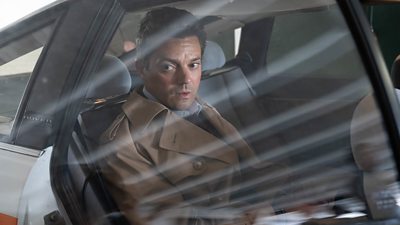
What can you tell us about your character, Edwyn Cooper?
Edwyn is a successful solicitor with a successful solicitor’s firm. He’s rather polished, wealthy and happily married – seemingly he has the perfect life. But this slowly deteriorates and starts to crumble from the moment that he accepts working with and for criminals with the prospect of making a huge sum of money. His predicament is a result of his own greed. He is tempted by the devil and as a result of that you watch him become feeble. Having been so strong, righteous and correct, what we discover is that that’s all false. I don’t feel sorry for him, I think he’s a fool, but I’m enjoying portraying someone who is given a choice and made a decision.
Unlike the other characters, Edwyn is in a lot of different positions – he doesn’t have one focal point so he tries to different techniques to get out of the situation he’s in. He’s really checkmated and I love that it’s all a lie, yet he’s got a façade of an absolute cool, held together, clever, witty, extravagant man. It’s fun peeling away those layers. What I have to do is make sure that the temperature each time we see him is in the right place for where he’s mental stability is. But I am relieved not to be him.
Can you tell me how he is involved and how he actually helps to pull in the money?
As well as being a successful solicitor, Edwyn has developed a bit of a side hustle, through a close link with the Masons, of helping the police force get slightly corrupt officers off once they have done something wrong. He’s created this whole wonderful set of flourishing monologues, Shakespearian moments, that he does to confuse the not-so-bright constable. It’s clearly been part of how he’s made quite a bit of money and he’s good at it. But this means he’s got connections to the underworld and he knows a lot of criminals, and those criminals dangle the carrot of something very lucrative in front of him; the robbery and the gold. Edwyn has links to the property world and, at the time, vast swathes of London were undeveloped. So he essentially buys and sells massive bits of land to move the money very quickly and to clean up the money. It’s a lot of money that they’re needing to get rid of and property was a good idea.
Can you tell me a little bit about the collaboration with The Gold’s writer Neil Forsyth and what initially drew you to the script?
Neil was on set all the time. On set, we don’t change anything in terms of script but we play with the tone. It was wonderful to have him on set because you could constantly have a conversation with him about the scene that’s playing out. And huge credit to Neil for the writing. The script read like a novel; so compelling and it moves forward in such a way, there are so many aspects to it. It’s one where you want to know what happens next. There are a lot of different very well-rounded, extraordinary characters in it and it’s got that richness and that comparison of old money, new wealth, dodgy characters, and useless-at-times police - but ones who ultimately uncover and solve it. The Gold is set in a world that’s changing, that’s on the brink of change and into the world of serious money and grotesque spending. It’s a proper story with good, long scenes with characters that you’re compelled to watch. You understand the predicament of each of those characters and you’re interested to see how it ends.
It’s also all inspired by a true story. That in itself makes you ask “wow, did this happen?”. My character, for example, is a composite character inspired by the white collar criminals who worked with the robbers and their intermediaries.
How differently all the characters speak in it is extraordinary, too. And I think, for me, what makes it so clever is that it’s not simplistic dialogue, this language is heightened. So when you look at it as an actor you’re confronted with the challenge. You try and make it natural. You’re sort of mumbling or put in your little quirks that you would when you speak. But actually when people do speak, or certainly someone that’s a good solicitor, they would speak very accurately with clarity and without much extra fact.
Did you do any research beyond the script or did you find everything you needed in the script?
I would like to lie and say I spent three years researching the robbery and how they got away with it, how they managed it and read all the legal documents for the court case, but that is not the case. Funnily enough, I grew up in South London and I have no recollection of this robbery although many, many people of my age do. I read a lot about it to prepare for the role and couldn’t believe this hasn’t been made before, quite frankly. It would be very interesting to see how the court case unfolded. It’s remarkable but also remarkable how they covered it up for so long.
What is Edwyn’s relationship like with Sienna (Ellora Torchia)?
Sienna comes along at a time when Edwyn’s marriage is becoming a bit difficult, so he just jumps ship. I think that’s completely pathetic of him. So when very attractive young lady is selling him property he just thinks “oh here we go”. But, what’s beautiful about it is you actually do see him happy. Like really happy and actually a glimpse of what he would probably would have really wished his life to have been. He stupidly and naively thinks that maybe that can happen and he can escape to France with this lovely, young woman but it’s all a lie. He hasn’t told her anything so it ends and falls to pieces. It’s a shame as there is a glimpse of something wonderful between them, but again the whole thing is a façade.
Can you explain more about your costume?
I love the costumes I have, so much credit to Grace because she has such a mammoth task on this, especially as we cover so many years. I am very suited in this and my suits represent me, again emanating something that I’m not. So I have really gone for sort of classic, wonderful 80s suits, some double-breasted. I think most of the costume budget went on my suits which I feel terrible for but they are so, so stunning. But I am very envious of the costumes that I see hanging up in the trailer. But I am sure the other actors have spoken about them. They are absolutely fantastic.
Why do you think The Gold would make a great watch?
It would make a great watch because there is not much like it on television at the moment. It’s nostalgic of a certain time and it’s an incredible story that not a lot of people know a great deal about. You’re amazed that these kinds of people managed to get away with such a thing. I hope that it will be exhilarating in uncovering and discovering with the police throughout the episodes, of how they got caught and how they managed to make such big mistakes.
