Blue Lights series 4 cast and creatives talk new challenges, huge action sequences and Gerry's return
The multi-award winning show returns this autumn

Three years into their jobs as response officers, Constables Grace Ellis, Tommy Foster, and Annie Conlon are operating at their limit, facing a new threat on the streets that the police can barely control.
Meanwhile, the murder trial of Gerry Cliff exposes a dangerous and long-buried secret that leads to chaos both inside the police and across the criminal underworld. As they grapple with big decisions about their future, Grace, Tommy and Annie must find the courage to face the greatest threat they have ever encountered: the truth.
UM
Interviews
Siân Brooke (Grace Ellis)
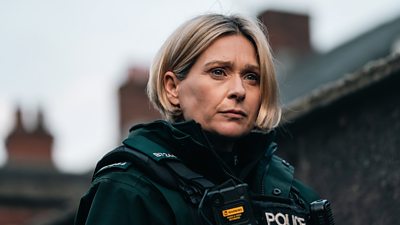
Where does Grace’s story pick up in series 4?
Series 4 starts six months on from series 3. Grace has taken her detective exams, and we find out in this series whether she was successful or not. In series three, she dipped her toes in the detective world with the child protection case, and it looks like she's found her calling. However, due to one thing and another we find her back on the beat and torn in terms of where she wants to be.
How is Grace feeling about her chosen career?
Once again Grace is really tested in the job this time around. She’s desperate to move forward and feels frustrated that it isn't happening as quickly as she wants. The officers are all very much at the coalface from the very first episode. It's quite chaotic for them and we kick off the season with a very heavy action sequence where a migrant centre has been attacked and all of our officers are right in the middle of it, dealing with a mob.
What drives her to put her life on the line every day?
She’s an empathetic person who desperately believes that she can make a difference. She wants to turn things around for people and at times she doesn’t really think about the danger that's involved. If she did, she probably wouldn't be so brave. She won't give up, which can be a blessing and a curse.
What are the big challenges that she's going to face this year?
She meets her match in a character that we encounter early on in series 4. This young woman Katie, who is dangerously provocative in bringing about chaos within society, which also affects policing. Grace always feels confident that she is able to change people's mindset or perspective but with Katie, Grace realises that she can't get through to her. It’s Grace, despite the uniform and badge, who ends up feeling powerless and vulnerable and that really tests her.
What would you say are the unifying themes of Blue Lights?
The key themes of the show this series are human kindness and the theme of home and what that means to people. The writers are clever in how they weave elements of what’s happening in the real world with storylines from series one through to four and connect the dots. From the return of Gerry and what that reveals historically to how Colly fits into the jigsaw of Gerry’s police life. The writers don’t shy away from the seriousness of recent events in Northern Ireland. They’ve humanised those stories and taken a tough job such as policing and given it a heart too. They also don’t tell you what to think. The viewer has both sides of the story.
How does the camaraderie within the station define this show?
The camaraderie of the show is the very heart of it. That's what shone through in those early scripts. These individuals go through crazy experiences, put themselves in danger and the bonds they have are very special. Take that one step further behind the scenes and we all get on so well and that feeds into what we do on screen.
What has lead director Angela Griffin brought to the job?
Angela is just a glorious energy to have on set because she makes everything seem possible. The huge action sequences are really hard to achieve and it's not like we have a huge Hollywood budget. Having worked within the industry for such a long time as an actress and now as a director, she's able to bring that understanding of all the components that make it work so she can speak to all the departments.
Martin McCann (Stevie Neil)

Where do we find Stevie in Series 4?
Stevie is settled and happy with Grace. They’re living together, and on the surface, life is good. But Stevie is starting to question where he fits within policing and, more fundamentally, what impact he can actually have. He’s become a little disillusioned with the job and is asking himself whether he could make a greater difference elsewhere, perhaps by moving up the chain of command. At the beginning of the series, Stevie is in quite an existential place. He’s asking himself some big questions about who he is, what he wants, and where he can be most useful.
What motivates him to put his life on the line every day?
Stevie comes from a place of natural decency. He genuinely cares about the job and, perhaps even more importantly, he cares about the people around him. His colleagues and his job matter to him, but Grace is at the heart of it. Those relationships, and his instinct to do the right thing, are what keep Stevie going. He might question the system, but he never really questions why he cares about the people within it.
What are the big challenges he faces this year?
Stevie is now a Sergeant, which changes everything. He’s no longer out on the ground with Grace, and he has to learn that from inside the station, there’s only so much he can control. That becomes particularly difficult when someone he loves so deeply is out there putting herself in danger. Stevie asks himself whether being station-bound is right for him when he knows Grace is on the frontline. There’s also a growing sense that his superiors aren’t telling him everything. Stevie’s instincts are usually pretty good, and his gut is telling him that something isn’t right. The more he senses that information is being kept from him, the more unsettled he becomes. He’s caught between wanting to trust the people above him and knowing that something doesn’t add up.
What was it like to welcome Richard Dormer back to the world of Blue Lights?
It was just like the old days again. Richard is very much part of the Blue Lights family and having him back brought a real buzz to the set. In many ways, Richard is the backbone of this series. He’s the sun, and we all orbit around him. He’s one of the most intelligent and generous people you could meet, as well as being one of our greatest actors, so when Richard came back, there was a feeling that we were making something special.
How does Gerry’s legacy play out in Series 4?
We know that Gerry has been murdered, but when we see characters interacting with him in episode 4, it gives his death a different weight. Those small moments between Gerry and Stevie, or Gerry with Sandra allow us to see the person who has been lost, rather than simply thinking about the fact that someone has been killed. We get a much more three-dimensional sense of what Gerry meant to the people around him. Those interactions remind us that when someone dies, you don’t just lose a person; you lose a whole set of relationships. We get to see just how special Gerry was to each character, and that makes his absence all the more powerful.
How does the camaraderie within the station define the show?
The camaraderie of the station is hugely important, but so is the vulnerability of the characters. I think Blue Lights works because of those small moments of togetherness and those little flashes of real life. It’s a show about people, ultimately, how much they need each other, how they affect one another, and how those relationships can bring out the very best or the very worst in us. It’s often the quieter moments that stay with you. The humour, the friendships, the vulnerability; those details make their world feel real.
What has lead director Angela Griffin brought to the job?
Angela brings an enormous amount of heart and empathy to the job. She understands these characters with real tenderness, and she creates an environment where you feel able to bring something of yourself to the role. As an actor and director, she understands the dramatic side of the job instinctively. For Angela, the story is everything, and the character within that story is everything. She understands that you can have all the action in the world, but if you don’t care about the people at the centre of it, none of it matters. That understanding has been hugely valuable to the series.
Katherine Devlin (Annie Conlon)
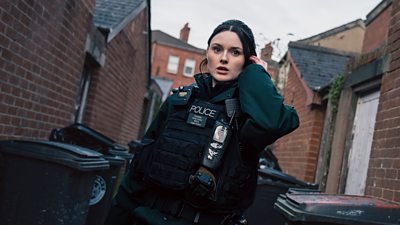
Where do we find Annie at the beginning of Series 4?
At the beginning of the new series, Annie is involved in policing the aftermath of a violent attack on a migrant centre. During the subsequent investigation, she forms a significant bond with Amira, a character whose experiences resonate deeply with her own. Annie becomes determined to help her, creating one of this series most compelling storylines.
Where is Annie in her career?
Professionally, Annie is more uncertain than ever. She finds herself questioning not only her role within the police service but also the institution itself.
Where is she in her personal life?
Annie continues to grapple with the grief of losing her mother. There’s no stop button when it comes to the grieving process. While that loss remains a constant undercurrent throughout the series, there is also the flicker of romance as feelings begin to rekindle between Annie and Shane. They are still trying to navigate that and understand what they mean to each other. Having shared traumatic experiences together, they are navigating whether their connection is - romantic, platonic, or something in between. They're definitely exploring the rhythms of what the dynamic is and what they could be to each other.
What drives Annie to put her life on the line every day in this job?
Much of Annie’s motivation comes from her background and identity and particularly her experience as a Catholic woman within the PSNI. She recognises the flaws within the institution but believes change is possible from within. Her determination stems from a desire to make the system better and to represent her community honestly and fairly by including the Catholic experience.
What are the themes underpinning the show?
The heart and soul of Blue Lights is Belfast, Northern Ireland and the people who live there. While the show may feature riots, investigations and moments of high tension, its emotional core lies in the quieter scenes, and in the conversations in the locker rooms and shared moments like eating a traybake in a patrol car. It’s also about the bonds and friendships that grow between colleagues. It’s those moments and interactions that reveal the complexity, vulnerability and humanity of the characters. That’s when they really see each other.
How is series 4 bigger and more evolved than previous series?
Series 4 tackles some of the most significant conversations the show has explored to date, particularly around the role of the PSNI and the legacy of policing in Northern Ireland. The series examines issues of trust, identity and community, including the historic mistrust that exists within some Catholic communities. These themes are approached with greater depth and honesty than ever before, making this the most emotionally ambitious season yet.
Nathan Braniff (Tommy Foster)
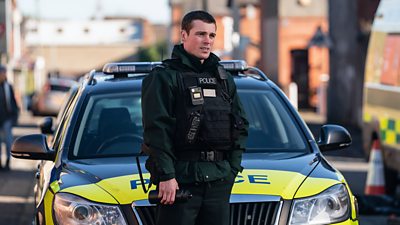
Last year, we explored the theme of the two-year fade for officers. Where is Tommy now in his career?
Tommy is still feeling that fade. The job is incredibly demanding, and he's struggling to balance its pressures with challenges in his personal life. It's taking a toll on him, and he's finding things difficult. It’s fair to say he’s struggling.
Where does the story pick up in this series?
The story picks up almost exactly where we left off. Belfast is going through a turbulent period, with divided communities and rising tensions. The series explores how the police try to manage those tensions, keep the peace, and protect the public.
What motivates Tommy to put his life on the line every day?
Tommy has finally found somewhere he feels he belongs the PSNI. He loves the job, the people he works with, and the sense of purpose it gives him. That commitment drives him to give everything he has to the role. However, alongside the everyday pressures of policing, Tommy is dealing with problems in his relationship with Aisling. We see a much more vulnerable side of him as he struggles with personal issues, community tensions, and violence against police officers. All of it leaves him questioning whether the job is still worth it.
What was it like having Richard Dormer back on set?
It was great. Although I didn't share any scenes with him this time, his presence is always felt. It was lovely seeing him at the readthrough and around set. We became very close during the first series, and nearly all our scenes were together so having him back felt special.
Tell us about Tommy and Shane's relationship this season.
Their relationship continues to improve, although they still have disagreements and moments of tension. They're learning to understand each other better, and their partnership keeps growing stronger. Off-screen, Frank and I have become closer too, which helps bring more natural chemistry to the characters.
How does the camaraderie within the station define the show?
The relationships between the officers are what make the series special. That sense of friendship exists off-screen too, and we've all become close friends, and I think that comes across in the performances.
How is this season bigger and more evolved than the previous three?
The scale is much larger. There are more stunts, more action, bigger set pieces, and even pyrotechnics and explosions. It feels like the most ambitious season yet.
What are Tommy's aspirations for the future?
At this point, his main goal is simply to stay in the job. He's committed to policing, but this series puts him under serious pressure. Ultimately, he wants to build a successful career and possible even earn the same respect as officers like Gerry, Stevie, and even maybe Collie from C3.
Andi Osho (Sandra Cliff)

Where does Sandra’s story pick up in series 4?
At the end of season 3, Sandra has learned that Mo McIntyre is going to be released from prison and that Helen has, in some way, been part of that process, so she feels betrayed. As a result, she can also see why the troops are becoming demoralised, because they’re trying to fight crime with one hand tied behind their back while the powers-that-be make deals behind closed doors.
Sandra has had doubts in the past about her chosen career path. How is she feeling now?
I don’t think she’s ever doubted being a police officer, but she has had second thoughts about remaining in Belfast after Gerry died because she’s been unsure if that’s where she belongs and if she has a reason to stay. Then after the riots in season 2, she realised the team needs her and that she wants to put her energy into protecting them and making sure that what happened to Gerry never happens to anybody else. I think, deep down she knows she’d also be bored if she went back to London! Moving from Custody to Response has kept her on her toes and perhaps has been a welcome distraction too.
What drives her to put her life on the line every day?
I think Sandra is a very principled woman but practical at the same time so as much as she is willing to put a life on the line, she is not a maverick risk taker. She feels like she’s part of the team and wants to protect them, particularly these new recruits Tommy, Annie and Grace, because Gerry was so involved in their development before he died.
What are the big challenges that she's going to face this year?
I think the biggest challenge for Sandra is going to be when Mo McIntyre's court case comes around. The last time she looked him in the eye was when she was processing his arrest so to now be faced with the prospect of seeing him across a courtroom, unsure if justice will be served, is incredibly daunting for Sandra, but she is the type of person who will want to be there regardless of the outcome. She’ll also see her relationship with Helen fracture as Helen moves up the ranks and seems to side with senior management. She was probably Sandra's closest friend at Blackthorn which makes it particularly painful.
Did you know when he left in series one that there was a possibility of Gerry returning for a special episode in S4?
Absolutely not. One of the producers asked me to come to a meeting last year and I thought he was going to tell me that they’re writing Sandra out of the show. I was fully braced for getting the elbow.
But then he shared their plans to bring Gerry back which I thought was a brilliant idea. I can’t overstate what a popular character Gerry was. He still is and even now people ask why the writers killed him off. I think viewers feel unresolved around that and so bringing him back will hopefully give them some closure.
How did it feel to have Richard Dormer back in the world of Blue Lights?
Surreal. It genuinely was very moving when we first sat down to rehearse with Angela and read through some scenes because I had been relating to him as somebody who had passed away.
So, to see him sitting there very much alive was almost overwhelming. I think Richard might have thought I was a bit crazy because I kept crying!
What aspects of Sandra’s life with Gerry will the audience get an insight into?
Essentially, it’s going to be their origin story, but also reveal much more about why Gerry is the man he is and what motivated his actions in season one. It’ll also reveal the significance the McIntyres played in Gerry’s past and their relevance to Sandra’s present situation
How does Gerry’s legacy continue to affect Sandra as well as the other characters in the show?
Gerry’s death is something that hangs over Blackthorn and probably always will. To lose a colleague is hard enough but when that happens in the line of duty, it’s even more tragic. Gerry instilled a sense of curiosity and dogged determination in some of the recruits which also keeps his spirit alive.
For Sandra, it’s changed her as a person - and is with her every day. She still wears her wedding ring and passes his memorial plaque at the station all the time. It’s a touching tribute but also a constant reminder that he’s gone.
What would you say are the unifying themes of Blue Lights?
For me, one of the most interesting ones is the grey area in policing. Doing things by the book doesn’t always get the results but then going outside of that can create moral dilemmas that the officers are constantly struggling to navigate. That’s what's really great about the writing, how the officers are constantly confronted with difficult choices. Perhaps that’s what makes this show feel so real.
How does the camaraderie amongst the Blackthorn officers define this show?
I think seeing the banter between the colleagues helps the show feel grounded because, Declan and Adam brilliantly capture how blue light workers speak. I imagine you need a sense of humour when you’ve got those types of jobs because you’re confronted with such extreme situations every day. Including that in the show makes all those very human moments feel so authentic. Perhaps seeing a team work together in challenging circumstances makes the audience root for them more?
Michael Smiley (Colly)

Where do we find Collie in series 4?
My character Colly continues the storyline established in series 3, with the ongoing cartel investigation and the pursuit of Dana Morgan, (played by Cathy Tyson), still very much at the forefront. However, new complications begin to cloud his objectives and push him off course. He's used to operating with a clear long-term strategy, but this season finds him increasingly thwarted. As circumstances change around him, Colly faces challenges that leave him more vulnerable than we've seen before and it looks like he’s in trouble because of it.
What drives Colly to be the best that he can be?
We know nothing about him or his personal life. We don’t know where he lives or who his friends are. Everything about Colly revolves around his work. He sees what he does as a vocation rather than a profession. In his mind, he’s serving a greater purpose and believes he has a responsibility to help bring stability and peace, whatever the personal cost. That sense of a higher calling drives every decision he makes.
What challenges does Colly face in this series?
Colly’s style of policing is all about the long game, and he likes to plant seeds and watch plans unfold over time. However, the economic landscape within policing is changing rapidly, and he’s finding his wings being constantly clipped. If everyone around him is playing drafts, Colly is playing chess, but suddenly events are moving faster than he anticipates. People expect him to have the answers, yet he’s confronted with questions he’s unable to answer. That’s destabilising for him but Colly is a survivor.
This series sees the return of Richard Dormer; what did you enjoy about that?
Richard and I hadn’t worked together before, so I was looking forward to seeing what energy he would bring to our scenes. What made it compelling was the backstory between the characters. They represent two different value systems: Gerry's conscience has brought him back, while Colly remains committed to his belief in the greater good. That tension gave us plenty to explore as actors and plenty of meat to play with.
Do we get to see a different side to Colly this year?
I think you're only ever going to see what Colly wants you to see. He's a loner, so controlled, highly disciplined and always thinking several steps ahead. He’s always going to be in the shadows, and he’s always going to be a shark. He's not a team player, so there's no room for emotions. You're never going to see him break down, be sad or be happy. We will only ever see him calculating risks and adapting his plans because that’s the only way he knows how to survive. He's willing to make difficult decisions because he believes the bigger picture justifies the means. He inhabits the moral grey areas that many of the other characters are still learning to navigate.
How is this season bigger and more evolved than the previous three seasons? I think if a series is to grow, it should come through storytelling. Series 1 focused on the rookie officers finding their feet, and as the show progressed, the characters became more embedded in the world around them. Their relationships have deepened, and the scope of the stories has expanded. With the introduction of organised crime and larger political and social themes, the drama has become more global and sophisticated. The writers and actors now really know the universe of Blue Lights and their characters inside out, bringing their own personal stamp to each of them, and I see that confidence reflected on screen. That’s what I found fascinating when I was offered the role of Colly.
What does it mean to you to come back home to work?
The number of people who have told me Blue Lights is their favourite show has been lovely and being asked to come back home to work on a drama of this quality is a massive compliment. I love working in Northern Ireland because not only is the on-screen talent superb, but the crews are unbelievably talented. There’s a level of professionalism, camaraderie, kindness and reverence, not to mention an emotional barcode that we all have in terms of craic that you don’t get anywhere else. There’s a Welsh word - ‘Hiraeth’, which means a deep emotional longing for a place and having lived in London for 40 years, coming back to Belfast is coming home.
Richard Dormer (Gerry Cliff)
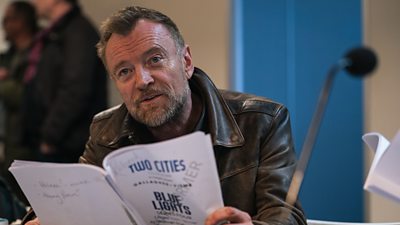
How did it feel stepping back into the role of Gerry, and reuniting with the cast and crew?
It was a weird sense of déjà vu, but surprisingly easier than I expected. I thought I was going to be nervous, but everyone was so welcoming as you would expect from this cast. The biggest challenge was rediscovering who Gerry was before the audience met him in series one. He's younger and much more troubled than audiences would have seen in the first series, so it was about finding that version of him again, even down to his voice.
Did you work with the writers to shape that earlier version of Gerry?
I suggested bringing Gerry's love of music into the story. I thought it would be nice to see him with a guitar, the sort of person who brings everyone together, and Declan and Adam found a lovely way to weave that into the script.
What can you say about Gerry's return?
Gerry reappears to uncover secrets that have consequences not just for the main characters, but for the wider police force. His return reveals how events from the past continue to shape the present.
What new sides of Gerry do audiences discover?
They will see a much more vulnerable, haunted version of him. We learn more about the car bomb that changed his life and how it ultimately led him to become a police officer. We learn how his friendship with Happy Kelly emerged from the most horrific tragedy and how it became the making of Gerry, really.
How does his storyline deepen our understanding of the Gerry we met in series one?
You begin to understand why he became the person audiences came to know and love. This is an origin story that gives greater context to the character. It also shows how Gerry is an example of how to be a good human and a really efficient cop.
Gerry's death had an enormous impact on audiences. Were you surprised by the reaction?
I was surprised by just how big the reaction was. I knew the scene would be powerful because I was emotional watching it when re-recording lines, before it was even finished. That spoke to the quality of the writing.
How do you think audiences will respond to seeing Gerry again?
They'll probably be surprised because this isn't quite the Gerry they remember. You catch glimpses of the man he will become, but he's still finding himself. He's carrying a secret that's defined him for years, and it's only when he meets Sandra that he really begins to become the person he was always meant to be.
Why do you think Blue Lights has resonated so strongly with audiences around the world?
It shows police officers as people first. They're flawed, funny, capable and frightened, and it explores the consequences of every decision they make while showing the infallibility of people in any job. It never loses sight of the human cost of the job, and I think that's what makes it so authentic.
Joanne Crawford (Inspector Helen McNally)

Where do we find Helen at the start of the new series?
Helen has been promoted again and is overseeing Operation Harvest, continuing the investigation into the drugs trade alongside C3. At the same time, she's coordinating the police response to escalating anti-migration protests. When we first see her, she’s in the control room, trying to navigate an increasingly volatile situation and keep everyone safe.
What challenges does Helen face this series?
Very early on she's entrusted with a secret she can't share with anyone. Trying to do the right thing while keeping that confidence isolates her from the rest of the team. Throughout the series she's pulled further and further away from the section, both emotionally and professionally.
Why is it important that Blue Lights tackles contemporary issues?
The more truthful and specific a story is, the more universal it becomes. Something rooted on a street in Belfast can resonate with audiences anywhere in the world because we all understand conflict, hope, love and community. Drama creates connection, even when it's exploring difficult subjects and that’s what our writers do best.
What was it like to welcome Richard Dormer back for an episode?
It was wonderful to have Richard back. He’s an incredibly generous actor and has a real presence when he walks onto a set. It was a joy to have him back and to explore more of our characters' shared history. Gerry’s return gives us important insight into the past and helps explain events unfolding in the present. Because Helen knew Gerry so well, it forces her to confront difficult truths and make some significant decisions.
What has the response been like from real police officers?
I've had officers tell me they love the show and that it feels like we're telling their story. Given the unique challenges policing presents here, that means a great deal. It's incredibly rewarding to know the series resonates with the people it portrays.
Do you have a favourite partnership on the show?
There are so many. Grace and Stevie are brilliant together, and Tommy and Gerry were a wonderful pairing. Personally, I loved working with Michael Smiley as Helen and Colly. We really enjoyed exploring that relationship and taking risks with it.
Declan Lawn and Adam Patterson
Co- Executive Producer, Co-creators, Co-Writers

How would you describe the story at the heart of series 4?
Declan Lawn: Series 4 picks up six months on from the end of series 3, so it feels like the second half of one story. We tackle some of the biggest issues facing Northern Ireland today, including racism, attacks on migrant communities and pressures within the criminal justice system. It's probably our boldest series yet.
Was bringing Gerry back always part of the plan?
Declan Lawn: When the BBC commissioned series three and four together during filming on series two, we were able to map out a four-season story. Gerry's return has been part of that plan since then.
Adam Patterson: It also made sense dramatically. Enough time has passed for the criminal case to reach its conclusion, and it felt important to give that story proper closure. Plus, it meant that people might stop shouting at us in the street for killing him off!
Where do we find our response officers in series 4?
Declan Lawn: After three years on response, everyone is starting to think intuitively about what's next. They're beginning to discover where they belong within the police service, while navigating very different personal relationships; some of which are undergoing huge strain and others which seem to be heading in the right direction.
Adam Patterson: There's also the question of whether they leave the family they've built together and especially after everything they’ve been through. That bond is as important as any romantic relationship, and it's one of the emotional drivers of the season.
Blackthorn Police Station faces closure this season. Why explore that storyline?
Declan Lawn: The station closure is inspired by real conversations with serving officers. Budget pressures mean stations are closing across Northern Ireland, some to be turned into luxury apartments, and we wanted to explore what happens when a close-knit team faces being torn apart by its own organisation.
Adam Patterson: Lots of bureaucratic institutions are facing a reduction in staff, resources and support but what happens when it hits the police service when crime isn’t reducing and you have the same job to do with less people. For Helen especially, it's incredibly difficult. She's trying to protect her officers while keeping the threat hidden from them, and she’s about to find out that leadership becomes an increasingly lonely place.
Helen and Colly have very different approaches to policing. How does that evolve?
Declan Lawn: Colly is the pragmatist; Helen is the idealist. Across the series they begin to recognise that both approaches have value.
Adam Patterson: Ultimately, they realise they achieve far more working together than they ever could apart. The police can’t survive without both of those styles of policing although it’s damaging to the police when they don’t work together.
Why was it important to focus on attacks against migrant communities?
Declan Lawn: When we spoke to serving officers, many told us this is one of the biggest challenges they face. We wanted to tell that story honestly and with empathy, showing different perspectives without losing sight of the human impact. We know from our research that crimes of racial hate against migrants is set to be the biggest issue for the police in the next ten years. These are all things we're grappling with as a community, as a society. If we can in some way illuminate why these things are happening through Blue Lights, then we've we've been successful storytellers.
Adam Patterson: Each season reflects the issues affecting Belfast today, and this is one of the most urgent. Drama allows us to explore not only the events themselves but the emotions and tensions behind them.
Executive Producers and Co-Creators
Stephen Wright (Two Cities Television) and Louise Gallagher (Gallagher Films)
Where do we find the story at the start of series 4?
Stephen Wright: We pick up the storyline this year with two major storylines. One explores Belfast's role as a transit route – a pipeline for organised drug trafficking into Great Britain and beyond, inspired by real events. The other centres on migration, reflecting issues currently affecting communities across Northern Ireland. We wanted this series to engage with contemporary stories as well as the legacy of the past.
How have the relationships between the officers evolved?
Louise Gallagher: The relationships between the officers have grown and matured over the years. Stevie and Grace are now a settled couple whose partnership is strengthened by sharing the pressures of policing. Tommy and Aisling are dealing with the emotional fallout of last series which highlights the very real impact the job can have on personal relationships within policing. Annie and Shane have developed a close friendship built on trust and mutual support. They grow to rely on each other more in this series.
What challenges does Blackthorn Station face this year?
Stephen Wright: The station faces the threat of closure as policing budgets come under pressure. It’s an existential threat than hangs over all the officers. Helen is forced to make difficult decisions to keep the station open, balancing practical policing with the needs of her officers.
Louise Gallagher: Helen carries that burden alone for much of the series. She's an instinctive leader who deeply cares about her team but protecting them sometimes means making decisions they don't fully understand. It’s a secret she has to carry throughout the series and one that weighs heavily on her as a burden of leadership. She doesn’t want to alarm her officers with the threat of closure. She can’t explain why they’re being sent out to check bald tyres when there’s much bigger problems to solve in the community.
What are the core themes of Series 4?
Stephen Wright: Blue Lights has always explored the tension between idealism and pragmatism. Our officers want to make a difference, even when the job makes that difficult. Ultimately, the series is about small acts of change and the belief that doing the right thing still matters.
Why did you decide to bring back Gerry?
Stephen Wright: We thought carefully before bringing Richard Dormer back. Gerry's story still had unfinished business, and his legacy continues to shape the lives of the other characters. His return also allowed us to explore unresolved questions around justice, legacy and the lasting impact of Northern Ireland's past.
Louise Gallagher: The series has always been about understanding where we've come from and asking who we are now. Gerry's story helps continue that conversation.
Blue Lights has always presented policing through a human lens. Why is that so important?
Louise Gallagher: From the beginning we've wanted to show the people behind the uniform. These are ordinary people doing extraordinary jobs, often carrying enormous emotional burdens. We've heard from many police officers who felt the series reflected experiences they'd never spoken about before, and that's been incredibly meaningful.
Stephen Wright: Louise's original idea humanised policing. Whatever people's views of the institution, it's individuals who arrive during the biggest moments of your life. That's the conversation we wanted to have.
Why is it important for you to tell stories set in Belfast?
Louise Gallagher: It's home. These are the stories and communities I know best, so they're the stories I want to tell.
Stephen Wright: Our experiences here give us a unique perspective, but the themes are universal. Conflict, identity, community and change resonate far beyond Northern Ireland. That's why the show has travelled so well internationally.
What has the BBC ever done for me?
Follow For More
Latest from the Media Centre
All newsSearch by Tag:
- Tagged with Northern IrelandNorthern Ireland
- Tagged with DramaDrama
- Tagged with Media PackMedia Pack
- Tagged with Latest NewsLatest News
