Radio for climate action
Making climate information accessible and actionable with Bangladesh Beter

At 32, Mehedi Hasan Mamun has been helping in his family’s fields in Bangladesh for as long as he can remember. His family has farmed large rice paddies and other crops in Mymensing’s Trishal district, more than 115 km north of Dhaka, for generations.
But their traditional knowledge of when and what to plant, how to maintain their crops and when to harvest no longer matches today’s weather and climate patterns. Heatwaves, drought, high humidity and untimely rain, along with hailstorms and floods, have made it difficult for them to cope using traditional methods alone.
Amid shrinking crop yields and anxiety, Mehedi says a local radio programme has been a blessing. The Krishir Kotha (Agriculture Talk) programme on Bangladesh Betar Mymensingh, a state-owned regional radio station, regularly provides information on weather warnings, modern agricultural techniques and farming practices to cope with climate-related challenges.
Mehedi says the programme, which he follows on radio and social media, offers regular advice and explanations, and has helped him better understand climate change and its impact on farming.
Every week, on Sunday and Wednesday afternoons, Mehedi tunes into the programme, and then shares what he has learned with his family, so that they can work to test more climate resilient methods of crop cultivation.
Through this programme, Mehedi and his family learned the importance of harvesting early when weather forecasts indicated the possibility of sudden rain, to prevent crops from being submerged. They also learned how to prepare their fields to grow multiple crops throughout the year, rather than following the single-crop cycle that their family had maintained for generations, increasing their income by 10,000 BDT (£70 GBP) while still maintaining the soil's nutrients. Through Krishi Kotha, they also learned about technologies such as battery-powered paddy cutters, which they used to improve efficiency.
Beyond crop cultivation, the programme also provides information on livestock rearing, animal diseases and treatment options – helpful as they started rear their chickens.
"This programme helps us learn easily and apply the knowledge in our daily farming activities. We are getting better yields by following many of the suggestions shared through the programme," said Mehedi. He explained how the guidance offered throughout the farming cycle, from seed selection and planting to harvesting, has helped them to apply these practices and achieve better crop production.

Krishir Kotha has been supported under our Bridges project, aiming to make weather and climate information more accessible and actionable for rural audiences who might have previously struggled to access timely, accurate information.
Change happens most effectively as people share and discuss new information – and Mehedi actively shares information with neighbouring farmers and encourages them to follow the programme as well, extending the reach of this climate-smart agricultural knowledge.
Most popular with listeners, Mehedi said, are question-and-answer sessions, discussions with other farmers, and competitions that giveaway agricultural prizes like seeds or saplings. Our programme makers said this kind of feedback reflects the audience’s growing sense of ownership and connection with the programme.
As climate change continues to create uncertainty for farmers across Bangladesh, access to practical and timely agricultural information has become increasingly important. Under the Bridges project, we have been working closely with four state-owned regional radio stations including Bangladesh Betar Mymensingh and two community radio stations to strengthen the quality of their agricultural-focused programmes and improve how weather and climate information is brought into broadcasts.
We have been working with Bangladesh Betar since 2025, when we began our capacity-strengthening and mentoring approach. We arranged workshops and training for executives, producers and presenters, focusing on climate and weather communication, impact-based forecasting, social media engagement, content production, mechanisms for gathering audience feedback, and what it means to deliver audience-centred broadcasting – bringing people the trustworthy information and stories they need most. Over the past one year, we have combined online and in-person mentoring to support programme teams so that they can apply these skills.
Our partnership resulted in a significant transformation of Bangladesh Betar Mymensingh’s role in raising climate awareness and preparing communities to fight climate change impact through its agricultural programme, Krishir Kotha. Producers and presenters now routinely incorporate weather and climate-related risks, impacts and adaptation measures into this programme.
Director of Bangladesh Betar Mymensingh, Mohammad Rafiul Karim, said, “With BBC Media Action's guidance, we have integrated simple, easy-to-understand weather bulletins and practical recommendations into our agricultural programming. Our presenters are now more confident, audience-focused, and committed to creating meaningful impact for the community. Our team has now become better equipped to access and use reliable information from trusted government sources. The equipment and hands-on support provided by BBC Media Action have been invaluable in this process.”
Bringing Betar onto social media, including Facebook Lives from the studio, allows impact to stretch beyond the radiofrequency coverage to reach larger audiences across the country. After our training, it became the first state-owned radio station in Bangladesh to produce weather and climate-related reels and other short-form content, which received over 20,000 views a week on average and helped increase its Facebook following from 74,500 to nearly 137,000. Its regular agricultural weather bulletins consist of actionable advice helping farmers make informed decisions. With jargon-free, easy-to-understand language, climate information is easier than ever for farmers and other rural audiences to understand and apply.
Funded by NORAD, the Bridges project aims to make weather and climate information services (WCIS) more understandable, accessible and actionable for communities most affected by climate change.
Latest news from Bangladesh
Our projects in Bangladesh
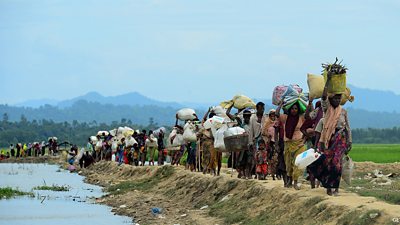
Responding to the Rohingya emergency in Bangladesh
We’re supporting local radio partners to produce a dedicated Lifeline radio programme for Rohingya people and host communities in living in Cox’s Bazar.
Protecting independent media for effective development
We are working with media support organisations and local partners to find out how best to support public interest media in Sierra Leone, Ethiopia and Bangladesh.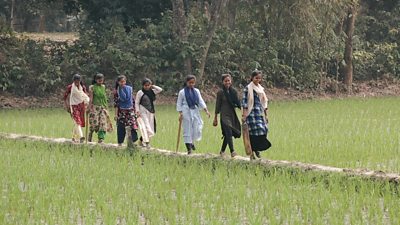
Hello I Am - challenging child marriage in Bangladesh
Watch our films with Rutgers showing how girls are breaking down barriers, in school and on the cricket pitch.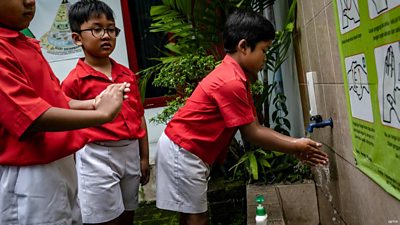
Communication to counter the COVID-19 ‘info-demic’
BBC Media Action launches new project in Asia to tackle the spread of mis- and dis-information around COVID-19 (coronavirus) which is as harmful as the disease itself.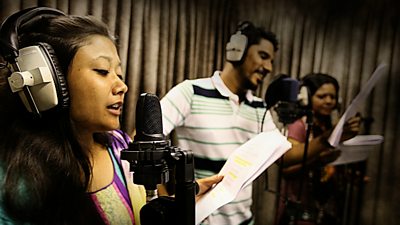
Generation Breakthrough: Using radio to encourage healthy relationships in Bangladesh
Engaging a young people with a range of social and health related topics through a weekly radio show radio Dosh Unisher Mor (Crossroads at 10 to 19).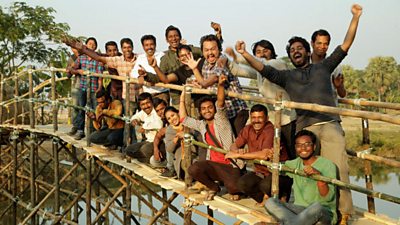
Preparing for and responding to disasters in Bangladesh
BBC Media Action and its partners are helping the public prepare better for future disasters as well as providing timely, accurate and useful information in times of crisis.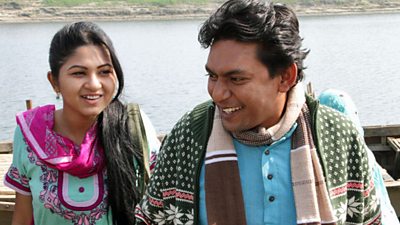
TV drama on maternal and newborn health in Bangladesh
Through a major TV drama series, a radio magazine show, public service announcements and communication skills training for community health workers.
Debate programme Sanglap
Sanglap (Dialogue), was a political discussion TV show enabling Bangladeshis from all walks of life to question their leaders on the issues that mattered to them.

Search by Tag:
- Tagged with BangladeshBangladesh
- Tagged with AsiaAsia
- Tagged with ClimateClimate
