Cultural Notes

Street names
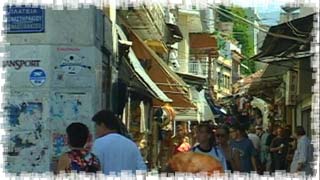
Most Greek street names feature the word οδός (o-dhoss), street, λεωφόρος (leyo-for-oss), avenue, or πλατεία (platt-eea), square. These are placed before the street name, for example οδός Σταδίου (o-dhoss sta-dhee-oo) is literally ‘street of the stadium’. The word οδός is almost always left out in speech, so Stadium Street is simply known as Σταδίου (sta-dhee-oo).
Streets can be named after personalities, such as Παπανδρέου (pap-andrey-oo) Papandreou Street, after the Greek elder statesman whose grandson became socialist party leader. And even though Greece is a republic, there’s also Βασιλίσσησ Σοφίας (va-silli-seess soph-ee-ass), Queen Sophia Street, after the Greek wife of the king of Spain.
Religious, ancient and mythical figures are also commemorated, such as Αποστόλου Παύλου (apo-stoloo pavloo) St. Paul’s Street, and Ιπποκράτους (ippo-krah-tooss) Hippocrates Street.
Significant dates often figure too, such as 28. Οκτωβρίου (ee-kostee oh-doee ohto-vree-oo), 28th October Street, the date Greece entered World War Two, and 25. Μαρτίου (ee-kostee pem-tee mar-tee-oo), 25th March Street, marking Greece’s independence from the Ottomans. You’ll also find names marking significant events, such as Πλατεία Συντάγματος (platt-eea seen-daghma-toss), Constitution Square.
Sometimes foreign names appear, usually of people who have played an important role in Greece, for example Βύρωνας (vee- ronass), the poet Byron who spent many years on the islands, and Κένεντυ, US president Kennedy.

