BBC HomeExplore the BBC
This page has been archived and is no longer updated. Find out more about page archiving.

28 October 2014
Inside Out: Surprising Stories, Familiar Places

BBC Homepage
England
Inside Out
East
East Midlands
London
North East
North West
South
South East
South West
West
West Midlands
Yorks & Lincs
Go to BBC1 programmes page (image: BBC1 logo)

Contact Us

Inside Out - Yorkshire & Lincolnshire: Monday January 9, 2006
Tsunami revisited

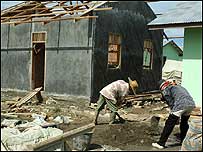
Tsunami rebuilding programme
Rebuilding lives - Tsunami survivors

It's a year since the Tsunami hit South East Asia with devastating consequences.

Inside Out presents a special investigation into the aftermath of the Tsunami.

Zoie Gibson and Paul Fox from television's 'The Royal' kept video diaries of their return trip to Thailand.

Tsunami diary

This is an extract from Zoie and Paul's diary made twelve months on from the Tsunami:

"When we first arrived just three weeks after the disaster, families were still desperately seeking missing loved ones.

"We were immediately put to work, clearing the debris.

"The devastation was overwhelming - it was shocking to see what was left of the holiday paradise we'd enjoyed so recently."

Return to PhiPhi

"This winter we returned to the island of PhiPhi.

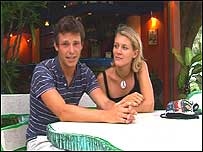
Zoie and Paul in PhiPhi
Zoie and Paul return to PhiPhi to monitor progress

"One year on, the wasteland that we saw back in January is slowly coming back to life but we wanted to find out what had happened to the people we'd met and helped on our first visit.

"Had they managed to rebuild their lives? The Tsunami claimed over 1000 lives here and destroyed many homes and businesses.

"The island is receiving lots of help from groups of volunteers and small relief organisations - many of them set up in memory of tourists who died in the wave.

"One centre was originally set up to help Swedish tourists immediately after the Tsunami.

"Thanks to continuing support from Europe, the centre is now providing help for the Thai people to get back on their own feet."

Rebuilding lives

"Kao Lak is one of many Thai resorts that are now familiar names for the most horrific of reasons.

"On our first visit here the devastation stretched for as far as the eye could see.

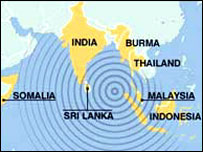
Map of worst-hit areas
The Tsunami devastated many of Asia's coastlines

"Swimming pools and the foundations of demolished buildings were all that remained of busy hotels which had been enjoying their peak season.

"Today it looks like the area will soon be bustling again.

"Many of the small coastal villages suffered huge human losses and their livelihoods were destroyed by the Tsunami.

"With a little help from outside, communities are now rebuilding themselves.

"The women of this village, are now making soaps and will soon be running a sustainable businesses themselves.

"When we first arrived here last year, we heard the terrible story of the devastation. The small school lost two thirds of its students and their teacher.

"So we volunteered to spend time teaching and clearing the site of the new school and we gave them a little money.

"We were touched by the beautiful people we met there.

"It was exciting to come back and see the day care centre where our money was helping to provide care and fun for the children."

Survivors

"We first came to Bang Tao in January 2005. Many of the hotels and resorts were badly damaged and businesses were destroyed.

"We worked clearing the land, translating, doing case studies on local people, and we ran school projects and today the village has benefited hugely from the volunteer project run in the area.

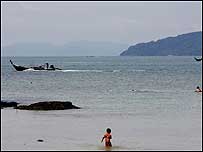
Post Tsunami scene
Devastation - coastal scene following the Asian Tsunami

"One person we were keen to find was the lady who last year gave us bananas when we were clearing debris.

"She had survived the Tsunami by clinging to a tree for several hours. She lost both of her restaurants and most of her house.

"On our return she proudly took us to her new sea front restaurant which she has begun rebuilding.

"Hearing that she had run out of money to complete it, our mission was clear.

"We would all put in some money and buy her everything she needed to set up this restaurant in time for the resorts peak season.

"Our cash wouldn't have bought dinner back home - but in Thailand it went a long way."

Links relating to this story:

The BBC is not responsible for the content of external websites

Inside Out Archive

Inside Out: Yorkshire & Lincolnshire
View our story archive to see articles from previous series.

BBC Where I Live

Find local news, entertainment, debate and more ...

Bradford
Humber
Leeds
Lincolnshire
North Yorkshire
South Yorkshire

Meet your
Inside Out
presenter
Jamie Coulson

Jamie Coulson
your local Inside Out presenter.

Contact us
Contact the Yorkshire & Lincolnshire team with the issues that affect you.

Free email updates

Keep in touch and receive your free and informative Inside Out updates.
Subscribe
Unsubscribe

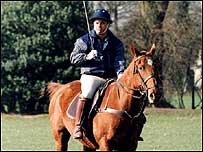
Polo player

Polo player
Anyone for Polo? Yorkshire is catching on to the sport of princes

It's fast, it's dangerous, and many people think that it's only for posh southerners... well, you're wrong.

Inside Out is talking about polo, one of the Royal Family's favourite sports.

Although Yorkshire is a very horsey county with racing, dressage, and show jumping, it's only recently that polo has been added to its list of equestrian sports.

Inside Out follows Johnny Nelson as he learns to play polo at Beverley Polo Club, near Hull.

Pay and go play

Beverley is the first club in the North of England where you can just turn up, pay and learn to play polo. You don't need to be a member or have your own horse.

The owner's intention is to make polo less elite and make the sport of kings and the landed gentry available to all.

Andrew Foreman, Beverley Polo Club's owner, is a local self-made millionaire. His mission is simply to bring polo to the people of Yorkshire.

His polo club is a stone's throw from Hull - and it's got some of the best facilities in England.

So what gave Andrew Foreman the idea to bring polo here?

"I got into business and needed a form of release - horses are fantastic for this. I got riding then met someone who introduced me to polo," recalls Andrew.

"I come from the grass roots. I know a lot of mixed people from down-to-earth to very wealthy. I wanted to bring polo to wide range of people. People think polo's too elitist and too expensive. In reality, it's no more expensive than any equestrian sport - you can do it with two horses."
Andrew Foreman, Beverley Polo Club

Just over four years ago he watched first polo match, decided to get into it, and caught the polo bug.

Andrew Foreman got so enthusiastic that he has brought in riders from Argentina and set up a team.

"Polo is very international but in this country, it's very southern based," he says.

"I got involved at Tadcaster - a very small friendly club. The owner of that suggested I form a club at Beverley.

"I was in the process of developing an equestrian centre here, and thought let's do it for polo... it became a mission to get polo going in a big way in Yorkshire."

Andrew's passion now takes him and his polo team all over the world from the UK to Europe, Russia, America, and New Zealand.

Inside the game

Polo is a complicated game, and whoever wins depends not just on who scores the most goals, but on the handicaps of the players.

At Beverley, they play low-goal polo - for less experienced players - where the game is divided into four rounds, called chukkas.

High goal polo lasts for eight chukkas, and the really serious players change their ponies every chukka.

Every so often you'll see people all over pitch, tramping in bits of turf that horses have kicked up.

It's called divot stomping, and everyone's expected to do it - it's a chance to put the pitch back together and socialise at the same time.

The good thing is that you don't have to spend a fortune to enjoy polo. All sorts of people play from builders, butchers to solicitors, accountants, and landowners.

Coach Paul Piddington says, "polo has a fantastic ability of levelling. It's not about money - it's about whether you can play or not. All money does is allow you to buy more expensive ponies".

"You can hire a horse - it's not expensive to play here - a lesson will cost £50 and you can hire a pony for a chukka - just pay to play... at the end of the match, just walk away and we look after the horses."

Picking up polo

So can anyone learn? Inside Out puts boxer Johnny Nelson, a complete novice, through his paces with Paul Piddington, one of the country's top polo coaches.

"I can teach people who have never been on a horse before and get them playing after a couple of hours to a level," says Paul.

"It's a fantastic team sport - that's why the universities embrace it with good team bonding," says Paul who says that you can never start too young.

"I'm teaching children from about eight - a fantastic age to start," he says.

It is a sport for everyone and it's also very addictive.

"It's all about adrenaline... I've played lots of other sports, but the adrenaline rush you get is phenomenal, people tackling you... it's a fantastic thrill."

Links relating to this story:

The BBC is not responsible for the content of external websites

Traffic and parking

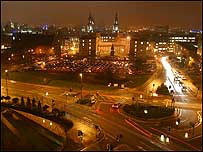
Leeds city centre
Leeds post rush hour - the rare sight of quiet roads

Read your feedback on this story

Penthouses, Porsches and shops that sell Prada… Leeds is a city with a fast track economy and a transport system stuck in the slow lane.

But until now few of us have known just how serious those jams have become. Stand by for some frightening facts about the future of your trip to work.

Congestion crisis

Leeds is the so-called capital of the North, a city alive with energy, opportunity and billions of pounds of investment.

But Leeds is stuck in a congestion crisis. Traffic heading into the city on the M621 has doubled in a decade and other roads are fast grinding to a halt.

Andrew Charles, a regular commuter into Leeds told Inside Out that his five mile journey takes one hour, a trip he regularly does faster jogging.

To see just how bad the situation has become, Inside Out presenter Morland Sanders experiences one of the UK’s worst commutes, heading into Leeds on the M62.

Big increase

Trafficmaster have 8,000 cameras across the country monitoring congestion 24 hours a day – and all three main roads into Leeds have seen big increases in congestion.

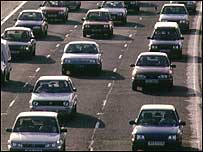
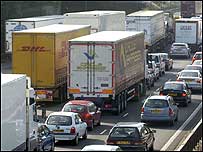
Traffic jam
Jam packed - Leeds' roads are becoming more congested

And once you’ve battled through the traffic, what awaits you in the city centre is a fight to find a parking space and an army of attendants checking your ticket.

In March last year Leeds Council took over parking enforcement in Leeds and declared they were getting tough on illegal parking.

And that’s hitting businesses. Chris McCourts set up his catering firm a year ago - 20 tickets later and he’s struggling to stay afloat.

Another business lost one of its most valued employees after congestion meant that she could not get home early enough to pick up her children.

Business impact

Leeds is now the largest city in Europe without a mass public transport system.

In Newcastle, the ferry and Metro are both viable alternatives to the car and help cut congestion. Ominously for Leeds, there is already evidence that big business is choosing Newcastle over its Northern rival.

But Inside Out has discovered that transport officials in Leeds know exactly what’s going on and that the situation is going to get far worse if traffic increases at its predicted rate.

At Leeds University they use the same modelling software and we got exclusive access.

Development is continuing in Leeds and with an extra 32,000 jobs in the pipeline, things are predicted to get worse.

Commuting chaos

So what is the answer to Leeds’ commuting chaos?

For nearly 20 years it was the Leeds supertram, a huge £1/2bn project that would have linked north and south Leeds with the centre of the city.

Traffic jam
Is public transport the answer to growing queues?

The Supertram was finally killed off in November last year by Transport Minister Alistair Darling.

But with the scheme already costing £40m and transport planning right back to the drawing board, people in Leeds are starting to question whether the blame lies closer to home.

Metro, the body in charge of public transport in Leeds told us that it is looking into increasing capacity on current rail routes.

It believes that a lot of progress could be made by investing in public transport.

Leeds City Council says drivers that flout parking laws cause untold havoc and significantly add to congestion.

They emphasise their attendants adopt a firm but fair approach and it is important that enforcement action is taken against those irresponsible parkers who cause difficulties for all other road users.

But is more action required to address Leeds' growing traffic problems?

Read your feedback on this story

Links relating to this story:

The BBC is not responsible for the content of external websites


About the BBC | Help | Terms of Use | Privacy & Cookies Policy