MENACING METHANE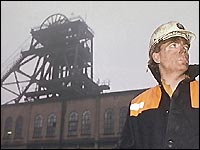 | | Former coal mines are now posing threats to locals |
The dangers of Britain's pit closure programme are exposed as Yorkshire and Lincolnshire's Inside Out team discovers a possible time bomb posing a threat to locals. Ever since the 18th Century coal mining has been a large part of Northern England's history. One of the UK's major mines, Kiveton pit in South Yorkshire, opened in the area in 1866 but nearby pits have been active since around 1700. By 1900 well over a million coal miners were employed in the UK with around 250 million tonnes of coal being produced, compared to around 42 million tonnes in the mid 1990s. But those involved wouldn't have foreseen the potential dangers faced by future generations in the area. Harmless emissions | | Coal absorbs methane gas naturally underground |
Coal absorbs methane gas naturally and when surrounding pressures are released, as they are during mining, the methane escapes. When coal is being extracted, the highly flammable methane gas is pumped out of the mine on a constant basis. Experts now say that neither the Government nor the former National Coal Board foresaw the problems of shutting the collieries, which are now filling with methane gas that can't escape. Explosive mixtures| Methane - The Facts | A methane molecule is composed of one carbon atom and four hydrogen atoms It is the principle component of natural gas Methane is colourless and odourless Methane is combustible, and mixtures of about 5 to 15% in air are explosive Burning one molecule of methane in the presence of oxygen releases one molecule of CO2 (carbon dioxide) and two molecules of H2O (water) Methane results from the decomposition of certain organic matters in the absence of oxygen During the past 200 years, the concentration of methane in the atmosphere has doubled Methane is a greenhouse gas so emissions contribute to global warming |
As Inside Out reveals, one disused shaft at Bolsover in Derbyshire contains 35% methane gas, 15% of which is considered explosive. After the shaft had been filled in with rubble, the gas was still escaping into a nearby warehouse. Although the shaft has now been vented to prevent any further incidents, nearby residents are becoming alarmed. Damaging EffectsResidents of Barnsley are already concerned at the effect of methane gas from the former Monk Bretton Colliery. Barnsley resident, Anne Booth, says she is left with an effectively worthless house as a result of the gas emissions and has even gone to the lengths of getting a gas monitoring alarm fitted in her home. "I think you actually have to live with it to know what it's like. "It's affected me greatly," she said. "How can I sell my house with a gas monitor in it and with a view across the road of boarded up houses. "Who in hell is going to buy a house like that?" 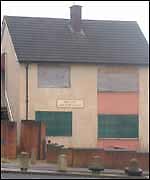 | | Boarded up houses will put buyers off |
Although residents are aware of the potential risks, new homes are currently being built at the bottom of Anne's garden. Anne is worried that potential buyers may be unaware of any problems. Bolsover and Barnsley are not the only areas to be affected by methane. Houses near Wakefield and Rotherham have also been affected. New theoriesTo this date, no one has been injured by mine gas on the earth's surface, although thousands were killed in underground explosions before the invention of the "Davy Lamp". | Davy Lamp Facts | Invented by Sir Humphrey Davy, the Davy Lamp was an invention that would save the lives of thousands of miners. Whilst underground, miners used to wear candles in their helmets enabling them to see. Gas built up in the mine could be sparked off by the flame, which caused lethal fires and explosions. The Davy Lamp prevented the risk of fires by using a metal gauze to distribute the heat, thus stopping the flame reaching ignition temperature. |
However, Inside Out reveals a theory that suggests gas may have played a major part in Nottinghamshire's Loscoe blast in 1986. The blast demolished a house and injured three people. It has been discovered that a shaft running under the village contains large amounts of methane, which could be lethal. Property boomWith Britain's continuing property boom, developers are increasingly using former colliery areas to build homes, shops and offices. Methane expert Cameron Davies - head of the trade organisation representing companies using methane for power generation - says he would be wary at living on a former mine site.
 | | Houses on former mining sites could contain methane gas |
"If a house contains an explosive mixture of methane and someone switched on a light, there will be an explosion," he warned. "Back in the early 1990s the Department of Trade and Industry suggested there were no methane abandoned coal mines because British Coal had said so back in the 1980s." Mr Davies said this was clearly wrong. He says that in fact new scientific evidence suggests that mines are producing more methane than anyone had predicted. More informationFormer coal mines can be found around many areas in Northern England including - Leeds
- Barnsley
- Sheffield
- Doncaster
- Rotherham
- Chesterfield
If you think you may be in a former mining area and are worried about methane gas please contact the Coal Authority's Corporate Affairs Manager, John Delaney. e-mail: thecoalauthority@coal.gov.uk | 



