BBC HomeExplore the BBC
This page has been archived and is no longer updated. Find out more about page archiving.

24 September 2014
Inside Out: Surprising Stories, Familiar Places

BBC Homepage
England
Inside Out
East
East Midlands
London
North East
North West
South
South East
South West
West
West Midlands
Yorks & Lincs
Go to BBC1 programmes page (image: BBC1 logo)

Contact Us

Inside Out - Yorkshire & Lincolnshire: Monday September 11, 2006

Skin cancer

Christa Ackroyd
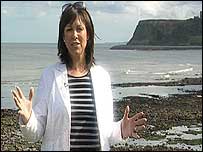
Christa - trying to raise awareness of skin cancer risks

Every year nearly 70,000 people are diagnosed with some form of skin cancer.

The incidence of skin cancer in the UK is rocketing and numbers of the worst kind, malignant melanomas, are set to treble in the next 30 years.

Last year BBC Look North presenter Christa Ackroyd's daughter Briony was one of them.

She tells Inside Out why her daughter's skin cancer scare made her give up tanning for good.

Exclusive interview

When did you first realise that there was something wrong with Briony?

To be honest we first realised there was a problem during a cautionary check up.

A friend, Nora, had suffered a malignant melanoma and, because Briony was very moley, suggested that she should show us what to look out for.

Out of maybe 40 moles, she found one which was multi-coloured which, in her words, she didn’t like the look of.

I had found another mole on the sole of Briony's foot.

In the end the professor took four off.

It was only when the diagnosis showed two out of the four, including the one Nora had spotted, were showing major signs of change, that we realised, as he put it, that we were heading for trouble.

It was not yet a melanoma but it was well on the way to becoming one.

How did you feel when the diagnosis was made?

Melanoma
Under the microscope - melanoma cells

Terrible - because, as the specialist says, it’s a fine line between what looks normal and what doesn’t.

And I wouldn’t exactly say it was that easy to spot the OK ones from the abnormal.

Then I felt relief that we had caught it in time as, in his words, he "sometimes has to tell a young person that they are facing a battle for their life".

Do you know if there was any reason that Briony might have been more susceptible than anyone else to skin cancer?

Not really. However, she is very moley and I suppose, like many young people (and unlike my childhood when we went on holiday in this country), she has been going abroad all her life.

"Getting sunburnt in childhood actually doubles the risk of skin cancer in later years."
Christa Ackroyd

This was at a time 20 years ago when we didn’t have high factor sun creams and total sun blocks.

She always wore a hat and had sun cream, but the message wasn't hammered home, I suppose, until a couple of years ago.

Are young people particularly at risk of skin cancer?

No. Everyone is at risk if you have ever burned in the sun.

Work men who strip off in the summer men and men with bald heads are obviously at risk.

Particularly at risk are young people who still believe 'no pain, no gain' and who think they have to get burnt to get brown.

I'd also advise checking the soles of your feet and putting sun cream there.

What did the treatment involve and was it frightening going through it?

The treatment was simple - basically it was removal and analysis.

It is from now on that we have to check every month and look for signs of change.

Did you ever think the worst?

No, because my specialist was so positive.
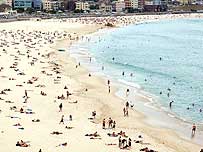
Beach
Sunbathers - putting themselves at risk without protection

Some people are so paranoid, they won’t even take their rubbish to the dustbins.

His advice was to use high factor every day even in early spring, and to wear a hat and T-shirt when swimming in the sea.

Also, never burn by staying out of the midday sun, and 'check, check, check' any new or changing moles.

What do you think needs to be done to raise awareness of skin cancer? Is there enough health education?

It is getting better. It's also the reason Briony, who us quite shy, decided to speak up.

Of course in Oz there are uva and uvb forecasts every day and that should happen here, I think.

But we are now becoming more aware and the message is getting through, which is why spray tans or the 'pale and interesting look' are the way forward!

Famous Aussie ladies Kylie and Nicole Kidman don't sport a tan - that’s because the figures for skin cancer in Australia used to be one in four.

How does Briony feel now looking back?

Lucky. But it’s not major life changing. She’s positive.

What precautions do you and Briony now take as a result of the cancer scare?

We lather on the lotion and check each other.

As a Mum I nag, nag, nag about it.

And of course, I buy her the best fake tans without a qualm.

Do we Brits spend too much time on sun beds seeking a tanned look?
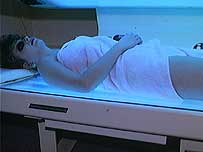
Sun bed
Sun beds - experts recommend fake tan rather than machines

Sun beds should be banned as should low factor lotions.

What would you say to sun worshippers who stay out in the full sun all day?

You are playing with fire, quite literally.

But my advice would be to still have fun in the sun as it has benefits and makes us feel happy and healthy.

Just don't go crazy...

Links relating to this story:

The BBC is not responsible for the content of external websites

Inside Out Archive

Inside Out: Yorkshire & Lincolnshire
View our story archive to see articles from previous series.

BBC Where I Live

Find local news, entertainment, debate and more ...

Bradford
Humber
Leeds
Lincolnshire
North Yorkshire
South Yorkshire

Meet your
Inside Out
presenter
Jamie Coulson

Jamie Coulson
your local Inside Out presenter.

Contact us
Contact the Yorkshire & Lincolnshire team with the issues that affect you.

Free email updates

Keep in touch and receive your free and informative Inside Out updates.
Subscribe
Unsubscribe

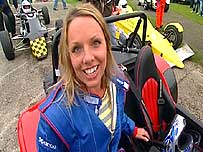
Nicola Rees
The Harewood Challenge - Nicola Rees gets ready for action

Haring up Harewood

Nicola Rees takes on Yorkshire's most challenging motorsport event - the Harewood Hillclimb.

On 16 September 1962, this hill on a Yorkshire farm gained notoriety in the petrol-head world of car racing.

Stockton Farm, Harewood, handed over, to the British Automobile Racing Club (BARC), the use of a track rising some 250 feet over a length of 1,200 yards (it was imperial measures in those days!).

Hillclimb spectacle

This first event, on then tar and chippings, was to quickly establish the course as one of the best hill climb racing courses in the country.

So in order to find out what all the acclaim is all about, Nicola Rees donned the helmet and racing kit getting to grips with the wheel to see if she could get the hill climb bug.

She did.

The sole aim of a hill climb is to get your car up the course to the finish in the shortest time possible.

They say that the fastest drivers are those who can get their car off the start quickly and the first 64 feet can take just under two seconds.

The fastest drivers can flash past the finishing line, now a longer 1448 metres away, in less than 50 seconds, that's exceeding 130mph!

So Nicola folded herself into the cockpit of the highly tuned Westfield SE for her attempt to crack the track record.

The power comes from a two-litre Ford engine, with a mere 264 brake horsepower that pings the driver from 0 to 60 in just 3.5 seconds, making it one of the most powerful cars in its class.

With the sounds of screaming engines and squealing wheels she was already getting the adrenaline saturated bug to get up that hill like a bat out of hell.

Playing safe

Safety is an important factor of participating and if you want to drive the Harewood hill climb, you have to dress the part and that even means squeezing into a fireproof driver's suit.

Whilst the whole day is just great fun, taking safety seriously means that it's fully enjoyable.

Nicola, as with all drivers, attended her briefing session, learning about the lines, corners and building up a mental image of the track.

In common with all racing tracks, there are some curious names to the corners and straights.

Clark's, Chippy's, Willow, Orchard, Farmhouse and Quarry all have their origins back in the early days, but you soon get to know them well - especially if you come out at one of them!

The bug bites

So if Nicola wanted to be on that podium spraying champagne at the end of the day she was to have her work cut out.

She met Alan Staniforth who, at 83-years-old had seen the top step of the podium many a time.

Alan was the oldest competitor on the day - he was even present at the inaugural event 44 years ago - he's now become a bit of a fixture in hill climb events across the country.

Alan gave Nic some timely advice before her final run.

At the close of the day and with Nic's time logged she was more than bitten by the bug:

"What a fantastic event… I can honestly say that it was one of the best things I've ever done. I might not have won… or even come close… but I've met some great people and had an amazing experience…. I'll definitely be back next year."

Links relating to this story:

The BBC is not responsible for the content of external websites

Bruce Cartwright
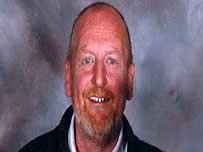
Bruce Cartwright - died after choking

Ambulance service

In our final story Inside Out investigates how a man choked to death in a restaurant after 999 controllers sent an ambulance to his aid, but no paramedic.

The vehicle despatched to help 53 year-old Bruce Cartwright was one of a number crewed by technicians - with less training and carrying different equipment than paramedics.

Mr Cartright died after going out to dinner in his home town of Knaresborough. He choked on a piece of steak.

Staff at the So Bar restaurant dialled 999 as 22-year-old friend Sophie Robertshaw fought to free the obstruction using the Heimlich manoeuvre.

But when the ambulance arrived, it was crewed by two technicians who were not trained and do not carry forceps to remove the piece of meat that had lodged in Mr Cartwright's windpipe.

This treatment is standard in cases of choking and all paramedics are trained in its use.

Inside Out reveals that a paramedic was on duty in the Knaresborough area but he was not sent to the incident.

Mr Cartwright was dead on arrival at Harrogate District Hospital.

Concern expressed

Ambulance unions have expressed concern that if ambulance services become fixated on response time targets, patients' lives could be at risk.

Jonathan Fox, of the Association of Professional Ambulance Personnel, was not commenting on this particular case but told Inside Out that many ambulance staff nationwide felt response targets were now considered more important by management than the patient's recovery.

"People feel at the sharp end that it's almost more acceptable for you to respond within eight minutes - the national government target for ambulance category A emergencies."
Jonathan Fox

Mr Cartwright's widow, Susie, herself a nurse, did not know a paramedic had not been called.

She said, "To know that there was one nearby who hadn't been contacted, it's really annoying because I want to know why.

"It's just brought everything back. We're full of doubts - what if, what if…"

Tees, East and North Yorkshire Ambulance service - now part of the Yorkshire Ambulance Trust - has struggled to hit government response targets.

The paramedic response car that night was left covering the whole Harrogate area.

Mike Shanahan, Assistant Director of Operations at TENYAS, said controllers had not sent a paramedic because the 999 caller had led them to believe Mr Cartwright was breathing.

He told the BBC programme: "Response times are very important. The same as they are for patient care. If we do the right thing, we should get the performance target at the same time as patient care."

"We sent an emergency ambulance with suitably trained and equipped staff… There's no evidence to suggest we should've sent a paramedic. When we got there and established the patient was in cardiac arrest, then I agree we're in a different ball game."

We ask how much risk is involved for patients when ambulances are sent out without fully trained paramedics.

Links relating to this story:

The BBC is not responsible for the content of external websites


About the BBC | Help | Terms of Use | Privacy & Cookies Policy