MAN WITH A MISSION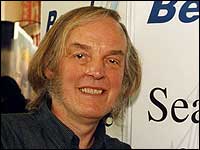 | | Professor Colin Pillinger dreams of Mars |
Inside Out meets Bristol’s man of the moment - Space Chemist, Professor Colin Pillinger. Get inside his Mars mission, inspirations and unconventional attitude… Professor Pillinger is an unlikely-looking hero. The Los Angeles Times - which clearly has fixed ideas about what a hero should look like - is perplexed by his appearance. | Profile: Colin Pillinger | Date of birth: May 9 1943 Place of birth: Kingswood, Bristol. Education: Kingswood Grammar School and Swansea University. Family: Wife, Dr Judith Pillinger, is also a space scientist working on Beagle 2 project. Their daughter Shusanah is also working on the team. The couple also have a son. |
"A scruffy bespectacled space chemist with Elvis sideburns and long hair who dreams of finding life on Mars in between feeding cows on his farm." Unlike other dreamers, Pillinger is not afraid to attempt to turn his dreams into reality. Even if his dreams reach as far as landing a spacecraft on Mars. That’s a trick no European has ever pulled off before. Beagle 2 Pillinger is the head of Planetary and Space Sciences Research Institute at the Open University. He is the man behind the Beagle 2 mission to land a scientific probe on the Martian surface. "He’s a very determined character and, I think, a visionary character," Lord Sainsbury, the Science Minister tells Inside Out. Big breakPillinger’s big break came in 1969, when Bristol University was asked to analyse the first rocks brought back from the moon. The team needed a junior chemist and Pillinger - who grew up listening to Journey Into Space on the BBC and reading the Adventures of Dan Dare in the Eagle Magazine - thought he might never have a better opportunity. Reputation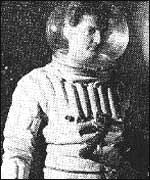 | | A young Pillinger was inspired by Jet Morgan's Adventures on Mars. |
Over the years, Pillinger has established himself as one of Europe’s leading space scientists. Seven years ago, he learnt that Europe was planning to send an orbiter - the Mars Express - to the red planet in 2003. Pillinger thought he could enhance the mission by sending a probe on the back of the orbiter, which would detach and land on the surface. It was an enormous risk - the team would have a fraction of the time and budget of a typical interplanetary expedition. "People have been dreaming about Mars for thousands of years and it fell on this generation for it to be 2003 and for it to be so close that we could go there," the professor says. "If we hadn’t taken the opportunity we’d never have forgiven ourselves. Everybody else felt like that and all they needed was somebody to say, "come on, we’ll go", and they trudged along behind me! "If we’d followed the proper routes we’d never have even been going to Mars," he says. "We just got the steam roller rolling. If you got in the way, you got squashed." Clash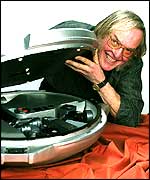 | | Colin Pillinger displays a model of Beagle 2 |
Pillinger’s style doesn’t always win him friends - especially amongst bureaucrats who have to ensure taxpayers’ money is well spent. David Southwood at the European Space Agency has often clashed with the professor. "Colin Pillinger is not a reasonable man," he says, "and he’s not easy to persuade. That’s of course what’s made Beagle what it is. "If Colin were reasonable and easy to persuade, he would have been persuaded not to attempt Beagle 2!" ProudThe whiskery space wizard is always optimistic about space exploration. "We’re good at science, we’re good at engineering, we’re great at ideas. The country should be pushing forward in the exploration of the solar system." But what about those sideburns? "He doesn’t see the need to wear a tie, to wear a suit," says his daughter Shusanah "It’s totally irrelevant to what he’s doing. He just doesn’t believe in convention."
| 



