DEBT DILEMMA | | Have attitudes to debt changed? |
Debt is something that most of us worry about at some point in our lives. But are attitudes to being in the red changing? And how can you avoid the debt trap? At one time, debt was almost a sin, seen as completely taboo, and something to be ashamed of. If you found yourself in debt, you certainly didn't tell anyone. Today, attitudes to debt are changing, largely due to the credit card revolution and the ease of getting loans. These days most people live with a certain amount of debt in their lives, whether it's a loan or instant credit. Inside Out investigates how attitudes to debt vary, and examines how to avoid the debt trap. The debt mountainUK consumers are in the grip of a credit craze if current statistics are to be believed.  | | Spend, spend, spend - consumers are using credit more and more |
Borrowing is on the increase with consumer credit in the UK up 65% since 1997, according to Euromonitor - an organisation that provides global business intelligence and market analysis.
The proportion of credit card borrowing nationwide increased from 21% in 1997 to 30% in 2001.
In early 2004 debt counsellors reported a 25% surge in the number of calls received compared with the same period in 2003.
In the West of England it's a similar picture, with more and more of the region's population accumulating debt. Student debt Lee and Ellie are students at the University of West of England. Lee has just started the second term of his foundation year, and Ellie is in her second year.  | | Lee and Ellie will have a mountain of debt by the end of University life |
They are looking at £20,000-£40,000 of debt by the time they have finished their courses. As students, a lot of their outgoings are spent on essential, every day life.
They don't live extravagantly - their money seems to just go on buses, launderettes, coffee and meals. They do smoke, and they do like to go out, but they are still constantly struggling to make ends meet. Then there's the controversial matter of student loans, which could hang over them for years after they've finished their studies. Money worries stress them out about as much as their college exams and coursework. It's a distraction that they can do without. Instant creditOllie is 24 years old, and his problem is very different - he's run up his substantial debts on his credit cards. Ollie moved out of home, and set up his own business. 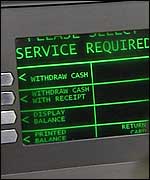 | | If debts mount too high, no service will be available |
He lived the lifestyle he wanted on credit, and the money went on clothes, food and drinks for friends, and music. He didn't buy a car or anything major, but he still managed to run up a debt of £3000. The extent of his debt isn't as huge as that of Lee and Ellie, but it's something that many of us can identify with. Ollie's story is a cautionary tale. He explains how his money disappeared over a period of time, almost without him noticing. "It went on drinking, holidays, clothes, presents for my girlfriend, taking mates out for meals... anything where you could spend money on a credit card.
"But if you dont think about it, if you dont concentrate on it, it's quite easy to let it boil in the background and get on with your life. "I treated the credit card as money for blowing on nice things, it wasnt money to live off, it was money to get the lifestyle that I wanted."
Unexpected costsOllie's situation was made worse when he was hit by a few unexpected problems. One of his credit card companies upped his limit without telling him, and he spent a lot of money on the internet.  | | Ollie funded his lifestyle through the credit card |
Ollie is a good example of falling prey to all of the things that are so widely available to us all. His dad Andi lives in Tintern. He bailed his son out because, for him, debt is absolutely wrong. Ollie was never really that worried about it, which highlights the differing opinion between generations. He's obviously relieved to be paying it back without interest to his dad rather than being at the mercy of a credit company! Credit controlSo what can you do to reduce the risk of finding yourself in major debt? | Top Tips On Debt | General advice
* Keep track of your outgoings and always check your bank statement.
* Budget for irregular bills and expenses.
* Educate yourself about money management.
* Set limits - cut your cloth to fit your incoming finances. * If money matters are spiralling out of control, buy everything on a cash basis.
* Seek help early on if debts escalate.
Students
* Part time and holiday work can be a good way of generating extra income.
* Choose a bank account with cheap overdraft facilities.
* Some universities run hardship funds for poorer students.
* Many colleges offer debt advisory services. |
A lot of people get into debt because of circumstances beyond their control. Keeping a budget allows you to get an accurate picture of your financial position - your incomings and outgoings. It will show how your money is being spent, and allows you to set spending priorities, and highlight where savings can be made.
Another good way to keep on top of your finances is to evaluate your standard of living. If you're spending too much on clothes, household goods, holidays or the Internet, you need to cut back. Think ahead and try to anticipate any spending peaks.
Don't take on major loans if you can't really afford to pay them back, rather than exposing yourself to enormous risks. Get out of the habit of spending to the limit, and cut back on non-essential luxury items if you're feeling the financial pinch. Hey big spender!Careful budgeting can help to make your money go further. A realistic budget ensures that your basic needs are met, and it allows steps to be taken to get you out of debt.
It can also be a very effective brake on large impulse spending.
In addition many debt advisory groups suggest developing some form of "cushion" to help cope with a downturn or change in circumstances. It's also important to have a financial plan with goals for the future so you can take a longer term view of your finances. This can include savings accounts, a pension, money set aside for your children, and a business plan (if you're thinking of starting a business). Help at handIf you do get heavily into debt, take action as soon as possible. Talk to an expert and get professional advice.  | | High-profile campaigns have highlighted access issues |
There are several national and local organisations who can help with specific problems. One of these is the National Debtline who run a freephone help line on 0808 808 4000.
Another good source of advice is the Consumer Credit Counselling Service on 0800 138 1111.
The BBC is currently running a campaign called Hey Big Spender which aims to increase awareness of the issues around debt. Visit the special Hey Big Spender web site for more information. | 



