SHORT CHANGED - PLAYING THE POSTCODE LOTTERY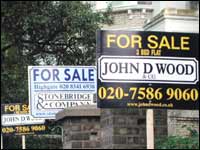 | | POSTCODE LOTTERY | What services have you come to expect from your local area? |
When it comes to local services in your area, are you being short changed? Inside Out compares three areas in the West whose residents feel they are losing out in the postcode lottery. What do you look for when you buy a house? Fitted kitchen, large garden, laminate flooring? Well maybe in the future you should look a little further afield than the shed at the bottom of the garden and consider what facilities are provided in the local area. Inside Out goes local in Calne, Sedbury and Lawrence Hill to find out what the areas have, or rather, haven’t got to offer. Going local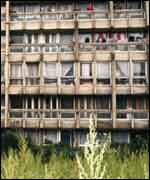 | | It is not only inner city areas that feel they are being short changed |
The quaint rural market town of Calne in Wiltshire has been in decline since the closure of its local factory. Residents here feel that rural areas are neglected. The town of Sedbury on the other hand, is a little confused. Although it is in Gloucestershire, it is nearer to Bristol and to confuse matters further, it has a Welsh postcode. Lawrence Hill is a deprived inner city area or Bristol and one of the worst places in Britain to live. Three years ago its residents were given £50 million to spend on improving their area. Negative exercise| Quality of Life Indicators | Quality of life means different things to different people and can be a difficult thing to quantify. A recent survey found the most important factors were:
- low level of crime
- good health services
- good quality, affordable
housing
- shopping facilities
- good public transport
- good schools
- good job prospects
- clean streets
- activities for teenagers
- facilities for younger children
(Source MORI poll, October 2001) |
So whether it’s inner city air pollution and high crime, or lack of schools, post offices and public transport in the countryside, it seems we Brits will never be satisfied. But surely complaining is no solution but just a negative exercise? Not according to the government, who stress that trying to measure where things are going wrong can help councils to identify problems and hopefully, put them right. Over the past few years, government advisors have been developing reliable ways of measuring these and other important factors, which are termed ‘quality of life indicators’. In future, they’ll be measuring more than 30 indicators under three broad headings; economic, social and environmental. This is all very well for future residents, but what about today’s locals in our three chosen areas? Put to the test Inside Out has put our three areas in the West to the test. Using some of the quality of life indicators identified by the government, we have graded different elements of local life. | | | | Crime | 30% of national average
Good | 50-70% - national average
Good | 3-10 times the national average. Armed police patrolling, high domestic violence
Poor | Health | 3 surgeries within half a mile
Good | Surgery in the village
Good | Many elderly deaths and many referrals to social services
Poor | Housing | Plans to develop housing, schools and business
Average | Reasonably priced housing
Good | High levels of unfit homes
Poor | Transport | 5 miles to train station, 25 miles to coach station
Average | Half hourly bus service, train in Chepstow
Good | Bus depot, train station, coaches
Good | Jobs | Relatively high unemployment
Poor | Lower than average
Good | 3 times the city average
Poor |
The verdictFrom our analysis of the three areas, Sedbury comes out on top, although sports facilities and local shops are lacking. The residents of Calne have good public transport, but due to the closure of the factory, unemployment is high. 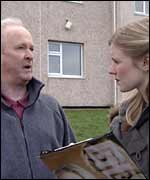 | | Tessa finds out what services local residents are unhappy with |
The residents most short changed in the postcode lottery however, are those of Lawrence Hill. With high crime and unemployment, Lawrence Hill is the area with the lowest quality of life. Are you being short changed?So how can you find out how short changed your area is? The web is a good place to start. There's a wealth of data from official and non-official sources. Type in your postcode, and www.upmystreet.com will reveal your nearest shops and services, schools, childcare, public transport, property prices, and crime figures. The government site www.neighbourhood.statistics.gov.uk provides a variety of official data. Some local councils have collected their own statistics. Bristol City Council is well ahead of the game, having produced its own Quality of Life report for several years. Find it at: www.bristolcitycouncil It can be very hard to get statistics which are accurate for a single street or group of streets - the crime figures, for example, may cover a much wider area. And, unless you compare figures from the same source, you can't compare one place with another, as we have done. Good luck! The BBC is not responsible for the content of external websites. | 



 Inside Out - West: Monday 10th February, 2003