FETAL ALCOHOL SYNDROME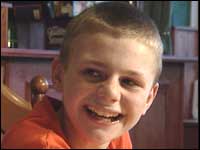 | | INNOCENT VICTIM | Alcohol can have devastating effects on an unborn child |
It is well documented that drinking during pregnancy can have harmful effects on the unborn child. What is less well known, is that heavy alcohol consumption in pregnancy can result in the condition known as Fetal Alcohol Syndrome. It’s Friday night and the bars in Bristol are packed. Groups of young women gather to socialise over a drink or two or three… A recent survey indicates that young women are drinking more than ever before, with weekend binges becoming a regular event. Such increases in alcohol consumption are undoubtedly damaging women’s health. Yet John Brooks from Dorset has another reason to worry about this trend. His adopted son Edward has acute learning and behavioural difficulties and is tiny for his age. Edward’s birth mother started drinking at age 14 and eventually died from liver failure. John believes that alcohol has played a huge part in Edward’s condition. He believes that Edward was damaged in the womb by his mother’s drinking. This kind of damage is known as Fetal Alcohol Syndrome or FAS. Irreversible damage| Fetal Alcohol Syndrome | Classical FAS is very rare, occurring in about 0.2% of births in the USA. The following symptoms are associated with Fetal Alcohol Syndrome (FAS): Low birth weight Small head Flat face with a snub nose and unusually smooth area between nose and mouth Thin upper lip Small, widely spaced eyes with prominent folds of skin on the nasal side of the eye Specific or general learning difficulties Hyperactivity and attention problems |
FAS is the term used to describe a number of foetal abnormalities which occur in the babies of women who have abused alcohol during the course of their pregnancy. The severity of the abnormality depends on the amount of alcohol consumed. The damage caused to the baby during pregnancy is irreversible. The condition is for life. At present in the UK, there is little knowledge about Fetal Alcohol Syndrome and little, if any, research being done by the medical profession. "There are a number of people in the country that aren’t trained in identifying alcohol related problems and because of that the children aren’t being diagnosed and therefore not getting help. We need training for paediatricians, midwives, community nurses and health visitors," says Dr Moira Plant from the Alcohol and Health research unit of the West of England. ResearchIn Bristol, Dr Plant organises the first UK conference on the syndrome. Also present is Dr Christine Loock from the University of British Columbia, Canada, who has been studying and working with FAS patients and their mothers for many years. 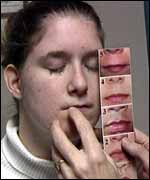 | | Facial features can indicate whether a child suffers from FAS |
A great deal is known about FAS in Canada because the condition is much more prevalent. In some remote Canadian communities, as many as one in four children show some form of alcohol damage caused during pregnancy. For Edward’s adoptive father John, it is a vital chance to learn more about his son’s condition and meet other parents in similar situations. Whilst John has not yet managed to get Edward’s condition formally diagnosed, he meets another family in Dorset who have. Bill took over the care of his grandson Michael after his daughter died from alcoholism. Securing a diagnosis is a difficult task, made even harder by the fact that most children with FAS are adopted, making a medical history difficult to obtain. "Most children in the UK with fetal alcohol syndrome are adopted or fostered. In many cases the biological mother denies that she was ever drinking during pregnancy because of guilt. This makes it even harder for those foster parents to get a diagnosis for their child."
Matthew Hill, Health Correspondent.
But how would a diagnosis help? John believes that a diagnosis won’t change Edward’s life, however, "It explains why Edward is like he is, it explains to others why he is like he is, and in a way, it explains to Edward why he is like he is." Diagnosis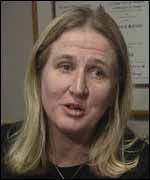 | | Dr Christine Loock believes that FAs must be considered in Edward's diagnosis |
In desperation, John turns to Dr Christine Loock. After studying Edward’s files and watching his behaviour on video, Dr Loock feels strongly that alcohol damage in the womb must be considered by those trying to diagnose Edward’s problems. For John, this is a small but significant step. "It’s more than we could hope for. She’s going to write a letter to all those that need to be involved with Edward so that the best can be done for him," says John. Back in the Bristol bar a young Mother tells us that when she was pregnant she drank 8 or 9 pints every weekend night till she was eight and a half months. It’s women like this that John wants to reach. "We’re not just fighting for Edward, we’re fighting for all the others and to get the message across that binge-drinking alcohol can harm an unborn child".
| 



 Inside Out - West: Monday 3rd February, 2003