

- Contributed by
- actiondesksheffield
- People in story:
- ARTHUR WARD, Cliff Teale, George Pullan, Norman Paley, Alan Milner, Isa Dalgleish, Winnie Sewell, Keith Spencer, Hazel Tombs
- Location of story:
- Cherbourg, Southampton, Cambridge, Haddington, Edinburgh, Rotherham, Beighton, Woodhouse, Laughton, Gleadless, Owler Bar, Baslow, Bakewell , Winster, Cupar, Fife, Kemback, Tayport, Fifeshire
- Background to story:
- Army
- Article ID:
- A4348587
- Contributed on:
- 04 July 2005
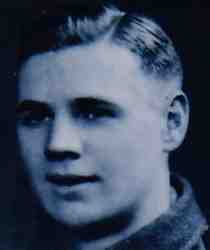
Arthur Ward
This story was submitted to the People’s War site by Roger Marsh of the ‘Action Desk — Sheffield’ Team on behalf of Arthur Ward, and has been added to the site with his permission. The author fully understands the site's terms and conditions.
Refer to Chapter 1-- A4345544 -for links to other chapters.
LIFE IN THE ARMY
by
ARTHUR WARD
Chapter 4 — My 21st Birthday
June 16, 1940
The officers kept going to HQ for orders which were changed every few hours. Then a decision was made for us. Two ships had arrived in the docks, one for airmen, Australians and Canadians and one for us, if there was enough room.
We had to make a run for it.
We arrived on the quayside at 1745 hrs and the docks were a seething mass of men marching, this way and then the other. No panic but not much organisation.
I remember that there was a cafe still open on the harbour and it was still selling tea and coffee at the full price although the Germans were only a few miles away.
Organisation amongst the higher ranking officers seemed to be very poor but there was no panic amongst the troops, and we marched on the harbour in orderly ranks, although we could be been bombed at any time and we had no cover.
We fully expected to be taken prisoner when it was decided that we could board the second ship complete with our guns. It was a British timber ship called 'Maplewood' and we boarded at 1850 hrs.
We gratefully clambered aboard until it nearly sank with all the weight.
We set sail at 2050 hrs and by now, it was nearly dark. The ship carried one gun for its own defence. It was so full of troops that it was practically impossible to lie down and I was on deck all the time. Cherbourg was occupied by the Germans on the next day.
During the night, the ship was brought to a halt when a searchlight suddenly lit up - it was from a submarine which fortunately turned out to be British, so it escorted us back to Southampton.
When daylight broke we saw a seaplane overhead and 2 British destroyers also escorting us. It had only been a very slow journey due, I suppose because the ship was so overloaded.
June 17, 1940
We docked at 0940 hrs and finally disembarked at 1045 hrs.
There was a good breakfast waiting for us on the docks, which we really enjoyed.
We had had very little to eat for these last few days, only emergency rations, usually Bully Beef and hard biscuits.
We looked a motley crew - unwashed and unshaven for nearly a week as we only had the kit we stood up in, but we had all kept our rifles.
CAMBRIDGE
We then boarded a train via Reading and Oxford to Cambridge.
The army orders were that we were to let no-one know who or where we were, as they wanted the Germans to think we were still in France.
I broke the rules - I had a scruffy bit of paper, an envelope and a pencil, so I scribbled, "in England, safe and well," and when we stopped at Bletchley Station, I wound down the compartment window and asked a passing station porter to post it home for me. He put on a stamp and posted it home so that they knew I was OK.
June 18, 1940
We alighted at Cambridge station and we marched into town.
We were a scruffy looking motley crew but marched with heads up down the main street. At the head of the column were civilians with lists of people who were willing to give us billets.
Some took several soldiers but when my turn came, I was allocated to a house on my own. It was a private house occupied by Mr. and Mrs. Lees, of Brampton Road, Cambridge.
They made me welcome, but had a big surprise as they had expected to house new recruits straight from civvy street.
They could not understand why we all looked so dirty, but when we told them where we had been, everything was OK and we were treated as heroes.
However, after a wash and shave, and a meal, we all felt and looked a lot better.
I badly needed a bath, but they did not offer me one, I thought that they hadn't got one, but the next day I realised that it was in the kitchen but covered up with a board, which formed a kind of worktop. So I suppose it was a bit embarrassing to offer me a bath in the kitchen.
We hadn't slept much for a week, so after a meal I fell asleep in an armchair. At about 23.30 hrs, the air raid siren sounded and this turned out to be the first raid on Cambridge. Being a university City I think the residents thought that they would not be bombed!
I slept through the first part of the raid and the Lees family thought I was very brave to sleep through it but they did not realise that it was caused through me being so tired.
I suddenly awoke when 2 bombs fell about 200 yards away, and we found out the next day that 11 people had been killed.
We went outside and saw a German bomber caught up in the searchlights, and we saw it shot down in flames. A very heartening sight for us but not very pleasant for the German crew of the plane.
The raid lasted until 03.45 hrs so we were able to get some much needed sleep.
The authorities were so upset about the raid that they decided that the Germans must know that our Regiment was in the area, so during the morning, we boarded trucks and were taken about 4 miles into the woods and fields. So ended our one night of 'pure bliss' in civvy houses.
We had very little equipment because it had all been left in France except our rifles which we kept to the very last.
It was also noted that our excursion into France was hardly recorded in memoirs of anyone after the War ended. We were proud of the fact that we were able to bring our guns back with us. The idea was that Churchill has ordered out our Division as a token effect to let the French think that we were doing our best to help them by defending Paris, but we never even got anywhere near it before the big retreat to Cherbourg.
Our Colonel was very perturbed to learn that most of the Regt. had thrown away our hated gaiters (which no-one liked wearing) and made everyone who had done so go on a route march of about 10 miles. The area we were in was called Braham.
June 22, 1940
We had a walk to a nearby village called Sawston.
My brother Eric was 20 years old today and I heard that he had had to register for service in the Navy.
Whilst in these woods I was mainly on duty in the cookhouse as I had made a mate of Cliff Teale (from Horsforth), but I also went out on manoeuvres.
June 29, 1940
Went in a truck to Cambridge to a cinema and saw Gulliver's Travels with George Pullan, Norman Paley, Alan Milner and Cliff Teale.
June 30, 1940
MY 21ST BIRTHDAY
We had a good night out in Sawston with Bill Turner and several other lads.
It was usual in this area to drink cider rather than beer, but I think we had beer on this occasion.
About this time we had the luxury of mobile showers and an anti lousing squad visited the camp to anti louse everything.
(AL63 used) then we were issued with new clothing and gradually new kit to replace all which had been left in France.
July 05, 1940
We cleaned up the camp area.
One thing we did not like about this camp was the latrines. We had to dig deep trenches and then over it, scaffold (wooden) poles were fitted in a horizontal position which we had to squat over and lime was periodically poured into the trench to try and sweeten things up, which I am afraid was not very successful, the whole area was covered in flies.
We paraded at 1415 hrs in full FSMO (Full Service Marching Order) which meant we had to carry all our kit for a move.
We had buses to Great Shelford Station then boarded a train at 1930 hours.
HADDINGTON
We travelled through March, Ely, Lincoln, Retford, Doncaster, York, Darlington, Newcastle to Berwick on Tweed, then on a branch line at 0730 hrs to Haddington (near Edinburgh).
We marched ½ mile to a camp on a golf course. Our address now is c/o Amesfield Park, Haddington, East Lothian, Scotland.
July 06, 1940
09.
15 hrs breakfast.
We then paraded and were given duties putting up tents and marquees.
July 07, 1940
Digging air raid trenches, then fatigues in the cookhouse.
July 11, 1940
We now had 4.5 Howitzers, but we left the guns in the Park as a reserve battery and moved to Beil House, Dunbar with 18/25 pounders.
Beil House was built like a castle in its own grounds, well away from the main road. We were here to defend the Firth of Forth which was only a few miles away.
I was still in FREDDIE troop, 279 Battery.
July 12, 1940
48 hours leave.
We left Haddington on the service bus to Edinburgh where I was able to send a telegram home to say that I was on my way.
At Waverley station we boarded the Flying Scotsman which left at 1305 hrs. We travelled via Newcastle and York and arrived in Sheffield at 19.45 hrs (6 hours 40 minutes).
I spent the leave visiting friends and relations.
July 14, 1940
Caught bus to Rotherham at 1920 hrs where I met Bill Turner with his mother and dad at the station. The train left at 2020 hrs and arrived in York at 2145 hrs. We had a 2 hour wait here, so we had a walk round York. The train then left at 2330 hrs and arrived in Edinburgh early in the morning at 0405 hrs.
On this train in the compartment with Bill Turner and me was a young scotch girl who had spent the weekend with her husband who was in the army and stationed in Leeds.
When we arrived in Edinburgh, we had to wait about 6 hours for a bus back to camp. However it was raining heavily and we had become friendly with the scotch girl, so she said we could shelter in her home while it was time for the bus. She took us in a taxi and told us her name was Mrs. Isa Dalgleish, address c/o Sutherland, Mulberry Place, Leith, Edinburgh 6.
Her father gave us a friendly welcome and gave us breakfast. They went to bed for a few hours and we slept in the lounge on easy chairs until 1045 hrs.
Isa took us to the bus and we arrived back in Haddington at 1150 hrs which was 10 minutes before our passes ended.
Later my mother and dad wrote to Isa thanking her and this started a friendship between them that lasted all through the war years.
During this time my mother and dad spent holidays with her family in Edinburgh, and Isa and her friend Helen came and stayed with my family quite a few times. They were very popular girls and they all had some good nights in Swallownest Club.
The twist to the storey is that I have never seen her since that first day and after the war, we all lost touch with each other.
July 16, 1940
We packed up all our equipment and returned once again to Beil House, Stenton, Nr Dunbar.
There we had the usual parades, gun drill and manoeuvres, but I was mainly working in the Sgt Mess as a waiter. This was a "cushy" job.
Various leave parties were having 7 days leave in turn.
August 21, 1940
Battery Drill Order for short manoeuvres. At night I went to a cinema in Dunbar and saw Myrna Loy in "The Rains Came".
Whilst at Beil, several times we visited a dance hall at nearby East Linton where we had many good nights.
We were also able to walk into Dunbar to a pub or the local picture house.
One night I saw Judy Garland in "Over the Rainbow".
There was an open air swimming pool in the rocks on the sea front at Dunbar, which was very good.
Many years later in 1979, we visited Dunbar whilst we were touring Scotland by car, and in a square near the sea front were 4 x 25 pounder guns which were of great interest to me.
August 23, 1940
I was on leave party No. 4.
0645 hrs. First Parade. Boarded trucks to East Linton. Train left at 0736 and we arrived in Newcastle at 1028 hrs. I had dinner at the YMCA with Don Gregson (died 11/01/97), cost 1 shilling and 4 pence each (6 ½p). The train left at 1235 hrs to Durham, Darlington, York arriving at 1417 hrs.
We left again at 1508 hrs to Pontefract then Sheffield at 1628 hrs.
I arrived home at 1705 hrs.
This was a typical 7 day leave. The usual visits to friends and relations, ride on my bike.
August 24, 1940
Get up at 1010 hrs. Went to Percivals house at Beighton on my bike. Then to Manor Estate and saw Winnie Sewell. After tea went to the Regent in Sheffield with Keith Spencer. There was an air raid alarm about 2200 hrs and we were allowed to stay in the Regent until the all clear sounded at 23.25 hrs. We caught a bus to Woodhouse, then walked home. There were 2 more air raid alerts and we heard later that 6 small bombs had been dropped at Laughton.
August 25, 1940
Sunday. Out cycling to Gleadless at 11.25 where I saw Winnie Sewell, John and Ron and to The Peacock Hotel at Owler Bar, Baslow, Bakewell to Winster where we had dinner and tea at the farm. During the afternoon we played football. We left for home at 18.15 hrs and arrived home at 2125 hrs.
An air raid alarm at 2145 hrs but no bombs heard.
August 26, 1940
Walk to Aunt Frances. Regent, Sheffield saw Ginger Rogers in "Primrose Path". Home at 2140 and air raid alert at 2145 hrs but no bombs.
August 27, 1940
Raining. Went to dance at Londsdale Club, Whiston with Hazel Tombs and a young man in RAF and our Eva.
Air raid alarm 2230 and bombs were dropped in the Rotherham area.
August 28, 1940
Went on bike ride to see Bill Turner's mother in Maltby. Night to dance at Beighton with our Eva. I saw Evelyn Williams.
Air raid warning at 2200 hrs. This was the heaviest raid so far on Sheffield. Bombs were dropped at Aston, Rotherham, Sheffield, Handsworth and one enemy plane was shot down in the area.
August 29, 1940
Went to see Grandma and Granddad, then to W Sewells where I had tea, then went for a walk to see the Barrage Balloon HQ at Norton. I caught the bus home at 2220 hrs.
Air raid alarm 2315 hrs and bombs were dropped in the area.
August 30, 1940
Left home at 1115 hrs to Victoria Station, at 1320, caught train to Doncaster
Station. Boarded the Flying Scotsman to Edinburgh. The train was 1 hour 20 minutes late and we missed our connection, so had to catch a bus to Beil House. We arrived at 2320 hrs, and to our surprise, the battery had moved except for a rear party. We then had the job of cleaning up the site.
August 31, 1940
At 1600 hrs we travelled in a 3 ton truck to Edinburgh and boarded a ferry (with the truck) at Queensferry, and travelled across the River Forth almost under the Forth railway bridge. We then slept in the HQ wagon lines at Cottan.
September 01, 1940
Arrived in camp at Cupar.
Our address now is, c/o Cupar, Fife.
We travelled by truck for a few hours. In St Andrews we had a drink at the Links Hotel and saw the golf course. Of course we did not know that the golf course at St Andrews would become a household name for its famed golf world championships. We found a YMCA canteen where we called several times for a snack. Usually “char and a wad.”
We are now in the open and under canvas again at 'Kemback Camp'.
September 12, 1940
KEMBACK
We moved to a farm at Bleet, this was 4 miles from St Andrews and 5 miles from Bupar.
This farm was overrun by rats, and as men slept on the floor in a barn it was not unusual for rats to run across their sleeping bodies.
Some nights I was lucky and I was able to sleep on a form. Not very comfortable but out of the way of the rats. We "borrowed" these forms from the canteen.
September 14, 1940
Went to St Andrews with Cliff Teale, Norman Paley and Keeble for ½ day leave.
September 15, 1940
We watched as a German plane was shot down by the RAF and it landed in the sea in flames.
We moved again and our address now is c/o CPO Tayport, Fifeshire.
September 19, 1940
We had a thunder storm during the night.
Pr-BR
© Copyright of content contributed to this Archive rests with the author. Find out how you can use this.


 Recommended story
 Story with photo