

- Contributed by
- marchback
- People in story:
- James Badcock
- Location of story:
- Germany
- Background to story:
- Royal Air Force
- Article ID:
- A4520783
- Contributed on:
- 22 July 2005
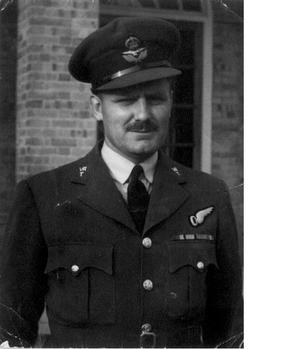
James Badcock
Chapter Two
It was 49 days since we had left Lamsdorf. How far had we travelled? I think it was about 600miles, as the crow flies, but it could have been 6000 the way we felt. Still, we had made it! We were put in huge marquees but, as the weather was improving, we were alright.
The food at the camp was very poor. Of course, all Red Cross food had stopped and all we got was a little soup and some bread. I found that young dandelion leaves were very tasty on bread. We rested and licked our wounds. The Jerry still pushed us around a lot but it couldn’t be for long.
Unfortunately, it was not a happy ending for many. The dysentery continued to take its deadly toll. The Germans would do little to help us. In fact, one German officer, who was approached for some clean clothing for these
Unfortunates, replied, in perfect English, 'What? Clothes for the English swine, I hope you shit yourselves to death.'
After about a fortnight we got a terrible shock - we were ordered to get ready to march again. This caused pandemonium. We could just about walk but as for marching - impossible. Furthermore, we knew (from our temperamental radio) that the Americans were probably only 20 miles away, so what was the use, where could they force us to march - it was pure Nazi bloody-mindedness. We held a meeting of the marquee Commanders and we decided to talk to each section. The decision was to tell the Kommandant we would not go. We got the reply we expected - if we resisted they would shoot. Our next move was to call in the Medical Officers and get them to certify us all as unfit to move. This move didn’t work either, as the Germans refused to accept this mass sickness. Finally, about half our number decided to march. The rest of us were left to take our chance. I was asked to take charge of the sick - anything was better than another march. The next morning came the crunch. At about 07.00hours the guards arrived to take over the marchers. The first thing we noticed was how few of them there were - so a few more dozen decided they were too sick to walk. Surprisingly, there was very little fuss and it seemed the guards were far too anxious to get moving to worry about a few hundred British POWs who were pig headed. Anyway, away they went - we waved goodbye to our friends and settled down to wait. What would the Germans do? Again a big surprise - nothing much happened, we saw very little of any guards and so we waited.
The next morning, a Tuesday, we had the first kick back. I was in charge of the morning 'appel' and had the chaps all lined up ready for counting - the time, 07.00hours. The German Ober-Feldwebel appeared (he was a pig of a man), the count was completed and I was preparing to dismiss the parade when this character ordered me to stop and said he was taking the whole of our Jewish contingent away to work. I said he wasn’t and so the fun started. He raged about the hated Juden, he sacked my Dolmeche (interpreter) because he was Jewish and there we were. I couldn’t speak German (officially), I had no interpreter so I was able to play it that I didn’t understand a word he said. He ordered me to find another dolmeche but when I addressed the lads and told them what he wanted not a man moved - suddenly out of about 700 men not one could understand German. This farce went on until 11.30hours - we were tired and hungry (we had had nothing to eat before appel) but we stuck it out and finally I got the order to dismiss. This German Ober-Feldwebel came over to me but all he said was 'I cant understand you, you are a British officer and yet you keep all your men standing about because of a few Jews - I think you are mad!' I tried to explain that, as far as I was concerned, they were in British uniform, had been captured as British and so were British, - we agreed to disagree.
The young Palestinian I had put in charge of the Jewish contingent (some 260 of them) came over and said 'Thanks for the effort Major but they will win, in the end, they’ve still got the guns and we are still Jews'. At 2pm that afternoon a contingent of guards arrived and removed the Jews - there was nothing further we could do. Happily, it wasn’t serious, as within 3 days it was all over.
That night whilst I was on my nightly vigil outside the marquee I heard the usual noises of evacuation by the civilians the thought that went through my mind was 'quo vadis?' just as the Roman General had thought all those years ago when the people were leaving Rome. The RAF passed over on their nightly errand of destruction, but tonight there was a new sound - sounds of great activity coming form the German quarters - something was afoot.
The next morning came sensation. No German arrived to unlock our compound. We waited until 08.00 hours and then decided to do something. We lifted the gates off their hinges and sent a Warrant Officer and 2 men, who could speak German, down to the main part of the camp to find out what the score was. They came back with the news that practically all the Germans had gone, there were only a few officers and a handful of old men left. The noises I had heard during the night now meant something.
We managed to contact the American and the French contingents and an interview was demanded with the Kommandant. He had fled so we had to make do with the highest ranking officer they could provide -a Herr Major. We found that the German garrison now consisted of only 26 officers and men - all of doubtful physical ability. We decided it was time to take over. There was very little argument from the German officers. The only thing they protested about was when we hauled down the German flag and hoisted a Union Jack, which mysteriously appeared from somewhere. The German Major protested that the Germans had not yet surrendered and, in fact the Americans were not yet in the district and that it was unwise to fly a British flag with the SS in the district, so we compromised - we made a Red Cross flag and hoisted that. We left the German sentries on the gate but took over the running of the Camp - including the cookhouse - at least we got something to eat.
It was decided to evacuate the marquees and so the French were moved out of their compound into a smaller one and the British took over their barracks. When I first saw the Compound I could have cried - the plumbing had broken down and the whole place was indescribably filthy. However, it doesn’t take the average British serviceman long to get organised and as we moved in so we cleaned up as best we could. Food was still short, people were still going sick, mostly with dysentery, and alas - each day someone was dying. We weren't home yet. The Americans were still about 11 miles away.
The next couple of days were probably the weirdest I have ever spent. There we were, right in the thick of the battle for Germany, still stuck in a prison camp, with Germans still walking about, but yet we were not really prisoners any longer. On the other hand we were not free to go outside the Stalag, it was like being in a small neutral country - an oasis if you like - surrounded by the combatant countries, just wondering and waiting. To say we were apprehensive would be the understatement of all time. What would happen if the Nazis counter-attacked? What would happen if the Americans, not knowing it was a POW camp, shelled the Stalag, believing it to be a German camp. It sounds silly, in retrospect, to dwell on such thoughts, but they were very real, believe me, during Easter week, 1945.
Amidst all the apprehension we managed to get some organisation moving. We got the barracks a little more shipshape, but were unable to do anything about the plumbing. We had a thorough reccy of the German part of the camp and found the clothing store. This was just what we wanted - clean clothes. However, we didn’t get much joy. All the store contained was a few pairs of underpants, of dubious origin, and a whole mass of new boots - of Italian manufacture. However, this was better than nothing the underpants were a godsend to those chaps still suffering from dysentery and there were enough boots for everybody to have a pair - and wonder of wonder! - most of us got a pair that fitted. They were good boots too, lovely soft uppers and quite well-made. As I had walked a pair of boots completely out on the march the Eye-tye replacements were very acceptable.
As we couldn’t get any new clothes we had to do the best we could with what we had and most of us set to on a glorious laundry exercise, but it’s a bit difficult when you haven't got much soap and very little warm water. However, with the application of a lot of energy we did at least manage to freshen up our shirts, socks and underclothes - and they dried very quickly, as the weather, at least, was on our side - it was a glorious Springtime - warm, sunny days - and we were able to sunbathe whilst our newly washed clothes dried out. The sun bathing would have looked a bit macabre to any onlooker - we all looked like something from a horror film - remember, we had walked over 600 miles on very little food, so most of us had lost our puppy fat. I weighed around 8 stone, and that was some loss when you think I was a sturdy 12 stone 10lbs when we started to march from Lamsdorf about 2 months ago - I think it is the only time I have seen my own ribs - and I was one of the fittest ones left - so you can imagine what the sick boys looked like.
One good thing which had emerged was that we had been able to rescue our Jewish, or Palestinian, comrades who the Nazis had forcibly removed from our midst, a few days before. No harm had come to them so the British contingent was, once more complete.
Meanwhile the war was closing in on us. We were able to get some information from our radio, which was very temperamental. On the Thursday evening we realised we hadn't long to wait - General Patton's 3rd US Army was fast approaching the gates - it was any time now. I think most of us found it difficult to sleep on the Thursday night - what with the distant gunfire, the refugees going past the Stalag, the constant sound of aircraft - invariably RAF or USAF - and with the still present apprehension - we waited, fitfully, for tomorrow.
© Copyright of content contributed to this Archive rests with the author. Find out how you can use this.


 Recommended story
 Story with photo