

- Contributed by
- John Constant
- Location of story:
- Burma
- Background to story:
- Army
- Article ID:
- A7881852
- Contributed on:
- 19 December 2005
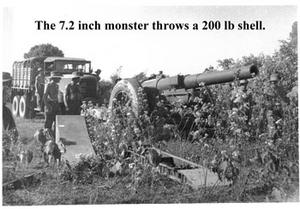
The Gunners' Monster
Chapter 4
A detailed feature of the Infantry sub unit training, which later proved to be most effective, took the shape of each of our Infantry platoons co-operating with a troop of Sherman tanks; this technique had developed from the previous jungle campaigns, when it was found that the murderous automatic fire from a Japanese bunker could best be countered by a single tank, firing smoke, then solid shot, at the bunker, before a section of infantry advanced close behind it. The section commander kept in touch with the tank commander or with his troop leader, by holding the telephone from the back of the tank, as they advanced together. When the Japanese were concentrating wholly on the menacing tank, the infantry would swoop out from behind it, and attack the back of the bunker, as the tank commander held his fire; the infantrymen quickly flushed out any surviving Japs with grenades, and killed them. Our individual training was concentrated on being able to avoid detection by the Japanese, even when they came as close as 50yds, at which distance it was considered essential to be able to kill a Jap soldier with one shot. Accuracy of aim and conservation of ammunition were vital.
For a while, a totally different aspect of our training included the provision of mock-up gliders, as we were told that our Brigade was to be used for a "coup de main" operation into the hilly Siamese frontier behind the Japanese forces in Burma; the soldiers had to practise tactical deployment from these, as they would have done on landing from the air. Whether the whole ploy was a ruse to confuse the Japanese High Command, or whether the plans were changed, I do not know; however, on several occasions during the subsequent campaign, when we were walking south through the jungle, Gurkha soldiers would raise the matter to emphasize that they had not been fooled, and felt they were destined to use their feet. They have a pleasant sense of humour! Knowing how dependent we were likely to be on the Allied air forces, I spent a week with the nearest RAF group HQ, to be sure that I understood, in detail, the way in which any calls for direct air support were handled, and what options were available in various circumstances. I also flew in their Dakotas, to help with pushing out supplies to units of 5th Indian Div on the feature known as the "Chocolate Staircase", a mountain of unstable shale and mud. When dropping to one unit in a narrow "glen" there, I fully realized, as a private pilot myself, how difficult it was to turn a fully laden Dakota through 180 degrees, when the valley itself was not wide enough.
The time approached for us to leave the Kohima area for operations south or east of Imphal, and there was a series of parties given by the officers of each unit, and plenty of rum was available. At one of these, given by a Nepalese (ie not British Gurkha) unit called Mahinda Dal, they had hired the famous court dancers of Manipur for the evening's entertainment, and that provided a real "eye opener". Not just the dancers who were exquisite teenagers with elaborate costumes, but the Nepalese spectators' antics intrigued us, too; they were quite in contrast to the rough games usually played in a British officers' mess on such occasions. At the last one of the latter before we started our long march, two of my ribs were broken as we were brawling. Our French Canadian field ambulance commander "comforted" me by saying that there was no better cure than marching with a heavy pack; how right he was, it has never given me any trouble in the 50 years since!
My abiding memory of our position, almost 10,000ft above sea level on the hills near Kohima, is the view towards the north, right across the Brahmaputra Valley to the Himalaya mountains, with Kanchenjunga sticking up like a great "tooth" above the others.
Just as Christmas approached, we were favoured for the first time by an Entertainments National Service Association (ENSA) team of entertainers, including a couple of intrepid Australian girls, who made our young officers' hearts beat, but to no effect, as our division started to be ferried south past Imphal and down to the valley beyond Kalemyo --- well over 200 miles of bumpy, dusty "roads" --- which the majority of the soldiers suffered in the back of general service lorries. Part of this journey passed down the notorious Kabaw valley, for which we had yet another inoculation, this time against Black Water fever. It might be a matter of some interest to Engineer readers that two parallel ditches had been dozed for nearly 20 miles right through this swamp, and the spoil heaped high onto the ground between, in the classical manner. As soon as it had drained, and consolidated, it was waterproofed with bituminized hessian and withstood the passage of thousands of heavy vehicles and two armoured brigades on transporters.
As we approached Kalemyo, I diverted from the convoy and took the muddy track down to Kalewa, where the river Chindwin had recently been bridged by the Sappers of 19th Indian Div. By the time I got there, Corps Troops Engineers were replacing the valuable bridging equipment with locally manufactured pontoons of a much more robust design, ready to take heavier loads in bad weather. Seeing the size and speed of this great river, it was quite clear that bringing and launching the initial pontoon rafts would have been much more effective, if the postulated concept of DUKW-type equipment had been available.
© Copyright of content contributed to this Archive rests with the author. Find out how you can use this.


 Recommended story
 Story with photo