BBC HomeExplore the BBC
This page has been archived and is no longer updated. Find out more about page archiving.

13 November 2014

BBC Homepage

Local BBC Sites

Neighbouring Sites

Related BBC Sites


Contact Us

Places Features

You are in: Hampshire > Places > Places Features > Gravel Extraction
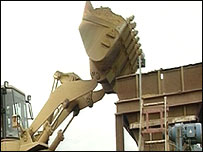
millions of tonnes of gravel will be extracted

Millions of tonnes will be extracted

Gravel Extraction

Hampshire County Council has shortlisted 10 sites throughout Hampshire to use for gravel extraction over the next decade - the plans will affect hundreds of thousands of homeowners.

Hampshire County Council has a shortlist of 10 sites on its list for mineral extraction - we last looked at this story back in January when 14 areas were on the council's list.

The 10 sites are;

  • Hamble Airfield
  • Mortimer Quarry Extension, Mortimer
  • Eversley Common Quarry Extension, Eversley
  • Cutty Brow, Longparish
  • Kingsley Quarry Extension, Kingsley
  • Frithend Quarry Extension, Sleaford
  • Forest Lodge Farm, Hythe
  • Plumley Wood, Harbridge
  • Purple Haze, Ringwood
  • Roeshot Hill , Christchurch

The planned quarries which vary in size would be in use for 10-20 years, after which they may become landfill waste sites or be turned into nature reserves.

The largest is the equivalent to 70 St Mary's Stadia.
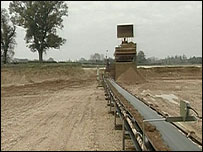
A gravel quarry

Some quarries will be the size of a small town

Residents are fighting hard not to have these sites near their homes and have been demonstrating their feelings to the council through a series of public meetings. 

Towns and villages are pitted against each other as everyone fights not to have a gravel extraction site in their area.

What's the gravel needed for?

Overall the demand for gravel is declining but gravel is used in huge quantities in construction of houses and roads. About five million tonnes of gravel is needed in Hampshire each year.

Hampshire also exports about a quarter of its overall gravel production to Dorset which has clay and sand, but little gravel.
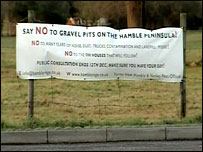
Gravel protest banner

Residents are fighting the plans

There are currently 13 sites in the county, but their production is declining as they reach the end of their lives and exhaust their deposits.

It is a government requirement for Hampshire County Council to identify land for mineral extraction.

What happens next?

Hampshire County Council has now selected the 10 sites listed above. Their plans will now be submitted to central government.

This will be followed with a public hearing in 2009, inspectors report at end of 2009 - then each application has to be approved for planning permission.

What happens in 10-15 years time?

In the past some gravel sites have become landfill waste sites - like the previous quarries outside Hamble and Lymington. The Blue Haze site near Verwood is also now a landfill.

With more and more waste being recycled, it's hoped that these new sites would not need to become landfill in 10 years time - as the quantity of our waste decreases.

Landfill sites can last 20 years - but the decommissioning process is 50 years because the gases have to be managed.

Other sites like Testwood near Totton have become nature reserves. The three lakes at Testwood are the remains of the gravel pits which were dug out in the 80s and 90s before being allowed to flood and given over to nature.

Your comments (add yours via the form below)

Martin Letts:
As Hampshire is on the coast is it not feasible to extract gravel and sand from the sea bed and send it by barge to the nearest point of use, and if possible use rail as transport? I know some is extracted from near the IOW but if this were done further offshore fishermen may be less upset.

Mark Boyd:
Yes please, It would bring jobs into the area, and when finished could be allowed to flood to provide wildlife habitat, and leisure facilities.

Sheila Lewington:
Whilst the need for more housing is evident there is also a need to keep our green field areas - communities need to keep their identities. The road and sewer systems in hamble, hound, burseldon, and netley abbey are ill equiped to cope. Traffic congestion is near impossible and to add to that with large lorries is a totally stupid idea (nothing new to our local council)- (they allow old trees and victorian buildings to be demolished for the sake of building FLATS - instead of developing what is already there). Will the council gives us a rate reduction, NO just keep on paying for more and more disruption, inconvenience and pollution. TAKE YOUR GRAVEL PITS WHERE THEY WON'T AFFECT LIVING WORKING HOUSEHOLDS.

Bob Pitman:
The Warsash Common - Chilling area is a well used natural resource in close proximity to the densely housed Locksheath-Titchfield Common-Warsash suburb. Its not replaceable, its not renweable, it's a haven for hundreds of walkers and cyclists every weekend of the year (I can't comment on weekdays but imagine its used then as well).Its a fantastic area of coast, country, and woodland. It's covered with footpaths, its a great area to find some peace and space. I don't know how you put a value on that, especially when its close to so many homes (filled with customers/voters). I understand the need for housing and building materials but the ruination of such areas cannot be justified for a few hideously expensive and profit driven piles of bricks and mortar. Find another way, this must be fought.

David Holland:
The resources of sand,rock and gravel are only extracted for a comparitively short time and then the sites are recycled as it says in the report. The more difficult and expensive it is to obtain permission, the more delay there will be in building new houses for young families who urgently need them and the dearer the houses will be. Isn't it rather selfish to oppose permission being granted for these sites?

S J Rasey:
Is it not about time someone realised that we have no need to dig as much gravel as our so called experts say we need. As most people see the situation at a stroke of a pen, millions of pounds could be put back into the economy. Our house building could be brought under control. Our prison population could be drastically reduced. Anything between 250 thousand 500 thousand cars could be off of our roads. NHS would not be under so much pressure, neither would our schools and general infrastructure of our country. This is a problem that could so easily be sorted out. Privately most people would agree but the powers to be have not got the guts to do anything about it.

Tell us your views on the gravel extraction proposals.

Disclaimer

By sharing any contribution (including any text, photographs, graphics, video or audio) with the BBC you agree to grant to the BBC, free of charge, permission to use the material in any way it wants (including modifying and adapting it for operational and editorial reasons) for BBC services in any media worldwide (including on the BBC's site accessed by international users).

last updated: 17/11/2008 at 15:19
created: 08/01/2008

You are in: Hampshire > Places > Places Features > Gravel Extraction

5 DAY FORECAST
The latest forecast for your area from BBC Weather
[an error occurred while processing this directive]


About the BBC | Help | Terms of Use | Privacy & Cookies Policy