User Rating

Hot off the success of Pirates Of The Caribbean, onetime indie-king Johnny Depp continued his foray into the big bad world of commercial blockbusters with schlock thriller Secret Window. David Koepp's "dunderheaded adaptation" of a Stephen King novella, about a writer under siege at his woodland home, got a mauling by critics although enough moviegoers took a peek through this window to keep it from falling flat at the box office.
Out The Window
Four deleted scenes come with optional commentary by writer-director David Koepp, who talks about stepping in dog mess both literally and metaphorically. An extended closing shot is also included, which features lots of corn - both literally and metaphorically.
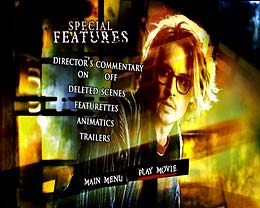 Koepp's feature commentary demonstrates the same attention to detail, going in-depth about the visual and allegorical nuances that help paint the picture of slowly encroaching madness. Among his influences, the writer-director cites Alfred Hitchcock's Psycho and Roman Polanski's The Tenant - although he magnanimously concedes that their execution was "probably far better". There are lighter moments too as Koepp notes of Depp's shaggy dog haircut, "Degree of bed-head was a major consideration of the movie." He's probably not joking.
Window Pain
Koepp gets down to the nitty-gritty in three substantial behind-the-scenes featurettes. In From Book To Film, he explains the process of stretching King's novella into a feature-length thriller, while Johnny Depp stretches the running time of this featurette by explaining the plot very... very... slowly.
A Look Through It is the best of the bunch, with Koepp (again!) thoroughly deconstructing a few of the key scenes while touching on areas like production design and cinematography. Hear too from actress Maria Bello, who less than fondly recalls the shock military tactics Koepp employed to keep the actors on their toes. Note: If you haven't seen the film, steer clear of Secrets Revealed in which Koepp blabs about the final twist.
Rounding off this package is a gallery of trailers and four animatic scenes - essentially CG storyboards used for testing a few of the more technically sophisticated sequences. If you were left wondering how they did that, Koepp's nuts and bolts guide to filmmaking makes this a window worth opening.
EXTRA FEATURES