| 13 November 2014 |

| |
| BBC Homepage | | |
| |||
| Contact Us | | |
HistoryYou are in: Edinburgh, Fife and East Scotland > People & PLaces > History > Robert Burns 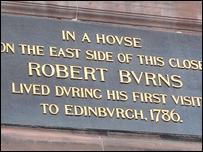 Robert BurnsExplore the places and poetry in and around Edinburgh connected to Scotland's national bard, Robert Burns. PlacesThe National Library of Scotland's 'Zig-Zag: The Paths of Robert Burns' opened in Edinburgh in November 2008. The exhibition, which is part of Homecoming Scotland 2009, marks the 250th anniversary of the birth of Burns and gives the country the chance to discover through the poet's own words how he created the myth of Burns. The Burns' Monument on Regent Road, opposite the old Royal High School, was built by Thomas Hamilton in 1830. 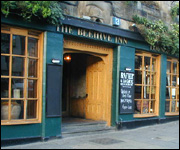 The Beehive Inn, Edinburgh The Writers' Museum on Lady Stair's Close in Edinburgh is a treasure trove of artefacts, manuscripts, portraits and personal effects belonging to Sir Walter Scott, Robert Louis Stevenson and Robert Burns including his writing desk. When Burns first came to Edinburgh in the winter of 1786/7 he stayed in the neighbouring Baxter's Close. When Burns lodged next door to The Beehive Inn, in Edinburgh's Grassmarket, he allegedly went to the Inn to watch cockfights. PeopleIt was love at first sight when Burns met Agnes 'Nancy' McLehose in Edinburgh. Agnes was separated but never divorced, so the two took pen names - Clarinda and Sylvander - to protect their identities in correspondence. Burns sent Agnes love letters to woo her, but Agnes retreated as Burns' literary advances grew more heated. In December 1791 Burns wrote 'Ae Fond Kiss', arguably the greatest love poem ever written, for his beloved Clarinda. William Creech was the chief publisher in Edinburgh. He published the first edition of Burns Poems and is buried at Greyfriars Kirkyard in the city. A plaque in his memory can be viewed at Newbattle Kirk. 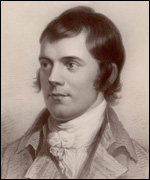 Robert Burns James Cunningham was a Scottish nobleman and the 14th Earl of Glencairn. He was a great supporter and friend of Robert Burns and was instrumental in the production of the second edition of Burns Poems. James Johnson, a struggling music engraver and music lover with a passion for preserving old Scots songs, met Burns in early 1787. Burns became an enthusiastic contributor to The Scots Musical Museum, responsible for one third of the 600 songs in the collection. Henry MacKenzie was a Scottish novelist and miscellaneous writer from Edinburgh who dedicated his 1785 paper, The Lounger, to the genius of Robert Burns. He is buried at Greyfriars Kirkyard in Edinburgh. Listen to a selection of Burn's poems connected to the arealast updated: 13/03/2009 at 11:22 SEE ALSOYou are in: Edinburgh, Fife and East Scotland > People & PLaces > History > Robert Burns |
| | About the BBC | Help | Terms of Use | Privacy & Cookies Policy |