



 | | | | | | | |||||||||||||||||||||||||||||||||||||
| | ||||||||||||||||||||||||||||||||||||||||||
|
Lionfish wreaks havoc in Caribbean sea | ||||||||||||||||||||||||||||||||||||||||||
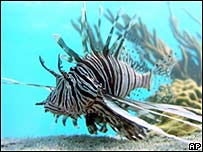
The red lionfish has invaded the Caribbean Sea swallowing native species, stinging divers and generally making itself a nuisance. An Associated Press report said it is believed that the fish, a tropical native of the Indian and Pacific oceans, probably escaped from a Florida fish tank. Now it is rapidly multiplying and showing up everywhere, from the coasts of Cuba and Hispaniola to Little Cayman's pristine Bloody Bay Wall, one of the region's prime destinations for divers. And wherever it appears, the adaptable predator corners fish and crustaceans up to half its size with its billowy fins and sucks them down in one violent gulp. The AP news agency said research teams observed one lionfish eating 20 small fish in less than 30 minutes. Threat to native species One marine ecology expert, Mark Hixon of Oregon State University in the US said: "this may very well become the most devastating marine invasion in history". Mr Hixon compared lionfish to a plague of locusts and said "there is probably no way to stop the invasion completely". The lionfish so far has been concentrated in the Bahamas, where marine biologists are seeing it in every habitat: in shallow and deep reefs, off piers and beaches, and perhaps most worrisome, in mangrove thickets that are vital habitats for baby fish. Northern Caribbean islands have sounded the alarm, encouraging fishermen to capture lionfish and divers to report them for eradication. | |||||||||||||||||||||||||||||||||||||||||||
| |||||||||||||||||||||||||||||||||||||||||||
 | |||||||||||||||||||||||||||||||||||||||||||


 Archive