It was only 1996 when Jeff Goldblum in Independence Day talked about strange outer space signals repeating themselves and recycling until there was no more. With controlled build-up, Goldblum’s David, showing a sort of stoic heroism said: "Strange thing is, if my calculations are correct, the signal will be gone in seven hours. The signal reduces itself every time it recycles. Eventually it will disappear." It’s like a Yoga class – breath in (and raise the tension: audience at the edge of their seats) and breath out (here’s comes the 'gag'). "And then what?" says curly haired chub Harvey Fierstein. "Checkmate!" replies Goldblum, as a bumbling Fierstein runs down a list of lives he has to save without the addition of his blood-sucking lawyer. Despite clinical, tidy, manipulative filmmaking being a well-worn attribute of most flag-waving American blockbusters, it’s the metaphor in Goldblum’s analysis that’s more important here. Like David Naughton in John Landis' An American Werewolf In London going on a murderous lycanthropic rampage every full moon - repeating his quest for human meat every time his razor became as useful as a camp hairdresser on King Kong’s island - today's Hollywood and its total lack of originality is just repeating and recycling itself in any disguise it sees fit. From the remake and the re-imagining to the book adaptation, the latest superhero craze and anything it can pimp off East Asian horror directors. Unlike Stephen King’s Pennywise returning to drag children into the sewers of Derry every thirty years (a book which was adapted into a television movie), Hollywood is repeating itself every thirty seconds. With the general consistency of Michael Pali'’s stutter in A Fish Called Wanda, the Land of La is hitting us with the same movies over and over and over again.  |
Yes, Hollywood has been doing it for years – the literary adaptation is no new fangled idea of course – but at least there was still a sense of quality, of characterisation, of vitality. Take music for example - The Byrds Tambourine Man, Jimi Hendrix's All Along The Watchtower,' Soft Cell’s Tainted Love– they’re all cover versions of previous songs but in many ways improve upon the originals. In the movie business, Hollywood’s latest output reaches the sorts of heights Ronan Keating’s Fairytale Of New York cover climbed - it's worth very little, it's purpose nothing more than musical rape. In any case, would anyone deny The Big Sleep any plaudits because it was originally a novel? No. Nowadays, the book, the novella, the comic, the graphic novel and probably kids’ pop-ups are just a scapegoat for a lack of ideas. Where's that spark of creative brilliance that will stop cinemagoers in their tracks? Let's see more books based on movies because the movies themselves and the writers of those movies had the ideas in the first place. I don't read any of the Alien comic books or novels but I rest easy knowing Ridley Scott gave us something unique and groundbreaking, and that it first appeared through an anamorphic Panavision lens on 35mm Kodak film. Without dwelling on psychoanalytical introspection, I'm sure all elements of creativity are based on some form of past events shaping the creator's ideas and therefore recognising elements of other films within new works is going to occur, but today it's infuriatingly common. On the one hand we have Wes Craven's Scream, which you’d be forgiven for thinking borrowed far too heavily from a whole host of films preceding it but I’d argue that it merely draws attention to its roots - a homage to early slasher films - showing a whole new generation how much fun it was to have a good scare at the cinema. Writer Kevin Williamson infused it with pop-culture references and used post-modern tactics to give life to a genre of films believed to be dead. Here Hollywood was recycling in principle, but at least some hearty breaths of fresh air were still prevailing. Then what finds its way to my desk but a review copy of Bad News Bears, a remake of the Walter Matthau fronted 1978 original, this time with Billy Bob Thornton in the lead role. Basically, it's a like for like remake but what really disappoints (disregarding the worth in remaking it in the first place) is the fact the new version makes no attempt to improve upon the flaws of the 1978 film, merely duplicating the same things that were wrong in the first place. It's like someone who can't be bothered to write their school essay, going on the internet copying one that was originally graded an 'F', and handing it in thinking how clever they have been. 2005's Bad News Bears stinks of laziness on the part of talented filmmaker Richard Linklater; jumping on the remake bandwagon to make a buck. Just because we’re recycling glass bottles to save the earth, doesn’t mean Hollywood’s idea machine has to follow suit. Watching the latest American re-imagining of a Japanese horror film, or seeing the teaser trailer for the 'all new' When A Stranger Calls, or sitting eagerly anticipating Indiana Jones 4, I'm continually reminded of my forgetful 85-year-old grandmother. No, it isn't because she was an extra in the Temple Of Doom, nor is she an expert of ancient Japanese mythology, (I'm not even talking about her penchant for talking to photographs on the wall and thinking Des Lynam is speaking directly to her, and only her, during afternoon Countdown - that’s a whole other story) she is simply someone who likes to tell a tale to whoever is listening. However, her trick is to tell the same story in exactly the same way to the same people even if they've heard it a thousand times before. I've grown tired of hearing about her first day at school, visiting Prince Rainier's grave, and her infamous flight to the Costa Del Sol ("I don’t like flying and I hate going to the toilet on a plane but on this occasion I just had to go. There I am with my knickers round my ankles, next thing I hear is the captain saying 'seatbelts on, we’re coming in to land'"). It’s a sad day that Hollywood has turned my cinema-going experience into a constant reminder of Rich Tea biscuits, overdone perfume, false teeth, and my Grandma talking for England. I suppose the ideas themselves have had dollar signs hanging over them since Jaws and Star Wars in the late seventies, since the marketing of the film comes part and parcel with the promotion of the soundtrack and the theme tune, the computer game, the T-Shirts, the action figures and the cuddly toys. It's so expensive to produce, distribute and exhibit films, the majors aren’t willing to take any chances. If rekindling the kind of excitement the Nightmare On Elm Street films used to produce means creating the gimmick of Freddy Versus Jason, with the guaranteed fan base, the merchandise, and the immediate iconography, then it is what the studios will do. Not because it's original but because it’s about as safe as business can get for the majors. You've just got to look at the numbers - Jason X in 2001 proved serial killer Jason Voorhees was finally dead with box office takings of $12.6 million having been made for $14 million. Yet, La La Land wasn't going to let the ghost live in peace. You can see the boardroom as they cotton onto the idea: "Imagine an angry Freddy facing off against Jason…brilliant’" Repackage the film they’d made a hundred times before (well, actually seven times for Freddy, ten times for Jason) and abracadabra you get $82.1 million in the US from a film which cost approximately $25 million. Does this mean Hollywood is simply giving us what we want? No, it means this is all Hollywood is giving us and as moviegoers we’ll take the best of what we can get. 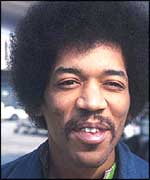 | | Hendrix covers 'improve on the originals.' |
That brings me to Alien Versus Predator, another film relying on the franchise and the gimmick to bring in the punters. Yet the film isn't just an example of Hollywood trying to cash-in on a market that they know already exists, it's a perfect showcase to see just how unoriginal their ideas have become, as the film is a dressed up, disguised retelling of Spielberg's own Jurassic Park. Essentially, both films tell the story of a bunch of scientists going to an island in the middle of nowhere and becoming food for prehistoric animals. Both the major protagonists in the film are picked up by helicopter before they have chance to say no to the expedition, and both films gain their thrust based on a mysterious billionaire's wayward imagination, sense of adventure and limitless funds. It’s surely only coincidence that both films introduce major characters at an archaeological dig and send them to a distant place that has been adapted into the natural habitat of predatory animals. Both follow the same pattern – introduce the characters to the situation, create the dilemma, get them attacked, some die but the remaining few get separated, hero saves the day. It's a basic narrative formulation you might argue but the conclusions are fairly identical. In both films the protagonists are assisted and saved by one of the antagonists: in Alien Versus Predator it's on purpose, in Jurassic Park it's inadvertent but nevertheless, it's like watching the same movie again. In a similar sense, if you've seen The 40 Year Old Virgin then you've seen Hitch and vice-versa, both films having been released within six months of each other in 2005. And yet Spielberg doesn't escape this trap either. His Sainthood amongst the Hollywood elite glossing over the fact he's filmed Lex and Tim's escape from the Velociraptors twice. Once in Jurassic Park, and again in 2005's War Of The Worlds (dare I say it, another remake), substituting the dinosaurs for metallic tripod tentacles. Both scenes build the tension in the same way, each culminating in a character accidentally nudging something to the floor, enticing further inspection from the villains who would have otherwise left. You can change the characters, the location and the bad guy, but if Hollywood insists on just repackaging the same movies with gimmicky bells and whistles, it'll find a lot of people turning to their DVD collections for old Hitchcock films, the original and best version of King Kong from 1933, and Hollywood's Golden New Age during the 1970s. They'll be searching the web for French, Spanish, Mexican, British, Japanese, Indian, Australian, and all kinds of national cinema. The independents will find a new lease of life, especially in the home entertainment market. Lost In Translation from 2003 seems to be a prime example. Sofia Coppola, working under daddy’s dollar (her father is of course Francis Ford Coppola who made The Godfather) but independent of major studio influence, found her film did exceptionally well in cinemas ($44.5 million in the U.S from a $4 million budget) yet found a new lease of life on DVD. Word of mouth spread through magazines and the internet that here was something genuinely unique. While the film was still showing at cinemas in the US, DVD sales reached over one million units prompting Focus Features Head of Distribution Jack Foley to proclaim: "The phenomenon of Lost In Translation succeeding in both mediums is unique and indicative of the incredible support for this special film". Zach Braff did the same thing a year later with Garden State making ten times its budget at the box office but it wasn't just Americans reaping the benefits of Hollywood’s stale ideas. French director Jean-Pierre Jeunet, after his disappointing trip to Hollywood filming the terrible Alien: Resurrection, returned to his native land and independently produced Amelie, a delightful comedy that became one of the most successful French-language films in US box office history making over $33 million, whilst also making £4.3 million in the UK. Yet Amelie’s fantastic journey would continue to prosper on DVD as the film was one of the most sort-after during the year, opening many people's eyes to their first experience of French cinema. Likewise, after Hollywood remade The Ring with Naomi Watts in 2002, many avid film fans went in search of the original Japanese version on DVD, opening themselves up to the delights of Japanese and east Asian cinema. Perhaps I'm wrong. We're actually a generation that has been in hibernation for twenty years, missing every single movie made since 1980. The cold, calculated mystery of Hannibal Lector passed us by in 1991 with Jonathan Demme's brilliant Silence Of The Lambs, Hollywood neglecting to realise why the film was so terrifying in its depiction of a monster whose plastic cage separated us and Clarice Starling from his ambiguous madness channelled through controlled, clinical aggression. Of course we missed the beat, and now we're privy to the answers that seem to negate the purpose in the forthcoming Young Hannibal: Behind The Mask, set for release in 2006. We’ve the pleasure of such original concepts as the sequel which is basically a form of cinema that continues the story of the previous film (oh, of course, we all already know that), so what has Hollywood got in store for us in 2006? Well, we can look forward to the vaguely titled I'll Always Know What You Did Last Summer, Scary Movie 4, Rambo 4, X-Men 3, Hollow Man 2, and Final Destination 3 to name but a few. We also have the esteemed pleasure to watch Omen 666 on its release date of June 6th, 2006 – the film being a remake of the original Richard Donner directed 1976 version. At least the Hollywood idea machine is stretching itself to thoughtful release dates, it's just it stinks of yet another gimmick.  | | Even Spielberg does not escape the trap. |
We can only hope the talents of comic Steve Martin come good in the remake of The Pink Panther after his wasted time on Cheaper By The Dozen 2. Even greats like him seem to have forgotten the creative pen – his superb writing for his own starring vehicles in 1991’s L.A Story and 1999’s Bowfinger are now just distant memories. Sylvester Stallone is putting some effort in – after the next Rambo sequel we can eagerly anticipate Rocky Balboa, another film for his Rocky franchise. There's the tasty delights of such slasher films being given the 2006 make-over treatment with remake and sequel predictions of Black Christmas, When A Stranger Calls, Return To Sleepaway Camp, Texas Chainsaw Massacre: The Beginning, The Evil Dead, and The Hills Have Eyes. There's also remakes of classics such as The Cabinet Of Dr. Caligari, The Fly, and The Wicker Man. You can ask the question why director Bryan Singer jumped ship from the X-Men franchise to Superman Returns but it doesn't really matter since anything resembling the quality and the originality of his smash hit The Usual Suspects isn't anywhere on the horizon. It's little wonder what John Woo will do with his remake of Masters Of The Universe - you just have to look at Mission: Impossible 2 or Face Off to get the general idea. And then you have to ask what is the point in remaking The Wild Bunch for a new audience. Are we missing the point of what cinema is about, or has the industry simply gone along with the times, changing like the cultures that have embraced it? At the end of the day is it a bad thing since we clearly like our fit of sequels and remakes – I certainly can't deny I enjoyed Tim Burton's version of Charlie And The Chocolate Factory, and Scary Movie 3 was a great improvement over the terrible first sequel. Yet the 'awe' factor is diminished with this constant recycling of ideas. Peter Jackson had the best of intentions with his King Kong remake but the predictable Computer Generated Imagery (CGI) has little effect on audiences compared to what they felt when they first saw Kong in 1933. Personally, animatronics, stop-motion, models and costume work are so much more appealing than watching what amount to computer games being played for us by the director. In many respects, the lack of CGI in James Cameron's The Terminator from 1984, is one of the reasons it's a better film than its sequel. Like the films themselves, such CGI is just recycled computer code patched into whatever generic narrative and clichéd plot some Hollywood big-shot comes up with. Hollywood won't disappear like the signal in Independence Day but, like Jeff Goldblum says in the film, it's reducing itself every time it recycles and in doing so big studio product is becoming less and less attractive. |